When will summer end in the UAE? Here's the official date
Astronomer explains when the heat begins to ease and autumn officially starts
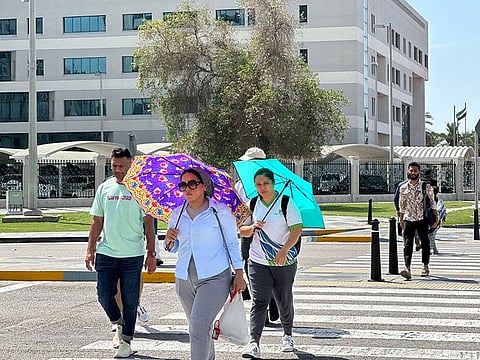
Dubai: The UAE's astronomical summer will come to an end on September 23, when the autumnal equinox marks the official start of autumn, although meteorologists classify September as the first month of the autumn season, according to Ibrahim Al Jarwan, Chairman of the Emirates Astronomical Society and a member of the Arab Union for Astronomy and Space Sciences.
Al Jarwan said the country's hottest period, known in Arabic as Al Qayz, begins to ease in the final third of August with the rising of the star Suhail, long regarded across the region as a traditional sign of gradually cooler weather.
Get updated faster and for FREE: Download the Gulf News app now - simply click here.
He explained that while temperatures remain high through September, the Indian seasonal low-pressure system weakens progressively during the month.
The UAE continues to be influenced by thermal low-pressure systems extending from central Arabia, bringing active winds that can raise dust and reduce visibility.
At the same time, conditions remain favourable for the formation of convective clouds, particularly over the eastern mountains, with thunderstorms and rainfall occasionally extending into inland parts of the country.
September also sees a seasonal shift in wind patterns, with south-easterly winds prevailing overnight and during the morning before giving way to north-westerly sea breezes in the afternoon and evening.
Humidity gradually increases compared with August, particularly during the second half of the month, creating more favourable conditions for fog and mist to develop in scattered areas across the UAE.
Al Jarwan noted that astronomical summer began with the summer solstice on June 21 and lasts for three months until the autumnal equinox on September 23. During the first half of summer, temperatures typically range between 41°C and 43°Cduring the day but can exceed 50°C in some areas during heatwaves.
In the latter half of the season, from August 11 onwards, higher humidity combines with persistent heat and the seasonal Kous winds to support the formation of towering thunderclouds over the Hajar Mountains, producing the localised summer thunderstorms known as Al Rawayeh.
With much of the summer still ahead, residents are continuing to adapt their routines to the season's intense heat by shifting outdoor activities to the early morning and evening hours, while increasingly turning to air-conditioned leisure and fitness venues during the day.
Dubai Mallathon, running from 15 June to 15 September, has become one of the city's flagship summer initiatives, allowing residents to walk and run along designated indoor routes across participating shopping malls during the cooler morning hours. The programme is designed to encourage physical activity throughout the summer despite the high temperatures.
Beyond organised fitness events, shopping malls, indoor attractions, museums, aquariums, family entertainment centres and beaches during the cooler hours remain among the most popular destinations for residents and visitors. As temperatures gradually begin to ease towards late August, outdoor parks, mountain areas in the east of the country and desert destinations are also expected to see increasing numbers of visitors.


