More Arabic-speaking nurses needed, says expert
'Cultural connection could help residents to lead healthier lifestyles'
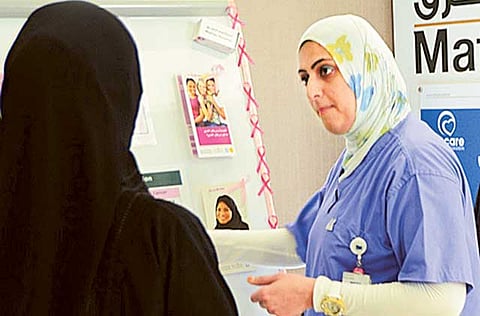
Abu Dhabi: Arabic-speaking nurses who are culturally connected to residents in the emirate could be a key element in reducing the prevalence of diseases such as diabetes and obesity, a top medical professional said in the capital on Sunday.
However, a large proportion of nurses in the emirate still do not speak Arabic, and this reduces their effectiveness in encouraging healthier lifestyles among residents, said Dr Sharon Brownie, professor and Griffith University representative at the Fatima College of Health Sciences (FCHS).
“Moreover, a study found that only one per cent of Abu Dhabi’s 8,300 nurses in 2010 was Emirati, and this needs to be changed,” Dr Brownie told Gulf News. “The attractiveness of nursing as a profession has to be increased.”
She was speaking on the sidelines of the fifth Annual Research Conference, which saw medical professionals discuss trends and findings in the healthcare sector. It was organised by the Abu Dhabi Health Services Company (Seha), which manages and operates public hospitals and clinics across Abu Dhabi.
The UAE has a high prevalence of non-communicable diseases such as cardiovascular disease, diabetes and obesity. Diabetes was estimated to affect 18.87 per cent of the population in 2012, as recorded by the International Diabetes Federation. In Abu Dhabi, cardiovascular disease is consistently the top killer, as measured by the Health Authority-Abu Dhabi.
Public health workers, consisting of nurses, allied health professionals such as physiotherapists and social workers, as well as trained lay community members, have proven to be effective in encouraging healthier lifestyles.
“While it is important to have enough doctors to treat non-communicable diseases, they are expensive to recruit and train,” Dr Brownie said. “On the other hand, public health workers are more connected to, and familiar with, residents and their needs. Unfortunately, this public health workforce is still underdeveloped in Abu Dhabi.”
To combat this, a number of universities across the UAE already offer degrees in nursing. These programmes are churning out graduates every year, including a significant number of Arab speakers, Dr Brownie said.
“In collaboration with the Australian-based Griffith University, the Fatima College of Health Sciences alone has produced nearly 500 nurses since 2008. More than 50 per cent of these nurses are Arabic speakers, and this is definitely a positive sign,” she added. “But to play a leading role in reducing non-communicable diseases, we need more such graduates.”
Studies have shown that even small changes in obesity levels reduce the burden of cardiovascular diseases, diabetes and stroke. Some of the steps in reducing obesity involve advising residents to reduce salt intake, increase physical activity, adopt healthier diets and stop smoking.
“Nurses and allied health professionals can reach out to patients and aid in disease management and monitoring, but there is also a need for trained lay community members, such as stay-at-home mothers who have much credibility, to advise people on healthy lifestyles,” Dr Brownie said.
“Abu Dhabi already has well-established government initiatives in schools to educate schoolchildren. These efforts need to be supported by a set of empowered public health workers.”

