Hatta’s dam lakes a home to rare species
Survey finds rarely seen flora and fauna thriving near the water bodies
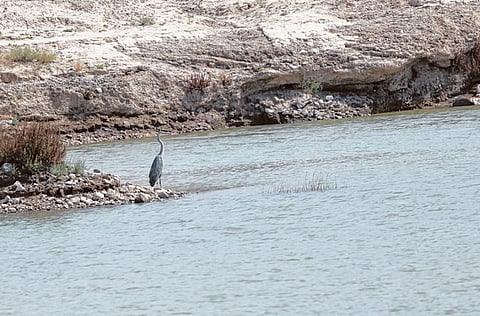
Dubai: An unusually large variety of birds, including the seldom-seen osprey, or fish eagle, has been spotted around dam lakes in Dubai recently, according to a new survey.
The April survey, led by Dubai Municipality wildlife specialist Dr Reza Khan, covered the “Hatta lakes” formed by dams in the Hatta area.
Most of the water bird species are breeding.
Two survey visits in the last week of April logged almost 30 bird species and a total of around 30 species of insects and reptiles, he added.
“This is very, very good. Normally, we find only 10 to 12 species. Most of the birds there are water birds. They were attracted because there is plenty of water in the lakes. We’ve had some good winter rains,” Dr Khan said.
It follows a similar survey in March which found animals and plants that had “vanished” from the deserts around Dubai had reappeared after years.
The earlier sightings include those of the UAE’s deadliest snake, the saw-scaled viper, and the country’s smallest bat, the Sind Batina Serotine.
Many local flowering plant species had also made a comeback, which attracted birds and insects that depend on them — followed by their predators.
The latest survey around Hatta town found that, with the exception of two or three migratory species, the birds were “all residents” of the UAE ecosystem.
Dr Khan also spotted the osprey or fish eagle, which is “seen in very small numbers” in the UAE.
There are only some 50 to 60 pairs in the whole country, he said.
“It was very exciting to see it because it’s a bird of coastal areas, but Hatta is pretty far off the coast. I didn’t expect it there,” Dr Khan said.
“It’s a real fish eater — no fish, no osprey. I saw it waiting for fish on a rock ledge that juts above the dam water.”
The people-shy bird of prey is sometimes found nesting in abandoned offshore oil rigs, he added.
The scientist also found several cases of breeding among the black-winged stilt bird, notable for its long legs, compared to its small body size.
“Most local birds were breeding. There are more insects and worms to feed on now. That’s because of more plants in the area. Rain is the lifeline of the cycle,” Dr Khan said.
Also spotted were herons, bulbuls, parakeets, doves, sparrows, swifts and partridges, among other species.
Dr Khan’s log also included lizards, geckos, toads, beetles, dragon flies, bees and butterflies.


