Can any country really control its tech? Ericsson CEO says no at Dubai WGS 2026
Technology is now as vital to nations as defence and finance: IBM’s Arvind Krishna
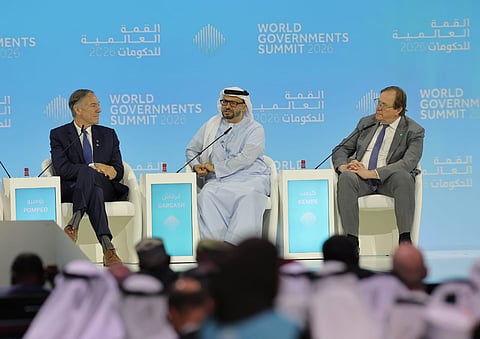
Dubai: Is technology something a country can truly own — or is that idea already outdated?
Ericsson CEO Börje Ekholm said, “Sovereignty sends the mind the wrong way.” As governments race to “nationalise” technology, Ekholm warned that the idea of full digital independence is misleading — and potentially dangerous.
Speaking at the World Government Summit, Ekholm said tech nationalism creates a false sense of control, arguing that every country, including the US and Europe, relies heavily on foreign technology to keep its digital systems running.
Speaking during a high-level discussion with IBM CEO Arvind Krishna and Axios co-founder Mike Allen, Ekholm challenged the increasingly popular idea that nations should aim for full “tech sovereignty”.
His argument was blunt. No country, he said, is truly independent when it comes to technology — and pretending otherwise is misleading.
“I think sovereignty leads the mind the wrong way, because it actually says that we can be a bit independent. I actually think in technology, we can’t… most countries on this planet will have an interdependence on other countries,” Ekholm told audiences.
To make the point real, he pointed to the US itself. America, he said, relies on Ericsson — a Swedish company — for major parts of its telecom infrastructure. Europe, meanwhile, depends heavily on American technology to run data centres, operating systems and much of the digital stack.
In short: even the world’s biggest powers don’t go it alone.
Instead of sovereignty, Ekholm argued countries should focus on trust — choosing partners and vendors they believe will keep systems running securely, reliably and without political interference.
The comments cut against a growing global push for digital self-reliance, data localisation and national control of critical technologies — trends driven by geopolitical tensions and fears of disruption.
Krishna, however, said, technology has become just as important to a nation as defence or finance — and possibly even more so.
“Technology is a force multiplier,” Krishna said. “It drives economic growth more than anything else.”
That’s why, he argued, governments must ensure critical systems can’t simply be “turned off” — whether by cyberattacks, political pressure or even something as basic as a cut undersea cable.
As governments pour billions into AI, cloud computing and next-generation networks, the debate isn’t just about innovation anymore. It’s about who you trust — and how dependent you’re willing to be.
And if Ekholm is right, complete tech independence may already be a thing of the past.


