Sharjah forum urges AI, integrated action to safeguard biodiversity
Experts urge smarter tools and joint action to protect regional biodiversity
Sharjah: Experts at the 25th Sharjah International Conservation Forum for Arabian Biodiversity (SICFAB) have called for greater use of artificial intelligence and coordinated environmental strategies to protect wildlife and ecosystems across the region.
The forum, organised by the Sharjah Environment and Protected Areas Authority at Sharjah Safari and running until February 5, is addressing specialised conservation challenges while promoting practical environmental solutions. Discussions have centred on invasive species management, seabird rescue and health monitoring, and global reassessment of sea snake populations.
Tackling invasive species
Participants highlighted health risks linked to avian influenza and stressed the importance of identifying safe ecological pathways for native wildlife, alongside monitoring routes through which invasive species spread.
Sessions recommended adopting the Indian House Crow Management Guide, focusing on prevention, public awareness, monitoring and early detection, particularly at ports and coastal areas. Experts noted the species’ high intelligence requires carefully planned intervention measures.
Delegates also encouraged combining multiple control strategies, including targeted poisoning, nest destruction and egg oiling to curb reproduction. Artificial intelligence, they said, could support eradication efforts by strengthening monitoring systems and improving resource use, drawing on expertise from the International Union for Conservation of Nature (IUCN).
Monitoring seabird and environmental health
A dedicated session on toxicology and seabird examination highlighted Sharjah’s work in tracking environmental and marine wildlife health. In collaboration with Sharjah Municipality laboratories, specialists studied seabirds’ exposure to microplastics, oil contamination and solid waste, alongside monitoring disease outbreaks.
The work forms part of the Sharjah Marine Stranding Response Programme, aimed at safeguarding marine ecosystems and wildlife.
Specialist training in avian forensics
The forum also delivered advanced training in avian forensic necropsy led by international experts Dr Daniela Denk and Dr David Roberts. The programme covered medical history assessment, weight measurement, trauma examination, parasite detection and internal organ analysis.
Experts stressed key diagnostic indicators, including tongue and cranial haemorrhages, liver damage and eye discharges, as well as sterile brain sampling for viral testing. Participants were also trained to distinguish between injuries caused before death and damage inflicted by predators, strengthening regional response capabilities.
Pollution and wildlife impact
Researchers Professor Fatin Samara and Dr Lara Dronjak outlined links between human activity and environmental health, identifying heavy metals, persistent organic pollutants and microplastic contamination in examined seabirds. Most microplastics were found to originate from synthetic textile fibres, highlighting growing human impact on marine ecosystems.
Global reassessment of sea snakes
The IUCN Sea Snake Specialist Group is conducting its first global reassessment since 2009, reviewing extinction risks for all 72 sea snake species. The study, co-chaired by Dr Vinay Udyawer and Dr Aaron Lobo, integrates local environmental data, including oil spill impacts, with global conservation analysis.
Practical conservation focus
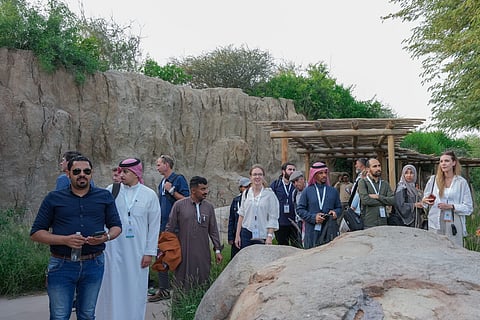
The forum concluded with a field safari at Sharjah Safari, linking scientific discussions with on-ground wildlife management and protected area conservation.
Participants stressed that protecting biodiversity requires a balance of scientific research and practical field expertise, helping strengthen regional capacity to respond to environmental challenges across the Arabian Peninsula.