Did your smartwatch get your 1,000-calorie burn right? UAE experts explain what it really measures
Wearables aren't designed to replace medical testing, as experts explain
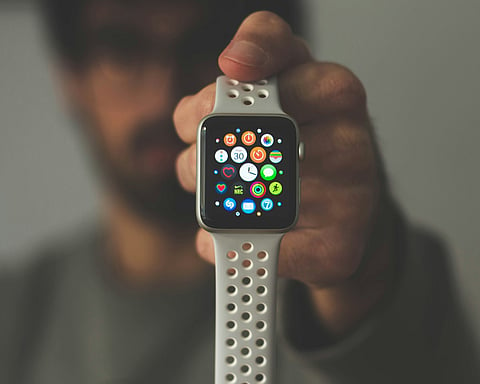
I heave a sigh of relief every time I check my calorie count on my smartwatch. It's always higher than what the treadmill says, and, ever the optimist, I choose to believe I truly did burn 30 more calories than the machine claims. Rather than accept that I didn't burn those 30 calories, compared to what the other machine says.
But then, which one is right? The one strapped to my wrist, or the one I step onto once a day?
I pick the one on my wrist, thank you very much.
Turns out, I'm not alone. Most of us live by the verdicts our smartwatches solemnly deliver each morning, a sleep score, a recovery percentage, a stress reading, a calorie count from yesterday, precise down to the last digit. It all sounds like hard data. And can data ever be wrong?
Well, hold that thought. How much of it is actually measured, and how much is your watch's best guess dressed up as a number? As wearable technology becomes increasingly sophisticated, with artificial intelligence helping devices analyse everything from sleep patterns to stress levels, it is tempting to assume that every metric on your wrist is a precise measurement of your body.
Experts say there is an important distinction: Some things your smartwatch measures directly, while others are intelligent estimates based on algorithms. Understanding that difference can help users get the benefits of wearable technology without treating every number as a medical fact.
Modern Snapdragon-powered wearable platforms combine data from multiple sensors and system inputs to build a picture of user activity and wellness over time. That trend data has real value as a companion to professional care. For many users, the biggest benefit is not detecting a medical condition, but building healthier habits around sleep, activity and recovery through continuous awareness over time. The right way to think about it is context, wellness awareness and trend monitoring, not a diagnosis on your wrist....

Your smartwatch is not a medical device, but it is not just a gadget either
One of the biggest misconceptions is thinking that wearables either know everything, or they know nothing. The reality, is somewhere in the middle, as Mohammed Al Khairy, Head of Edge AI & Business Development, Middle East Africa, Qualcomm Technologies Lt says.
Wearables aren't designed to replace medical testing, but they are becoming increasingly capable at identifying trends, behavioural changes and wellness signals over time, he elaborates further.
Today's devices use optical sensors, motion sensors and increasingly on-device AI to interpret the signals they collect. The strength of modern wearables, he explains, is continuity, collecting information over time and combining different inputs to build a broader picture of activity and wellness. "Modern Snapdragon-powered wearable platforms combine data from multiple sensors and system inputs to build a picture of user activity and wellness over time," Al Khairy says.
For users, the biggest benefit may not be identifying a medical problem, but improving everyday habits, and this includes sleep, activity and recovery through continuous awareness over time, as he explains.
A wearable directly senses very few signals, for example wrist movement, pulse-wave changes, skin temperature, GPS-derived speed and elevation, and sometimes electrical heart activity. It then uses algorithms to estimate sleep stages, stress, calories burned, recovery and VO₂ max...

What your smartwatch actually measures
While smartwatches display dozens of health metrics, they directly measure far fewer things than most users assume. Another misunderstanding is that every number displayed by the watch, is directly and accurately measured, explains Abhinav Malhotra, founder and head coach, AbhiFit.
A wearable directly senses signals such as wrist movement, pulse-wave changes, skin temperature, GPS-derived speed and elevation, and sometimes electrical heart activity. "It then uses algorithms to estimate sleep stages, stress, calories burned, recovery and VO₂ max," Malhotra says. The challenge, he explains, is that users often mistake those estimates for precise biological measurements. "And those estimates are not 100 per cent reliable," he says.
According to Malhotra, some metrics are more useful than others. "Resting Heart Rate and movement throughout the day (NEAT) are the most useful ones which we as coaches do use in our coaching, but sleep stages, calories burned, recovery and stress scores are overhyped and not useful, all the time."
Sleep scores are estimates, not sleep laboratory results
Sleep tracking is among the most popular smartwatch features, but experts say it is also one of the easiest areas to misunderstand. A smartwatch may estimate how much deep sleep or REM (Rapid Eye Movement) sleep a person gets, but it is not conducting the same analysis as a clinical sleep study.
As Malhotra explains, clinically, a proper sleep study measures brain waves, eye movements and muscle activity. Clinical VO₂ max test measures oxygen and co2 exchange. A watch is trying to predict those outcomes from your wrist," Malhotra says.
Ashish Panjabi, COO, Jacky's Retail elaborates further: "Sleep scores and Heart Rate Variability (HRV) are probably among the most misunderstood metrics," he says. "Many people become overly encouraged or unnecessarily discouraged by a single day's score, when these measurements are designed to be viewed over time."
The key, he says, is looking at broader patterns rather than reacting to one number. "Again, it's about understanding the trend rather than reacting to one notification or headline number."
Calories burned: The metric people obsess over most
Few smartwatch numbers attract as much attention as calorie burn, and Malhotra says this is one area where users often place too much trust in the technology.
"Without question, it is calories burned. It is the most obsessed-over and the most useless," he says.
Many people don't realise that watches estimate calorie expenditure using algorithms based on personal details and activity information. "The watch predicts it using algorithms using your age, sex, height and weight, together with heart rate, wrist movement, GPS, speed, distance, elevation and the exercise mode selected," Malhotra explains.
The problem is that the number can influence behaviour. "The biggest practical problem is people get too happy and eat back the calories burned," he says. "They think they burned 1,000 calories in a session, reward themselves with an 800-calorie sandwich or 'cheat meal,' and get demotivated when they don't lose fat."
Instead, he says people should focus more on daily movement. "NEAT (Non-exercise Activity Thermogenesis), which includes walking, standing, taking the stairs, doing household work and overall movement throughout the day, is a significantly higher contributor to total calories burned in the day."
Your watch can detect stress, but it cannot understand it
Stress scores are another example of where users may misunderstand what their devices are actually showing. A smartwatch may detect physiological changes, but it cannot determine the exact reason behind them.
"Stress usually means physiological arousal - the watch cannot tell whether you are anxious, excited, dehydrated or simply had three coffees," Malhotra says.
Similarly, recovery scores should not be treated as a final verdict on whether someone is ready to exercise. "HRV reflects changes in autonomic nervous-system activity; and it's not a direct marker of recovery, tissue healing and performance," he says. HRV can fluctuate because of breathing, hydration, alcohol, illness, heat, sleep, training load and menstrual cycle. "One morning reading doesn't tell the whole story anyway, a long term trend is still more useful."
When too much data becomes confusing
Having access to more health information can be useful, however, context matters.
If a device floods you with isolated numbers, it is easy to panic over a single 'off' reading that's within your normal range, says Al Khairy. The solution, he says, is not less information but smarter interpretation. On-device AI can help identify patterns across multiple signals rather than presenting users with isolated readings. "The industry's job is to present insight, not raw alarm," Al Khairy notes.
Moreover, it's key to remember that wearables provide indicators, not definitive answers. They are excellent for tracking lifestyle habits and identifying long-term patterns, but important medical decisions should always be made in consultation with healthcare professionals rather than relying solely on notifications or app-generated insights, as Panjabi observes.
AI is making wearables smarter, but not replacing doctors
Artificial intelligence is transforming wearable technology by helping devices personalise recommendations and interpret multiple data points. Al Khairy says the industry is moving beyond watches that simply display numbers.
With newer wearable platforms capable of running AI models directly on the wrist, devices can provide more context-aware insights instead of overwhelming users with statistics. However, he stresses that AI-generated recommendations still have limits. Predictive algorithms are decision-support tools, not clinical verdicts. Validating any specific health claim is a job for device makers and medical bodies. The silicon enables the capability; it doesn't adjudicate the medicine."
Malhotra offers a similar warning. "Machine learning may improve the estimate, but it cannot turn it into medical truth."
The human body naturally experiences fluctuations in heart rate, sleep quality, stress levels and other health metrics throughout the day. Without the right context, it's easy to become concerned about perfectly normal variations. The key is to focus on the trend lines rather than the headlines. A single reading rarely tells the full story, whereas patterns over weeks or months provide far more meaningful insights into your overall health...

The smartest way to use your smartwatch
And so, the consensus: Wearable technology works best, when users focus on trends, rather than chasing perfect scores.
Al Khairy adds, "My advice to consumers is simple: Don't fixate on any single reading. A persistent change may warrant discussion with a healthcare professional, while isolated readings often require additional context."
Wearables can be valuable tools, as long as users understand their limitations. "They are brilliant for identifying trends, improving accountability and starting useful conversations. The problem begins when people confuse an algorithmic estimate with an actual biological fact," as Malhotra agrees.
The smartwatch on your wrist may know more about your habits than ever before. But when it comes to understanding your health, experts say the smartest approach is knowing what it truly measures, and what it is only predicting.


