
Garmin Forerunner review: The running watch worth the money
Finding a capable running watch no longer means paying flagship prices
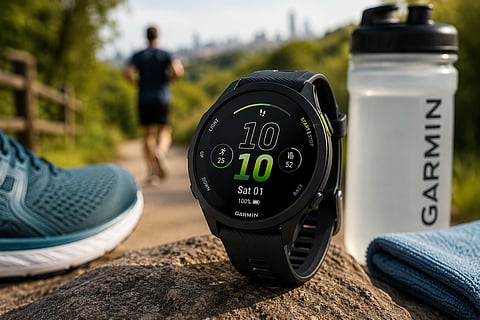
Finding a running watch that delivers meaningful training data without moving into premium pricing is becoming easier, and the Garmin Forerunner 165 is one of the strongest examples. It combines accurate GPS tracking, a bright AMOLED display and Garmin's coaching tools in a package aimed at runners rather than general smartwatch users. The verdict is straightforward: if running is your main sport, this is a better long term investment than many feature packed smartwatches.
Key facts
Best for: Beginner to intermediate runners who want structured training
Bottom line: A focused running watch with reliable GPS, long battery life and practical coaching features that matter more than flashy smartwatch extras.
What you get
The Garmin Forerunner 165 is built around a 43mm lightweight case with a 1.2 inch AMOLED touchscreen and Garmin's familiar five button control system. The touchscreen makes menus easier to navigate, while the physical buttons remain useful during runs when sweaty hands or rain can make touch controls less reliable. The watch is water resistant upto 1 meter and weighs just 39g, making it comfortable enough for all-day wear.
Inside, the watch supports GPS, GLONASS and Galileo satellite systems for outdoor tracking. It records pace, distance, elevation, cadence and wrist based heart rate, alongside training metrics such as VO2 Max estimates, recovery time, race predictions and Garmin Coach training plans. Garmin also includes Morning Report, suggested daily workouts and sleep tracking as part of its broader wellness features, although these should be viewed as general lifestyle information rather than medical measurements.
Battery life is one of its biggest strengths. Garmin rates the watch for up to 11 days in smartwatch mode, with considerably longer endurance than most mainstream smartwatches that typically require charging every day or two. Depending on GPS usage, many users can comfortably get through a week of regular training before reaching for the charger.
The standard model focuses on fitness features, while the Music version adds onboard storage for playlists from supported streaming services.
How it performs
The Forerunner 165 succeeds because it concentrates on the needs of runners instead of trying to replace a smartphone. GPS tracking is generally accurate, pace data is easy to follow during workouts and Garmin Connect remains one of the strongest training ecosystems available for recreational athletes. TechRadar praised the watch for delivering many features previously reserved for more expensive Garmin models, including wrist based running power and Garmin Coach plans, while also highlighting its lightweight design and dependable battery life.
The AMOLED display is another major improvement over earlier entry level Forerunner models. Colours are vibrant, workout screens remain easy to read in bright daylight and navigating menus feels more modern than older memory in pixel displays. Several long term users also report that sunlight visibility remains excellent during outdoor sessions.
For runners in the UAE, battery life and outdoor visibility matter throughout much of the year. Long runs in warm weather become easier when the display stays readable without constantly increasing brightness, while fewer charging sessions mean less chance of discovering an empty battery before an early morning workout.
There are a few features reserved for Garmin's higher end Forerunner models. The 165 does not include multi band GPS or advanced metrics such as Training Readiness and Training Status. Serious marathon runners analysing every aspect of performance may eventually outgrow it, but for most recreational runners those omissions are unlikely to affect day to day training. TechRadar and Wirecutter both position it as an excellent entry into Garmin's running ecosystem rather than a stripped down compromise.
Compared with a typical smartwatch, the difference is clear. An Apple Watch or Samsung Galaxy Watch offers richer app support, voice assistants and communication features. The Forerunner instead prioritises endurance, structured workouts, recovery guidance and dependable GPS performance. If your wrist is mainly there to help you train better, Garmin's priorities make more sense.
What we like
Bright AMOLED display that remains easy to read outdoors.
Long battery life compared with most smartwatches.
Excellent GPS tracking and practical running metrics.
Garmin Coach and training plans provide useful guidance for improving performance.
Who should buy this
The Garmin Forerunner 165 is best suited to runners building consistency, training for races or simply wanting more detailed insight into their workouts than a standard smartwatch provides. It also suits people who value battery life and prefer a lightweight watch that stays comfortable throughout the day.
Those who primarily want messaging, third party apps and broader smartwatch functions may be happier with a traditional smartwatch instead. Likewise, competitive athletes seeking Garmin's most advanced training analysis should consider moving further up the Forerunner range.
Verdict
The Garmin Forerunner 165 strikes an impressive balance between price, performance and usability. It delivers the essentials that matter to runners, accurate GPS, dependable battery life, structured coaching and an excellent display, without adding unnecessary complexity. Garmin has also retained the software features that make its watches valuable long after the initial purchase, particularly through Garmin Connect and its evolving training recommendations.
It is not designed to replace a premium smartwatch, and it does not need to. Instead, it succeeds by staying focused on helping runners train consistently and understand their progress. For anyone looking to buy a dedicated running watch that should remain useful for years, the Forerunner 165 earns its place among the strongest choices available today.
Gulf News earns a commission on purchases made through links in this article, at no extra cost to you. Our editorial team selects products independently.


