Beacon of peace
The UAE stands firm in a troubled region, which makes it attractive to investors from all over the world
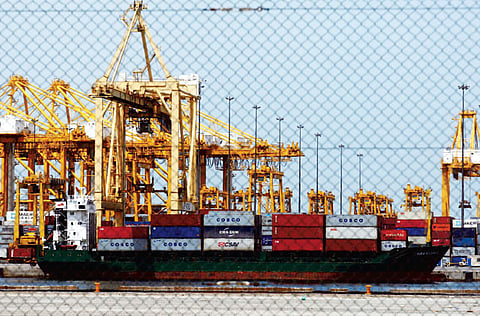
Traditionally, the UAE offers various trade and investment incentives and advantages for international investors. Its strategic location between to European and emerging Asian markets and competitive free zones gives it an edge. Combine that with incentives such as 100 per cent transfer of capital and profits, diverse industries and non-oil sector activities, cheap energy sources, zero profit tax and no personal income taxes, the country indeed provides one of the best business environments worldwide.
According to the Arab World Competitiveness Report 2011-2012, released by Organisation for Economic Co-operation and Development (OCED), “The UAE ranks 27th [in the world], a very good showing given the country’s advanced stage of development. The UAE’s overall competitiveness reflects the high quality of its infrastructure, where it ranks eighth, as well as its highly efficient goods markets (tenth). Its strong macroeconomic stability (11th) and some positive aspects of the country’s institutions such as high public trust in politicians (eighth) and high government efficiency (fifth) round up the list of competitive advantages.”
Reputation as a safe nation
Considering the current scenario in the Middle East, the UAE is also attractive due to its reputation for being a safe investment destination. Political unrest in some parts of the Arab world as compared to the stable environment here leads to a positive outcome for the UAE, which according to experts, makes the nation an exceptional business hub within the Gulf Cooperation Council (GCC). “Apart from political stability, what has also worked for the UAE is an open business environment, technology-enabled services, high response rates on government processes and a fairly transparent business atmosphere,” said Meera Kaul, Managing Director, Optimus Technology & Telecommunications, in an email interview with GN Focus.
However, for some international investors like Gavin Smith, Area Manager of finance investment company PIC, the UAE is not without its challenges. “Despite recent reclassifications by some international asset management firms, the UAE is still a frontier market in our opinion. Like many frontier markets, it is a little more opaque, has lower trading volumes and presents common challenges that any immature country has,” he said.
At the Abu Dhabi & Mumbai Investment Forum 2011 held in India this October, the Chairman of the Abu Dhabi Department of Economic Development, Nasser Ahmad Al Suwaidi, deliberated on reports that rated Abu Dhabi as the second most attractive hub for FDI in the Middle East in 2010 with total investments amounting to about $2.7 billion (about Dh9.93 billion), and this despite a significant decline in global FDI levels over the past two years.
In an address delivered on his behalf by Mohammad Thani Murshed Gannam Al Rumaithi, Chairman of Abu Dhabi Chamber of Commerce and Industry, Al Suwaidi said, “In view of the economic and political instability and regional responses to economic change in Western Europe and elsewhere, friendly nations should come even closer through strategic partnerships.”
Opportunities for investors
Dubai is home to the Arabian Peninsula’s first urban train network and it ranks nine on the MasterCard Index of Global Destination Cities in terms of spending and 18 in international visitors’ spending. The latest figures show that the RAK Investment Authority (RAKIA) licensed 800 new companies in the first eight months of 2011, a 31 per cent increase from the same period last year and there are still several projects that private companies can bid for. The Dh40 billion UAE-wide Etihad Rail network is likely to spur investment when its freight-only first stage becomes operational by 2013, with a second stage that includes passenger transport to follow.
According to the World Bank report, published in October 2011, the UAE improved its global ranking by two notches to reach 33 this year. The report by the World Bank and the International Finance Corporation (IFC), Doing Business 2012: Doing Business in a More Transparent World, assesses regulations in 183 economies and ranks the economies in 10 areas of business regulation.
Political stability aside, the gain has also come from a sustained, long term effort. And as Ali Adou, Vice-President and Portfolio Manager, The National Investor, told GN Focus, “For the past decade the UAE has been one of the most preferred countries for investment in the Middle East and North Africa region. Being a hub for industries such as logistics, media and finance, the UAE has provided boundless opportunities to both regional and international investors.”
The country has also successfully diversified the economy which in turn has helped weather the global financial crisis. The country has become less dependent on natural resources as a source of revenue and currently non-hydrocarbons sectors such real estate, logistics, tourism and multi-industry companies constitute around 66 per cent of the county’s GDP. Experts have also said that the UAE can take advantage of its strong position to become a hub for the BRIC (Brazil, Russia, India, China) countries currently enjoying global spotlight.


