Oura Ring 5 UAE price revealed: Inside the world’s smallest smart ring, features and full breakdown
Should you upgrade or stick to the Oura Ring 4?
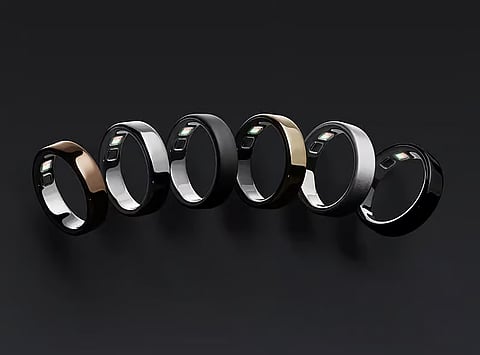
Oura has officially unveiled its next-generation smart ring, and the headline feature is hard to miss: It’s now the world’s smallest smart ring. The Oura Ring 5 trims down the bulk of previous models while quietly upgrading its health-tracking ambitions, especially around cardiovascular and metabolic insights.
Here’s a clear breakdown of pricing, availability, and what’s actually new.
UAE pricing, launch date, and availability
Despite the redesign, pricing for the Oura Ring 5 remains unchanged from the previous generation. The base finishes, which include Silver and Black, are priced at Dh1,599, while the premium finishes, Gold, Stealth, Brushed Silver, and Deep Rose, come in at Dh1,999.
The familiar subscription model is still very much part of the experience. Full access to health insights continues to sit behind a membership priced at Dh29.99 per month or Dh269 per year. Without it, users are limited to more basic, surface-level metrics.
In terms of rollout, pre-orders opened on 1 June 2026, with shipping and retail availability set to begin from 4 June 2026.
Oura Ring 5 vs Oura Ring 4: What actually changed?
On paper, the Oura Ring 5 and Ring 4 may look similar in purpose, but under the hood the hardware has been significantly refined. The Ring 5 is around 40 per cent smaller, with a noticeably slimmer profile and smoother interior, compared to the bulkier design and raised sensor domes of the Ring 4.
It also introduces 12 optimised signal pathways, upgrading from the standard sensor setup of the previous generation, along with improved real-time activity tracking versus the Ring 4’s more retrospective approach. Despite these changes, battery life remains largely the same at up to one week on both models. At the core of Oura’s design philosophy is still the advantage of the finger itself, which delivers a stronger pulse signal than the wrist, reinforcing why the ring form factor continues to be central to its accuracy claims.
What’s new under the hood
The Ring 5 is being positioned more like a proactive health companion than a passive tracker.
1. Health radar (cardiovascular strain tracking)
Built with input from medical researchers, this feature monitors long-term trends in:
Nighttime blood pressure signals
Respiratory patterns over a rolling 30-day window
It’s designed to flag subtle shifts that could indicate cardiovascular stress, especially during sleep when external factors are minimal.
2. GLP-1 insights (metabolic tracking)
Rolling out in the UAE from 4 June 2026, this feature is aimed at users on GLP-1 medications such as Ozempic or Mounjaro. It combines:
Medication tracking
Dosage schedules
Side-effect logging
Weight and biometrics
All of it sits alongside sleep, stress, and readiness scores for a more complete metabolic picture.
3. Expanded women’s health tools
Updates include:
Menopause insights: A structured symptom scale linked to sleep and mood changes
Hormonal birth control tracking: Better cycle mapping across different contraceptive methods
Should you upgrade?
Worth it if:
You’ve found previous smart rings too bulky. The reduced size alone changes the wearing experience significantly, especially for all-day use.
Probably skip it if:
You already own an Oura Ring 4 and mainly use it for sleep and basic activity tracking. Most software updates will still reach older models, so the upgrade is more about comfort and live tracking than necessity.


