Meet Lego’s Smart Brick: Tiny, powerful, and fits inside a regular brick
The new Smart Play system adds sound, motion and reactions without screens
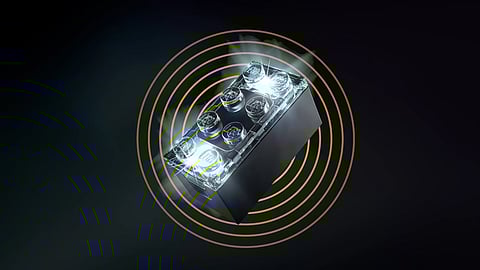
Dubai: Lego has just unveiled what it's calling the biggest innovation in nearly 50 years, and honestly, it looks impressive. At CES 2026 in Las Vegas, the toy giant showed off its new Smart Play system, which essentially turns ordinary Lego creations into interactive, responsive experiences without needing a screen.
The centrepiece: A tiny computer that fits entirely inside a standard 2x4 Lego brick. Yes, you read that right. All the tech packed into something smaller than your thumb.
What actually makes it smart?
Available for pre-order from January 9th and launching on March 1st, the Lego Smart Play system includes three interactive elements: Smart Tags, Smart Bricks, and Smart Minifigures. According to Julia Goldin, chief product and marketing officer of the Lego Group: "For over 90 years, the Lego Group has sparked imagination and creativity in children around the globe. As the world evolves, so do we, innovating to meet the play needs of each new generation. Lego Smart Play is the next exciting chapter in our Lego System in Play."
These Smart Bricks are packed with sensors including accelerometers, light sensors, and sound sensors. They've also got a miniature speaker with an onboard synthesiser and wireless charging. The computer inside is a custom chip that's smaller than a single Lego stud and can be updated via a smartphone app.
What does all that tech actually do? Well, at the CES demo, Lego cars revved their engines, a Lego duck quacked and even snored when placed on its side, and a Lego aeroplane pilot exclaimed "woah!" when flipped upside down. When multiple Smart Bricks were added, they created what Lego calls a "decentralised network" of interactivity between different characters and creations.
How it actually works
The Smart Bricks can detect colours, sounds, direction, and distance. They connect to each other via Bluetooth mesh network, so they're aware of each other's position and orientation. In one impressive demo, two kids raced their Lego cars to see who could reach the trophy first. The trophy, equipped with a Smart Brick, was able to tell which car won the neck-and-neck race by displaying the winning car's colour. When the winning vehicle was placed on top, the Smart Bricks flashed and fireworks sounds crackled through the tiny speakers.
The bricks also have a microphone, but before you panic about privacy, Lego spokesperson Jessica Benson explains it's used as a virtual button rather than recording anything. "I've seen it where you blow on it, if you put it on a birthday cake, for instance, it makes things happen. It's very much used as another sensor point, it's not recording any details, it's just picking up those inputs that are to do with sound and reacting in real time to what the kids are doing with it."
There's no AI in this product at all, Benson confirms, and no camera either.
Not your typical electronic Lego
These Smart Bricks aren't like the huge Lego Mario toys that required two AAA batteries and mostly only activated when their bottom-mounted cameras detected colour or barcodes. They're wirelessly charged, with a pad that can charge multiple bricks at once, and the battery will still perform after years of inactivity.
Lego says the new platform features more than twenty patented world-firsts. The Smart Bricks and Minifigures are the same size and shape as standard Lego pieces, which means they integrate seamlessly with your existing collection.
Star Wars launches the system
To kick things off, Lego partnered with Disney to announce three Star Wars sets launching on March 1st.
The sets include a $70 Darth Vader's TIE Fighter (473 pieces) with one Smart Brick, one TIE Fighter Smart Tag, and one Darth Vader Smart Figure. There's a $100 Luke's Red Five X-Wing (584 pieces) with one Smart Brick, five tags, and both Luke and Leia Smart Figures. And finally, a $160 Throne Room Duel and A-Wing set (962 pieces) with two Smart Bricks, three figures including Luke, Emperor Palpatine, and Vader, plus five tags.
The interactive features include humming lightsabres, roaring engines, light-up blasters, and the music of Star Wars. When you sit Emperor Palpatine on his throne, The Imperial March plays. When built into Lego cars, the bricks can detect which one crosses a finish line first, or change from engine noises to crashing sound effects if the vehicle is flipped over.
What's next?
It's highly unlikely they'll stop at a few Star Wars sets. The Lego Group is calling the new computer bricks "the most significant evolution in the Lego System-in-Play since the introduction of the Lego Minifigure in 1978." There are unconfirmed rumours that upcoming Lego Pokémon sets will be next to get them, and the company already quietly piloted them in 2024 in a Lego City set.
Lego spokesperson Jack Rankin suggests the tags can lead to more creative forms of mix-and-match play. When kids tried an early Smart Tag that quacked like a duck and combined it with a helicopter set, they enjoyed having a duck helicopter.
The company writes: "Lego Smart Play will continue to expand through new updates, launches and technology."
So there you have it. After 90 years of encouraging kids to use their imagination for sound effects, Lego is now doing some of the work for them. But with enough tech packed into these tiny bricks, this could genuinely transform how kids play with Lego. Whether that's brilliant innovation or unnecessary tech inclusion, parents will decide when the sets hit shelves this March.
Areeba Hashmi is a trainee at Gulf News.