Samsung Galaxy S26 Ultra: Why the new camera is actually a massive upgrade
Fewer megapixels on paper, faster and sharper photos in reality
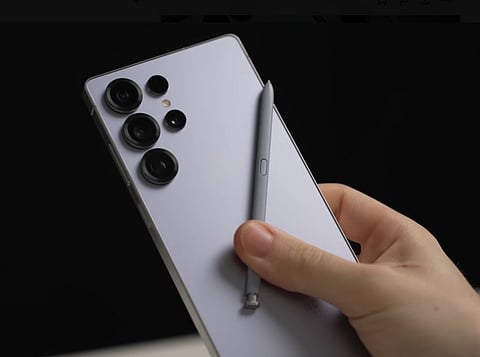
Dubai: On paper, Samsung's latest flagship appears to have taken a step backwards with its zoom camera. In reality, it has done something far more clever. Here's what's actually going on and why it matters for your photos.
The number that looks wrong
When the Galaxy S26 Ultra's camera specs started circulating online, one detail caught people's attention immediately. The new 3x telephoto camera, which handles medium-range zoom shots, appeared to have fewer megapixels than before. Going from 12 megapixels down to 10 megapixels sounds like a downgrade, and on the surface it's easy to see why people were concerned.
But the number tells only part of the story, and the part it leaves out is actually the most interesting bit.
What Samsung actually did
Samsung is using a sensor called the ISOCELL 3LD, which is natively a 12-megapixel sensor. Think of a sensor like a canvas. The full canvas measures 12 megapixels, but Samsung has chosen to use only the central 10 megapixels for capturing your actual photo.
Why would they do this? The centre of any camera sensor is where image quality is cleanest and most consistent. By focusing on that central sweet spot and ignoring the outer edges, Samsung is choosing quality over quantity.
Here's where it gets interesting. Despite using only 10 megapixels to capture, the phone still delivers a 12-megapixel final image through a process called multi-frame fusion, where the camera rapidly takes multiple shots and intelligently combines them.
Think of it like a chef reducing a sauce: you start with more than you need, concentrate it down to the best bits, and then build it back up into something richer and more refined.
The real upgrade: Speed and intelligence
The megapixel conversation is actually a distraction from what Samsung has genuinely changed. The real breakthrough is something called a three-stack architecture, and it is a significant engineering achievement.
Traditional camera sensors capture an image and then send that data off to be processed separately. There is a tiny but meaningful delay in this journey, and during that delay things can go wrong: your subject moves, light changes, and the resulting image looks blurry or distorted.
The ISOCELL 3LD solves this by building memory, specifically DRAM, directly into the sensor itself. Think of DRAM as the sensor's own short-term storage. By placing it inside the sensor, the camera grabs and holds an image almost instantaneously before anything has a chance to move or change. This is particularly valuable when shooting portraits at zoom range, where even slight camera shake can ruin a shot.
What this means for your photos
The practical benefits show up in several ways you will genuinely notice.
First, there is significantly reduced rolling shutter. This is that unpleasant effect where fast-moving objects appear warped or wobbly in photos, like a spinning propeller that looks bent rather than circular. The integrated memory captures the entire frame so quickly that motion is frozen cleanly instead.
Second, the stabilisation at 3x zoom is described as gimbal-like. A gimbal is a mechanical device used by professional photographers to keep cameras steady whilst moving. Achieving that smoothness purely through sensor design and software, without any moving parts, is genuinely impressive.
Third, the camera pairs with the Snapdragon 8 Gen 5 processor, which contains a dedicated AI ISP. An ISP, or Image Signal Processor, is essentially the brain that turns raw sensor data into a finished photograph. The AI version makes thousands of micro-decisions about colour, brightness and sharpness in real time, producing results a traditional processor simply cannot match.
So in short terms this means:
Zoomed-in portraits will look sharp, smooth and steady, even if your hands aren't perfectly still
Fast-moving subjects such as children, pets or sports action will appear crisp and frozen rather than blurred or distorted
Low-light zoom shots will retain more detail and less grain, thanks to the faster data processing between the sensor and the processor
Videos at 3x zoom will feel smooth and professional, closer to footage shot on a stabilised camera rig than a handheld smartphone
Colours and contrast will look balanced and natural even in tricky lighting, with bright skies and darker foregrounds both rendered clearly in the same shot
Shutter response will feel almost instant, meaning the photo you get is the moment you actually intended to capture, not a split second too late
Samsung's S26 camera: The verdict
What Samsung has built is a zoom camera that prioritises speed and intelligence over raw size. Rather than simply cramming in more megapixels, the company has engineered a system where the sensor, memory and processor work together as one tightly integrated unit.
The benefits are faster shooting with virtually no shutter lag, cleaner zoom portraits, better handling of bright and dark areas in the same shot, and consistently sharp results across all three cameras.
So whilst the spec sheet might make it look like Samsung took something away, what it actually did was rebuild the whole philosophy from the ground up. Sometimes fewer megapixels, in the right hands, produces better pictures than more.
However, the upcoming Samsung Unpacked event will let us test out the phone and see if the reports and specs match up to the hype so far.
Areeba Hashmi is a trainee at Gulf News.