iPhone Duo is Dh8,499, Samsung TriFold was Dh11,999: How much is too much for a foldable?
Dh8,499 iPhone Duo: The real cost of owning Apple's first foldable phone
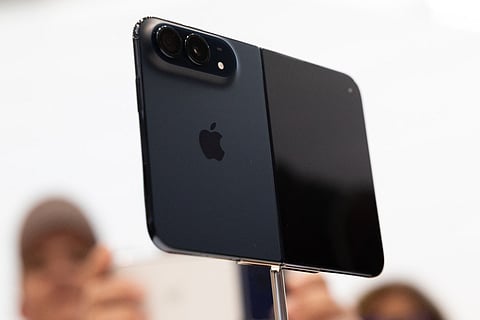
Dh10,000 used to be the price of a decent used car deposit or a top-spec laptop. And now, it is roughly what many people will spend on a phone.
Apple's first foldable, the iPhone Duo, goes on pre-order on October 16, at Dh8,499 for the base model and Dh13,599 for 2TB. Add the extras most buyers end up with and the realistic bill clears Dh10,000 before the phone leaves the shop. Ten months ago, Samsung tested the same territory with the Dh11,999 Galaxy Z TriFold. It was discontinued.
So is there a ceiling on what people will pay to fold a screen? The evidence so far says yes, but not where you would expect: buyers keep paying more for foldables, while manufacturers are the ones finding the limit.
iPhone Duo: The Dh8,499 phone that can cost more than Dh15,000
The iPhone Duo starts at Dh8,499 in the UAE, but that is just the price of the phone itself. Add a case, a charger and protection for its folding screen, and the total can quickly climb past Dh10,000.
For Dh10,167, buyers can get the 256GB model, a Dh319 case and AppleCare+ coverage for two years, which costs Dh1,349. A more fully equipped setup, including a Dh529 Folio, AppleCare+, a Dh169 charger and a Dh199 MagSafe accessory, brings the total to Dh10,745.
Those who want the most storage will pay considerably more. The 2TB model, with the same accessories and protection, costs Dh15,845.
Storage upgrades account for a significant part of the increase. Moving from 256GB to 512GB costs an additional Dh850, while upgrading to 1TB adds Dh1,700 and choosing 2TB adds Dh2,550.
Apple does not include a charger in the box, so that is another expense to factor in. AppleCare+ also adds to the overall cost, particularly for buyers concerned about potential repair bills for a folding screen. Apple has yet to publish an out-of-warranty repair price for the device.
So, what do buyers get for the money? The iPhone Duo has a 7.6-inch inner screen that opens up for a larger viewing area, alongside a 5.4-inch outer screen for everyday use. It runs on Apple's A20 Pro chip, has a titanium frame and offers IP68-rated dust and water resistance. Its iOS 27 software has also been adapted for the folding design.
There are trade-offs, however. At 254g and 11.3mm thick when folded, the phone is relatively heavy and bulky. It also lacks a telephoto camera, which may disappoint buyers expecting a versatile camera system at this price.
For UAE shoppers, the question is not simply whether the iPhone Duo is worth Dh8,499. It is whether its larger screen and folding design justify spending Dh10,000 or more once the extras are included.
Foldable phones are getting more expensive
Foldables are already expensive, yet forecasters expect them to get pricier still. That sounds odd, but it is mostly about which foldables people are buying.
There are two types. Flip phones, which fold in half like a compact, are getting cheaper as more brands make them. Book-style phones, which open into a small tablet like the iPhone Duo, Galaxy Z Fold8 and TriFold, stay at the top of the market. More buyers are now choosing the book style, so the average price goes up even if no single phone gets dearer.
The numbers reflect this:
Higher average prices. Counterpoint Research expects the average foldable to sell to retailers for $1,485 (about Dh5,450) in 2026, up 18% on last year. That is a wholesale figure, so shop prices are higher.
More premium models. Phones above $1,600 are expected to make up 60% of foldable sales this year, up from about one in three in 2025. The rest are mostly cheaper flip phones, which keep the average lower.
More buyers, not fewer. DigiTimes expects foldable sales to grow about 20% in 2026.
Two other factors push prices up. Apple's arrival at $1,999 lifts the average on its own, and it brings iPhone owners who had no foldable option before. And memory chips have become more expensive this year, a cost manufacturers are passing on, according to9to 5Google.
Prices and sales can rise together because foldable buyers are a fairly small, well-off group. They choose these phones for the big screen and multitasking, not because they are good value.
What the forecasts don't show is how much the average UAE shopper will pay. Here, the Duo faces cheaper rivals: Samsung's Galaxy Z Fold8 lists at Dh7,199 and sells through marketplace sellers from about Dh5,380, roughly Dh3,000 below the Duo. Choosing between them is about more than price, though: screens, cameras, software, repair costs and how you plan to use the phone all matter.
The TriFold: How far can foldable phone prices go?
Samsung's Galaxy Z TriFold offered a glimpse of how much buyers might be willing to spend on a foldable phone. It launched in the UAE on December 19, 2025, at Dh11,999 for a 16GB/512GB model, around Dh3,500 more than the base iPhone Duo.
The price did not appear to deter early buyers. The first batch sold out within a day, followed by another limited release in January 2026. The TriFold stood out for its design and features, including:
A 6.5-inch outer screen that unfolds twice to reveal a 10-inch display.
Support for running three apps side by side, along with Samsung DeX for a desktop-style experience when connected to a monitor.
A 5,600mAh battery, a 200MP main camera and 45W charging.
A weight of 309g and IP48 protection against dust and water. Repairing its inner screen could cost about $1,120 to $1,240, or roughly Dh4,100 to Dh4,550, although Samsung offered a one-time 50 per cent discount on the repair.
However, the TriFold's run was short-lived. In March 2026, Samsung confirmed plans to stop selling the device once existing stock ran out according to Bloomberg, around three months after its launch. While demand appeared strong, high production costs, compounded by rising memory prices, reportedly made the device difficult to sell profitably. Early batches were also limited, reportedly numbering around 3,000 units each, according 9to5google.
The TriFold's brief run highlights a challenge for the foldable phone market: strong interest does not necessarily make an expensive device commercially sustainable. It also raises a question for manufacturers such as Apple: how much are buyers prepared to pay for a phone that offers something beyond the conventional smartphone?
So, where should buyers draw the line?
There is no single price that will feel reasonable to everyone. Someone who uses a larger screen every day for work, reading or entertainment may see the benefit. Someone who mainly messages, browses social media and takes photographs may not.
There are a few questions worth asking before spending Dh10,000 or more:
Will I use the larger screen regularly? If most of your phone use involves calls, messages and social media, the extra space may not make much difference.
Am I paying for features I actually need? More storage and accessories can push up the bill, but not everyone needs the highest-capacity model or every add-on.
Have I considered repair costs? Folding screens can be expensive to replace, so check the warranty and available protection before buying.
Would a regular phone and tablet cost less? Compare the total cost of both options rather than looking at the phone's price alone.
The iPhone Duo and Samsung TriFold show how far phone makers are willing to push design and pricing. Whether buyers follow will depend on how much they value the convenience, and what they are willing to give up to pay for it.
For anyone considering the iPhone Duo, the starting price of Dh8,499 is only the beginning of the calculation. The more important question is whether the folding design will make enough difference to everyday life to justify spending more.


