How former cricketer Arun Lal helped a laundryman’s son become a successful corporate leader
Lal and his family played a crucial role in helping Bikash Chowdhury
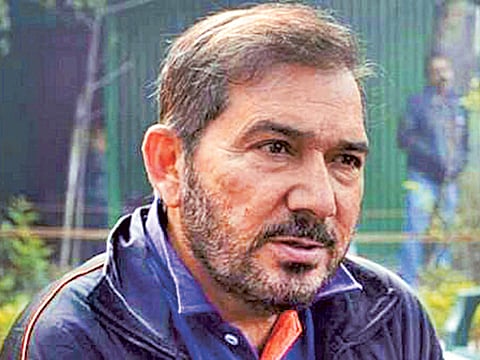
Former India cricketer Arun Lal may not have had a long international career, but his impact on Indian cricket – and on one young boy’s life – extends far beyond his playing days.
Lal scored more than 10,000 runs in domestic cricket before becoming a popular cricket commentator and later coaching Bengal to the Ranji Trophy final in 2020. He also battled a rare form of jaw cancer after being diagnosed in 2016. But perhaps one of his most meaningful innings was played away from the cricket field.
Crucial role
Lal and his family played a crucial role in helping Bikash Chowdhury, the son of a Kolkata laundryman, overcome poverty and build a successful career in corporate India.
Chowdhury grew up in Bhawanipore, Kolkata, in extremely difficult circumstances. His father ran a laundry stall on the pavement, while the family lived in a small hut beside it.
He was the first in his family to attend an English-medium school, but speaking English was a challenge. His father’s work brought him into contact with the family of Arun Lal, and Lal’s first wife, Debjani, began helping the young Chowdhury with his English.
There was also a simple incentive that made the 12-year-old look forward to his lessons – orange squash.
“I would go every day to study because she would give orange squash,” Chowdhury later recalled.
Lifelong relationship
What began as English tuition soon developed into a lifelong relationship. The Lals, who did not have children, took Chowdhury under their wing and became his second family.
Chowdhury continued his education, completing his BCom and MCom before appearing for the CAT examination. In 2000, he secured admission to IIM Calcutta.
The journey was not easy. He struggled with mathematics during his early days at IIM and needed help from seniors and friends. But he persevered.
Professional footballer
Sport had also been a major part of his childhood. Chowdhury played football for Young Bengal and represented Bengal at the sub-junior level. He even considered becoming a professional footballer.
Lal encouraged him but warned that there were no guarantees in sport. That advice prompted Chowdhury to focus more seriously on academics.
After IIM, he entered the world of finance, working with Deutsche Bank and Credit Agricole, including a stint in London. When he was laid off by Deutsche Bank in 2008, his resilience came to the fore. He immediately called Lal and Debjani to reassure them that he would find another job.
Within a week, he had joined Credit Agricole. Today, Chowdhury is a senior employee at JSW Steel.
Offering gratitude
But he has never forgotten the people who helped him get there.
“I have two sets of parents – Mr Arun Lal and Mrs Lal and my biological parents,” Chowdhury said.
His gratitude has extended beyond words. He gifted the Lals a Mercedes, helped them financially when they wanted to move into a bungalow and even named his daughter Arunima after Arun Lal.
Lal, too, considers Chowdhury family. “We gained a son. He is a terrific human being and I am grateful to the Lord for Bikash,” he once said.


