Why stability remains the UAE’s most enduring foreign policy principle
Restraint, pragmatism and long-term vision guide the UAE’s global approach
Turbulence often dominates the headlines across the Middle East, but these reports capture only part of the story. Political divisions, humanitarian crises, and fragile trade routes create enduring challenges that demand measured, principled action. The true test of foreign policy, then, is not in immediate reaction, but in the deliberateness and persistence of strategy. Stability, as the United Arab Emirates understands, is not granted by circumstance. It is carefully constructed through consistent principles, measured restraint, and a clear national vision.
This focus on long-term stability is grounded in the UAE’s own transformation. From small pearling and fishing communities, the country has grown into a globally connected economic and diplomatic actor. Diversification, infrastructure investment, and social cohesion have provided the foundation for a foreign policy that is outward-looking, pragmatic, and designed to manage uncertainty rather than amplify it. By turning geographic advantage into strategic capability, the UAE has positioned itself at the crossroads of global connectivity, linking Asia, Africa, and Europe through logistics, ports, and aviation networks.
Respect for sovereignty
Decades of development and regional engagement have shaped the UAE’s diplomatic outlook. These principles emphasise respect for sovereignty, rejection of extremism, adherence to international law, and preference for negotiated political solutions. They are not abstract ideals. They guide the UAE’s engagement in moments of crisis, favouring dialogue and de-escalation while remaining aware of the risks posed by state fragility and ungoverned spaces. This framework has enabled the UAE to act as a stabilising force, balancing diplomacy with preparedness for security challenges.
The UAE has consistently invested in preventing crises from escalating, while also responding efficiently, and with allies, when they do occur. Historical experience underscores this approach, demonstrating that diplomatic engagement is operational, not symbolic. The UAE has participated in peacekeeping efforts in Lebanon and joined the international coalition to liberate Kuwait in the early 1990s, contributing military personnel as part of a broader multinational effort. During the 1990s, UAE forces were also involved in multinational operations in Somalia under UN-led missions, providing humanitarian and security assistance, supporting capacity-building efforts, and operating in challenging environments to help stabilise the region.
Diplomatic challenges
More recently, the UAE has applied this operational mindset to complex diplomatic challenges, including sustained mediation efforts between the Russian Federation and Ukraine. Since 2024, the UAE has facilitated multiple prisoner exchanges between the two countries, with cumulative numbers exceeding 4,300 released through these initiatives, reflecting the trust both sides place in the UAE as a constructive interlocutor.
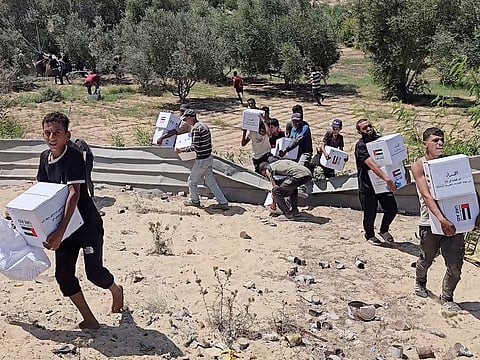
Humanitarian action has remained a parallel pillar of this strategy, reinforcing the UAE’s commitment to alleviating suffering irrespective of geography. According to the United Nations Office for the Co-ordination of Humanitarian Affairs, the UAE was ranked as the third-largest global donor in 2025, contributing approximately $1.46 billion in humanitarian assistance, representing over seven per cent of all tracked aid. A significant share of this assistance has supported populations affected by conflict, including Gaza, Sudan, Syria, Ukraine, and Afghanistan. Since the outbreak of hostilities in Gaza in 2023, the UAE has provided a significant share of international aid, delivering tens of thousands of tonnes of supplies via land, sea, and air routes, evacuating patients for medical care, and operating field and floating hospitals. Beyond these crises, UAE agencies deliver essential support, including food, shelter, clean water, and healthcare, to over 100 countries, often in partnership with United Nations agencies and other international organisations, demonstrating a sustained commitment to protecting civilian populations and enabling recovery.
Promotion of trade and investments
Economic diplomacy and the promotion of trade and investments are also cornerstones behind the UAE’s foreign policy engagements. In 2024, the UAE’s non-oil foreign trade reached a record Dh2.997 trillion, significantly outperforming global trends, while foreign direct investment reached Dh130 billion, ranking first regionally and 11th globally. These figures reflect an economic model built on openness, resilience, and connectivity, reinforcing predictability in a volatile region.
Comprehensive Economic Partnership Agreements (CEPAs) extend the UAE’s focus on economic prosperity and growth. Agreements with India, Indonesia, Türkiye, and ongoing negotiations with the European Union reduce barriers, attract investment, and deepen interdependence. The UAE–India CEPA alone has contributed to bilateral trade approaching $100 billion since its implementation, highlighting how structured economic engagement can foster stability and create shared interests across regions.
Artificial intelligence
Forward-looking initiatives such as artificial intelligence also support the UAE’s approach to uncertainty. The national AI strategy aims to integrate AI across key sectors while establishing regulatory and institutional foundations, with projections suggesting a contribution of up to $96 billion to the economy by 2030. The UAE joined the US-led Pax Silica alliance to bolster and secure AI and semi-conductor supply chains in January and is investing internationally in AI technologies as it prepares for the future.
A clear understanding of the UAE’s national interest underpins its approach. The UAE’s direction is defined by clarity of purpose, not by alignment for its own sake. The UAE integrates economic development, social wellbeing, and global partnerships in its approach. Rooted in openness, diversity, and sustainability, it reinforces both domestic resilience and international credibility, ensuring that stability remains a consistent priority domestically and regionally.
No policy can eliminate risk and uncertainty entirely, but the UAE’s experience demonstrates that a measured response to instability matters. By grounding its foreign policy in principle, evidence, and pragmatism, the UAE shows that prioritising stability is a deliberate choice. Diplomacy, humanitarian action, economic engagement, and strategic innovation work together to sustain this principle, even as the region remains unsettled.
Dr Mohammed Ibrahim Al Daheri is Deputy Director-General, Anwar Gargash Diplomatic Academy (AGDA)


