Yemen: Wisdom over noise in times of regional crisis
Why the UAE’s approach to Yemen reflects strategic restraint and foresight
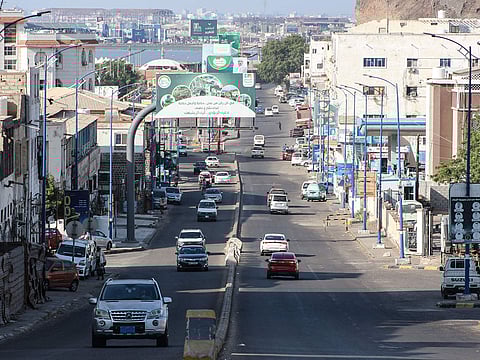
The UAE’s wisdom is clearly reflected in the political and media discipline that accompanied the decision by the UAE leadership to withdraw from the Yemeni file. This discipline and stance do not represent a momentary or circumstantial position; rather, they convey multiple wise, rational, intelligent, and refined messages — deep in both timing and significance.
The UAE’s calm, non-reactionary strategy in addressing the Yemen crisis is based on prioritising wisdom, prudence, intelligence, stability, political solutions, and counterterrorism. It reflects a shift from direct military engagement toward supporting political solutions and backing the efforts of allied parties, particularly Saudi Arabia, while emphasising the primacy of dialogue and mutual understanding among Yemeni brothers to establish sustainable security.
The UAE’s approach to the Yemen crisis carries numerous implications and sends more than one clear, unambiguous message, underpinned by strategic vision and substance. It is grounded in rationality, continuous dialogue, political consensus, avoidance of populism, and resistance to media noise — especially the clamour and mob-like behaviour prevalent on social media. Political and military decisions are not crafted in the rooms of social media platforms.
The primary message
The foremost of these messages is the affirmation of the wisdom of the historic decision to withdraw our forces from Yemen in order to avoid a reckless and senseless confrontation with an ally. This reflects a mature reading of potential escalation paths and a prioritisation of regional stability over emotional reactions or stubbornness. It demonstrates a firm understanding that disagreements among allies — no matter how complex — are not managed through zero-sum confrontations, but through reason, responsibility, and self-restraint. Wisdom, in any political decision, must prevail over impulse.
The wise approach chosen by the UAE in dealing with developments in Yemen — consistent with its conduct in facing various crises and challenges — falls within the broader philosophy and policy of the UAE toward Yemen, aimed at supporting security, peace, stability, dialogue, reconstruction, growth, and development.
This policy is manifested on the ground across liberated Yemeni cities through development and humanitarian projects spanning health, education, security, water, infrastructure, and the economy, through which the UAE has left enduring and visible imprints.
In a step reflecting the country’s commitment to sustainable development, the UAE allocated $1billion last November to support Yemen’s energy sector. Yemen’s renewable energy sector has witnessed a qualitative leap thanks to projects implemented by Emirati companies, including the Aden and Shabwa power plants, which are expected to provide clean electricity to more than one million homes in the coming years.
The UAE’s continued support for the health sector has also driven significant humanitarian and developmental progress, alleviating citizens’ suffering and providing a wide range of medical services free of charge.
Education and health
Out of its conviction in the importance of education, health, and youth in building the nation’s future, the UAE has focused on restoring the education system to its former state after most schools and educational facilities were destroyed by the Houthis. In recent years, a number of schools have been inaugurated with Emirati support as part of ongoing relief efforts for Yemen’s education sector, in pursuit of national recovery and the advancement of future generations.
These efforts were crowned by the adoption, at the conclusion of its 57th session in October 2024, of a resolution by the Human Rights Council — submitted by the UAE on behalf of the Arab Group — on “Providing Technical Assistance and Capacity-Building for Yemen in the Field of Human Rights.” This step embodies the international community’s confidence in the UAE and its efforts to support human rights in the region and worldwide.
Populism: A lack of political intelligence
Within this wise framework, and since the emergence of the dispute — when the other allied party shifted from prudence and wisdom to populism — the UAE chose to confront the absence of political intelligence with calmness and a far-sighted strategic vision. It addressed the situation with political maturity, first clarifying facts in an official statement before taking a courageous decision that uprooted discord at its source and refuted any falsehoods or fabrications directed at the UAE.
One of the key principles distinguishing UAE policy is the recognition that the initial euphoria of any political decision is quickly followed by an awareness of burdens, multiple and intersecting pathways, complex entitlements, and deeper entanglement in the Yemeni file after a difficult decade. There are no easy options, and bypassing a sincere ally would be politically, economically, and media-wise costly — leading only to further complication of the crisis rather than its containment.
In parallel, the UAE has confronted the fierce political campaign against it with high professionalism, relying on its extensive and influential network of external relations. This network fully understands that the UAE represents a successful Arab and Middle Eastern model built on development, moderation, and openness — far removed from ideological rhetoric, extremism, and the economic and developmental failures that plagued the region for decades. This political and diplomatic capital was not built in a day or through a passing crisis; it is the result of a long trajectory of consistency between word and deed, guided by a rational, calm strategy, an ambitious vision, and diligent work.
The UAE: Media maturity and steadfast positions
In this context, the UAE is credited with its media maturity and the steadiness of its discourse, particularly in the face of a reckless and immoral campaign grounded in false rumours, ambiguous narratives, and the unscrupulous use of modern technologies to produce deceptive content that quickly reveals its emptiness before public opinion. Although the number of Emirati voices on social media is relatively small compared to the opposing mobilisation that occupied Twitter in an orchestrated campaign of verbal attacks against the state, the dignity and consistency of the UAE’s media discourse are not weaknesses; they are genuine assets that must be preserved in this crisis and in all crises. Holding the moral high ground is essential in any debate — and this is the UAE’s natural position.
This does not, by any means, imply complacency or refraining from reviewing our media performance. On the contrary, reassessing the experience, drawing lessons, and strengthening the UAE’s narrative are priorities, especially amid attempts by various parties to attach negative narratives to the UAE’s role and positions. However, this reinforcement must remain an extension of our ethics and values, because when media detaches from ethics, it may win a round but ultimately loses the battle in the long term.
As one examines the many files used to attack the UAE, their sheer number and diversity reveal the depth of the sense of inferiority felt by some in the face of the UAE’s success. The country is accused of economic success, social openness, religious moderation, and respect for residents. From attacks on Jebel Ali factories, to allegations of being a gold hub, to leadership in clean energy, sovereign investment funds, the judicial system, a successful record in port management, regional influence, and international relations — an extensive list of toxic criticism accumulates, explainable only by our success and their failure, our performance and their shortcomings.
Excess in hostility is not new
Crises in the Gulf and among its states are not new, nor is excess in hostility a recent phenomenon. Yet the region remains our geographic, historical, and social space. As crises begin to recede and find resolution, the UAE’s steadfastness, reason, and wisdom will become evident. History will record that it did not sink into the mire as others did, but stood firm on solid ground, adhering to the mindset of statehood, ethics, and responsibility.
Wisdom in this crisis calls for prioritising collective responsibility over escalation, adventurism, populism, media noise, and the opening of social media megaphones to stir discord and spread rumors and falsehoods. Herein lies the UAE’s elevated policy and its wisdom in distancing itself from political folly when making decisions.
The UAE has proven that success is not accidental; it is the product of a balanced strategic vision, wise crisis management, and sound policies rooted in the values of justice, tolerance, and support for stability. It is therefore unsurprising that the UAE becomes a target for those unable to create success and who resort to noise, clamour, and populist reactions during times of crisis.
Ultimately, the truth remains clear to those who read reality with wise, rational, and fair eyes: the UAE has been, and continues to be, a cornerstone of regional stability — across the Gulf, the Arab world, and even internationally. Its role in Yemen will remain a bright mark in its humanitarian and political history. Positions are measured by outcomes, and outcomes testify that the UAE chose the path of construction over destruction, reason over impulse, and truth over pretense.
If heritage once said that wisdom is Yemeni, today’s political reality confirms that wisdom is Emirati — measured by decisions, not by noise.


