Four years on, January 17 stands as a test the UAE passed
Unity, leadership and diplomacy turned a terrorist attack into national strength
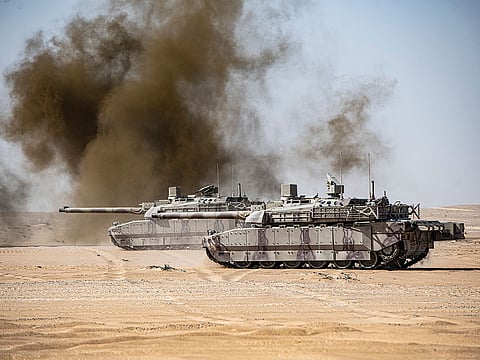
Four years have passed since the events of January 17, 2022, when Houthi militias launched drone and ballistic missile attacks targeting vital civilian facilities in Abu Dhabi. On that day, the UAE’s resolve was displayed in its strongest and most inspiring form, as the nation moved decisively to repel this terrorist assault.
Despite the turbulent and challenging conditions facing the region and the world, the fourth anniversary of January 17 arrives with renewed Emirati determination. The will of the nation’s people has only grown stronger, the steadfastness of its wise leadership has deepened, and the foresight of its vision continues to be affirmed by unfolding events. The unity between the people and their leadership in confronting challenges and achieving national accomplishments remains unwavering.
In this context, the General Authority of Islamic Affairs and Endowments made a meaningful gesture by dedicating last Friday’s sermon to the “Day of Solidarity,” commemorating this proud national anniversary and reaffirming sustained readiness to safeguard national security against any future threats, while inspiring continued determination toward a better future.
Test of resolve
The events of January 17 constituted a true test of the UAE’s resolve, its geopolitical weight in the region, and its international standing. They demonstrated the country’s firm and decisive capacity, as well as its exceptional diplomatic strength, further reinforcing its regional role and global stature.
The UAE’s handling of the crisis was exemplary. Its response to the Houthi attacks was swift and comprehensive. The Armed Forces successfully intercepted and neutralised multiple projectiles using advanced missile defence systems. Emergency services were immediately deployed to affected sites, areas were secured to prevent further harm, and federal and local entities coordinated seamlessly to ensure an efficient and effective national response.
Public reassured
In the immediate hours following the attack, the UAE’s wise leadership and government worked in concert to reassure the public through transparent communication, demonstrating the state’s readiness and capacity to manage such crises and emphasising the importance of international cooperation in confronting the Houthi threat. The rapid reconstruction of damaged infrastructure underscored the UAE’s advanced crisis-management capabilities, while the measures adopted in the aftermath of the attack reflected the state’s proactive approach to protecting its citizens and critical infrastructure from asymmetric warfare.
The UAE’s response was not limited to security and military dimensions. It was accompanied by intensive diplomatic engagement on multiple fronts, aimed at mobilising international support for its position, highlighting the implications of this terrorist attack for regional and international peace and security, and calling for intensified efforts toward a peaceful settlement of the Yemeni conflict. The UAE stressed that continued instability only deepens humanitarian suffering and amplifies security threats across the region. At the same time, Emirati diplomacy drew attention to Iran’s role in supporting the Houthi militia through the provision of weapons and advanced technology, enabling such attacks that threaten regional stability, the security of maritime corridors in the southern Arabian Peninsula, and freedom of international navigation. The UAE also reaffirmed its unwavering commitment to combating international terrorism in all its forms.
International support
Through professional and effective diplomacy, the UAE successfully rallied broad international backing at both state and institutional levels to condemn the attack on Abu Dhabi, affirm the UAE’s right to self-defence, expose the gravity of the terrorist threat posed by the Houthis and the Iranian support behind them, and urge the international community to intensify efforts toward a political resolution to the Yemeni crisis.
The UAE’s efforts to confront the Houthi threat form part of a broader strategy to promote security and prosperity across the Middle East. In this sense, the UAE’s response to the January 17 attack reaffirmed its commitment to regional stability and underscored its role in managing and resolving regional and international conflicts.
Echoes of the past
Today, as the anniversary of January 17 returns, echoes of the past resurface in a different form. A coordinated media campaign led by Muslim Brotherhood-linked networks and hostile actors seeks to undermine the UAE’s role in Yemen and to strain the strong partnership between the two pillars of the Arab Coalition supporting Yemeni legitimacy: the United Arab Emirates and Saudi Arabia. This campaign is merely an extension of repeated attempts targeting the UAE to weaken Gulf unity and to disrupt the region’s collective moment on the broader Arab stage. I think that responding to such efforts is a sovereign and diplomatic matter managed with high professionalism by Emirati institutions, which address these challenges with strategic prudence. The UAE does not engage in online political squabbles; instead, it relies on wise leadership and credible diplomatic and media tools to clarify its positions with composure and authority.
This approach reflects a clear understanding that the task is not for individuals to engage in direct confrontation, but to entrust the matter to leadership equipped with diplomatic foresight and the ability to build international coalitions at the highest levels. For years, Emirati leadership has urged citizens not to be drawn into sterile political arguments on social media, nor into divisive disputes that drain individual energy and distort the state’s noble message. This guidance forms an integral part of positive citizenship values, embodied in the principles launched by His Highness Sheikh Mohammed bin Rashid Al Maktoum in 2017, outlining the qualities of the Emirati digital persona, foremost among them positivity, respect, professionalism, and commitment to supporting national achievements.
Mohammed Salem AlSalmi is a Senior Researcher and the Head of Research & Advisory Sector at TRENDS Research & Advisory


