Chemical weapons in Sudan: A conflict crossing the world’s red lines
International pressure grows over allegations of chlorine gas use by Sudanese army
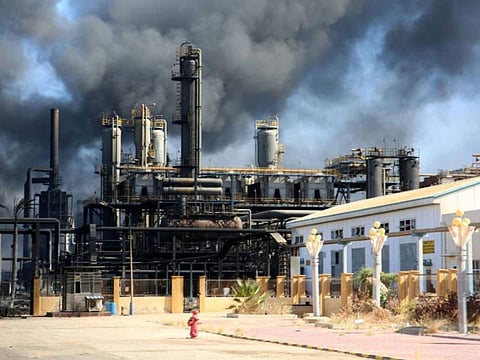
The Sudanese conflict is witnessing a dangerous escalation, with mounting allegations against the Sudanese army regarding the use of chemical weapons during its military operations. At the same time, US and international pressure is intensifying to compel the government in Port Sudan to acknowledge these violations and cooperate with the relevant authorities, foremost among them the Organisation for the Prohibition of Chemical Weapons (OPCW).
Numerous indicators suggest that the arming efforts led by Sudanese army commander Abdel Fattah Al Burhan point toward a protracted conflict. However, the accusations of the army’s use of chlorine gas in several attacks have added an extremely sensitive dimension, given that such weapons are internationally prohibited.
Background of the allegations
Over the past two years, a growing body of international reports and investigative journalism has raised serious allegations against the Sudanese Armed Forces (SAF) concerning the use of internationally prohibited chemical weapons — most notably chlorine gas — during the ongoing war with the Rapid Support Forces (RSF). These allegations include incidents in areas populated by civilians, significantly heightening concerns over potential war crimes and violations of international humanitarian law.
As field evidence, satellite imagery, medical reports, and eyewitness testimonies continue to accumulate, the Sudanese military leadership persistently rejects the accusations, characterising them as “politically motivated fabrications.” However, the increasing convergence of independent sources has transformed the issue from isolated media claims into a matter of growing international legal and diplomatic concern.
The accused party and international positioning
Tensions between the United States and the Sudanese government have escalated following Khartoum’s refusal to respond to an initiative by the Quadrilateral Mechanism aimed at ending the war in Sudan. The mechanism includes the United States, Saudi Arabia, Egypt, and the United Arab Emirates. In this context, Washington has used the chemical weapons file as one of its key pressure tools against the Port Sudan–based government.
In a significant development, the US State Department’s Bureau of African Affairs called on the Sudanese government to cooperate with the Organisation for the Prohibition of Chemical Weapons (OPCW) and to immediately acknowledge its violations. It also stressed the urgent need to cease any further use of chemical weapons.
The spokesperson for the Bureau of African Affairs stated that the United States had announced in May that the Sudanese government used chemical weapons during 2024, emphasising that the decision was based on a thorough and careful analysis. She added that following this announcement, Washington imposed sanctions on Khartoum in June, considering the use of chemical weapons “unacceptable” and a clear violation of the relevant international convention.
The spokesperson further expressed her country’s concern over the possibility of repeated use of such weapons, citing recent international reports that indicated the use of industrial chlorine gas in Sudan.
In addition; According to statements issued by the US Department of State, as well as assessments referenced by regional governments including Chad, the Sudanese Armed Forces — under the leadership of Abdel Fattah Al Burhan — are the entity implicated in the alleged use of toxic chemical agents during specific military operations.
Washington has formally called on the Sudanese authorities to acknowledge the allegations and to cooperate fully with the Organisation for the Prohibition of Chemical Weapons (OPCW) to facilitate an independent technical investigation. This demand reflects a broader concern that chemical weapons may have been used as part of deliberate battlefield tactics rather than as accidental or isolated incidents.
Type of suspected chemical agent and field indicators
Investigative reporting by France 24 identified chlorine gas as the primary suspected chemical agent. According to these findings, liquid chlorine was allegedly delivered through the aerial deployment of chlorine-filled barrels near strategically sensitive sites, most notably around the Al Jaili oil refinery north of Khartoum.
Medical assessments and visual documentation reportedly indicate symptoms consistent with chlorine gas exposure, including:
• Unusual chemical burn patterns on victims’ skin
• Abnormal soil discoloration at strike locations
• The rapid death of animals within affected perimeters
Chlorine, while commonly used for water purification, is classified as a choking agent when weaponised and is prohibited under international chemical weapons conventions when employed for hostile purposes.
US sanctions in response to the Sudanese army’s use of chemical weapons
The US sanctions decision
In 2024, the United States imposed direct sanctions on General Abdel Fattah Al Burhan following what it described as the confirmed use of chemical weapons by the Sudanese Armed Forces. This marked a significant escalation in international pressure and represented the first time sanctions were explicitly linked to chemical weapons use in Sudan’s current war.
From a policy perspective, this step signals a shift from diplomatic condemnation to coercive accountability, potentially laying the groundwork for broader collective action. It reflects Washington’s assessment that chemical weapons claims have moved beyond speculation into the realm of substantiated concern.
The chlorine shipment and emerging supply chain risks
Investigative reports further revealed the existence of a shipment of chlorine barrels that ultimately arrived in Port Sudan. The shipment was reportedly linked to Colonel Anas Younis, in his capacity as Director of the Sudanese Engineering Ports Company, the entity believed to have overseen import procedures.
This logistical trail has intensified concerns that dual-use materials with clear weaponisation potential may have entered Sudanese military possession with either institutional negligence or active coordination. The case exposes a profound governance failure in monitoring hazardous materials during wartime and raises serious questions about command responsibility and regulatory oversight.
Official military denials and the credibility gap
The Sudanese Armed Forces have issued categorical denials, affirming that they:
• Do not possess toxic chemical agents
• Have never used chemical weapons
• Have not imported materials for chemical warfare purposes
However, these denials increasingly face credibility challenges due to the steady accumulation of satellite imagery, medical documentation, civilian testimonies, and investigative journalism. From a strategic communications perspective, this widening gap between official narratives and independent field reporting has undermined the government’s standing in international forums and weakened its legal defense posture.
International response and prospects for accountability
As the allegations intensify, international stakeholders continue to press Sudan to grant unrestricted access to independent OPCW investigators. Such access would constitute a decisive test of Sudan’s compliance with the Chemical Weapons Convention and broader disarmament norms.
Failure to cooperate could trigger:
• The expansion of legal proceedings under international humanitarian law
• Broader multilateral sanctions regimes
• Escalating diplomatic isolation
• Potential referrals to international judicial mechanisms, including war crimes tribunals
The trajectory of international response is therefore increasingly tied to Sudan’s willingness—or refusal—to submit to impartial verification processes.
Media investigations and the Halabja precedent
Numerous Western media outlets and human rights investigations have examined the expanding evidence suggesting that the Sudanese army employed chemical weapons — particularly chlorine gas — during the conflict that erupted in 2023. Reports by The New York Times and France 24 alleged that chlorine barrels originally designated for water purification were repurposed as weapons and deployed near oil facilities in September 2024. Notably, no direct military rebuttal was issued in response to those specific claims.
In May 2024, the United States formally concluded that chemical substances had been used by the Sudanese army against the Rapid Support Forces, reinforcing earlier investigative reporting.
Human rights organisations, including Human Rights Watch, confirmed the imposition of US sanctions on General Al Burhan and simultaneously called for greater transparency, disclosure of evidence, and the initiation of an independent international investigation.
Several analyses explicitly draw a historical parallel between Sudan’s current situation and the 1988 Halabja chemical massacre in Iraq. Notably, observers argue that evidence of chemical weapons use in Sudan has surfaced more rapidly than it did in Iraq at the time — making an urgent international investigation both a humanitarian and legal necessity before critical forensic material degrades or disappears.
International inaction and selective enforcement concerns
Despite the gravity of the allegations, Western media and rights groups have sharply criticised what they describe as international indifference. To date:
• The UN Security Council has established no dedicated investigative mechanism
• The OPCW has not been formally mandated to conduct an official mission
This institutional paralysis has fostered growing perceptions that the global ban on chemical weapons is being applied selectively, shaped more by geopolitical calculations than by consistent legal enforcement.
Strategic conclusion
The accusations of the Sudanese military’s use of chemical weapons — along with US sanctions — represent a pivotal turning point in the international management of the conflict in Sudan. If substantiated through independent verification, these claims could radically alter the legal status of Sudan’s military leadership and accelerate the internationalisation of accountability mechanisms.
The issue is no longer confined to media reporting. It has evolved into an open international case with the potential to determine the political and legal future of Sudan’s military command structure and to reshape global engagement with the war.
Failure to pursue impartial investigation would not merely represent institutional negligence—it would risk enabling the recurrence of chemical warfare in modern conflict. As several reports conclude, international silence in the face of verified chemical weapons use would amount to a renewed betrayal of victims and a dangerous erosion of one of the most fundamental prohibitions in international law.