UAE UNESCO World Heritage Sites: Locations, history and why they matter
From ancient oases to rare wildlife, how three UAE sites earned global protection
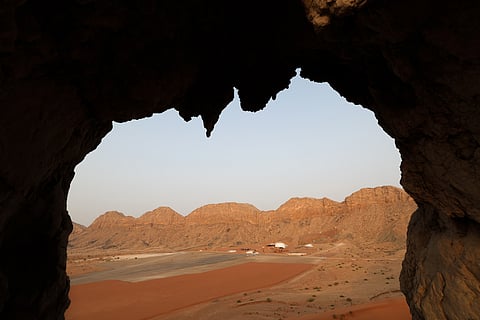
Dubai: Long before the UAE we know today, there was a story stretching back over 200,000 years.
The country is now home to three UNESCO World Heritage Sites, each safeguarding places of 'Outstanding Universal Value' - locations so significant that their loss would be felt not just nationally, but by humanity as a whole.
From Palaeolithic tool-makers to the wildlife still clinging to the Hajar Mountains today, these sites reveal how life has survived in harsh environments, some showing how early communities adapted and thrived through shifting climates, others safeguarding ecosystems still vital to the wider Gulf region.
Together, they tell a story far older than the UAE itself and visiting them offers a deeper understanding of a region too often defined only by its modern ambitions.
Get updated faster and for FREE: Download the Gulf News app now - simply click here.
Which UAE sites are on the UNESCO World Heritage List?
Following Wadi Wurayah's inscription, the UAE now has three World Heritage properties:
The Cultural Sites of Al Ain, inscribed in 2011.
Faya Palaeolandscape in Sharjah, inscribed in 2025.
Wadi Wurayah National Park in Fujairah, the UAE's first natural World Heritage Site.
1. Cultural Sites of Al Ain (Hafit, Hili, Bidaa Bint Saud and Oasis Areas)
This serial UNESCO site reveals a remarkable story - continuous human settlement in a desert landscape stretching back to the Neolithic period, with traces of numerous prehistoric cultures layered across time.
Among its most striking features are circular stone tombs dating to around 2500 BC, ancient wells, and an array of mudbrick structures, homes, towers, palaces, and administrative buildings. Hili is especially notable for preserving one of the earliest known examples of the aflaj irrigation system, an ingenious network dating to the Iron Age. Together, these remains chart the region's pivotal shift from hunting and gathering to settled life.
More broadly, the Al Ain Oasis stands as enduring evidence of something larger, the ability of early civilizations in northeastern Arabia, particularly during protohistoric times to forge a sustainable, thriving relationship with a harsh desert environment.
2. Faya Palaeolandscape
Situated between the Persian Gulf and the Arabian Sea, this site preserves an extraordinary record of human presence spanning the Middle Palaeolithic through the Neolithic, roughly 210,000 to 6,000 years ago. Layer by layer, its archaeology traces how hunter-gatherers and early pastoralists adapted to a shifting climate, as arid and rainy phases alternated in cycles of about 20,000 years.
Beyond simply surviving, these early communities made resourceful use of the landscape itself, drawing on its varied terrain for raw materials and other resources. With its diverse water sources and rich geological features, Faya offers a rare window into how humans have endured and adapted in some of the world's harshest, driest environments.
3. Wadi Wurayah
Wadi Wurayah National Park in Fujairah has become the UAE's third UNESCO World Heritage site and the first in the country to be recognised for its Outstanding Universal Natural Value.
The inscription celebrates the park's exceptional biodiversity, distinctive geological formations, and status as one of the Arabian Peninsula's most vital freshwater ecosystems.
Nestled in the Hajar Mountains overlooking the Gulf of Oman, Wadi Wurayah is one of the UAE's most striking natural landscapes a rugged terrain of valleys, waterfalls, and perennial freshwater springs supporting a remarkable range of habitats. Long recognised as a nationally protected area, it shelters numerous plant and animal species, several of them rare or threatened.
UNESCO's recognition rests on several standout features:
Over 1,099 recorded species - 883 animal and 216 plant species
A refuge for at least 10 globally threatened species
Home to roughly half of the UAE's terrestrial mammal species and nearly half of its terrestrial reptile species
One of the world's largest, best-preserved ophiolite rock formations, offering a rare glimpse into ancient oceanic crust and upper mantle
Regarded as one of the Arabian Peninsula's most important ecological reserves, Wadi Wurayah provides a sanctuary for rare wildlife — including the Arabian tahr and the caracal, alongside unique insects and plants found nowhere else.


