Two arenas in Dubai and Abu Dhabi, one night: How Michael Jackson tribute show and Atif Aslam gig signal UAE's rise as year-round cultural Hub
A tribute show in Dubai, a concert in Abu Dhabi reflect UAE's growing cultural confidence
Dubai: There was a time when summer in Dubai meant one thing: escape the sweltering heat.
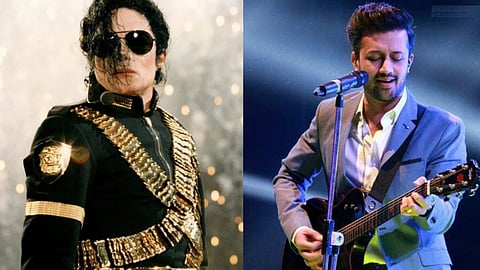
Yesterday on July 18th, it meant making an impossible choice. Do you moonwalk at a Michael Jackson tribute show at Coca-Cola Arena in Dubai? Or do you drive to Abu Dhabi and lose yourself in Atif Aslam’s soulful ballads at Etihad Arena?
That was my family’s dilemma and it was a good problem to have. My twin boys are huge Michael Jackson fans, so the tribute show got our vote. But my friends headed to Atif Aslam instead. Before long, my WhatsApp had turned into a split screen of moonwalks, Billie Jean, romantic anthems and thousands of people singing every word back to the stage.
But here's the heartwarming bit: nobody felt like they had backed the wrong show.
Everybody came home talking about an unforgettable night. And that’s when it struck me.
Maybe this is what people mean when they say, “Dubai it.”
Not just doing things bigger or faster, but creating a city where a sweltering July weekend isn’t about finding the next flight out. It’s about deciding between two sold-out shows celebrating two very different musical worlds.
That says a lot about how far Dubai, Abu Dhabi —and the UAE—have come.
There was a time when July meant quieter roads, packed airports and residents counting down to their European and Indian holidays. Today, the city doesn’t seem to pause. If anything, its cultural calendar has become one of its biggest drawcards, attracting tourists and giving residents every reason to stay put.
What struck me most at Coca-Cola Arena wasn’t simply that every seat was occupied. It was the mix of people. Families, teenagers, tourists, long-time Michael Jackson fans—people from every corner of the world, all singing the same songs. Then MJ's iconic Heal the World anthem began.
Thousands stood up. Phone lights lit up the arena. Complete strangers sang together. For a few minutes, the usual labels didn’t seem to matter. It wasn’t about where you came from or what language you spoke. It was simply about sharing the music.
That’s the strength of a good tribute show. It doesn’t try to replace the artist. It celebrates a legacy that still resonates decades later. The timing made the evening feel even more significant.
The world hasn’t exactly been short of difficult headlines lately. Regional tensions, wars, economic uncertainty and an endless cycle of breaking news have dominated conversations. Yet yesterday, two arenas in the UAE were packed.
One audience was celebrating the music of Michael Jackson through a tribute show. Another was singing every word with Atif Aslam and thinking about their first crush in school or that soul-breaking heartbreak.
Different artists. Different audiences.
But the same appetite for live music and shared experiences.
At a time when AI is changing how we create and consume entertainment, and when so much of our interaction happens through screens, there was something refreshingly old-school about that.
Imagine this: Thousands of people choosing to be in the same room, singing the same songs at the same time. Technology can perhaps enhance entertainment, but it still can’t recreate the atmosphere inside a packed arena.
While Michael Jackson’s music echoed through Coca-Cola Arena, friends at Atif Aslam’s concert couldn’t stop talking about his effortless vocals, his romantic classics and the energy inside Etihad Arena. It wasn’t a competition. It was two equally memorable nights unfolding simultaneously.
That’s something the UAE has become exceptionally good at.
It has evolved into a place where different cultures don’t simply coexis, they thrive. On any given weekend, you can find Arabic music, Pakistani artists, Bollywood stars, Western pop acts, K-pop groups or classical performances, each drawing its own loyal audience.
That diversity isn’t manufactured. It reflects the people who call this country home.
For years, Dubai was defined by record-breaking buildings and ambitious projects.
Today, it’s increasingly defined by experiences.
Not manufactured experiences, but real ones—families debating which concert to attend, friends swapping videos from different venues, children discovering music from another generation and arenas filled with people who simply wanted to enjoy a Saturday night together.
Yesterday wasn’t remarkable because there was a Michael Jackson tribute show or because Atif Aslam performed to a packed arena.
It was remarkable because both happened on the same evening, in the middle of July, and both found their audience.
A decade ago, that would have been difficult to imagine.
Today, it feels perfectly normal. Maybe that’s what “Dubai it” looks like.
Not just building world-class venues, but filling them -- even in the middle of summer.


