Manila’s Grand Opera House: Inside the ambitious landmark set to rise in Entertainment City
Westside City's Grand Opera House Aims to Make Manila Asia's Broadway
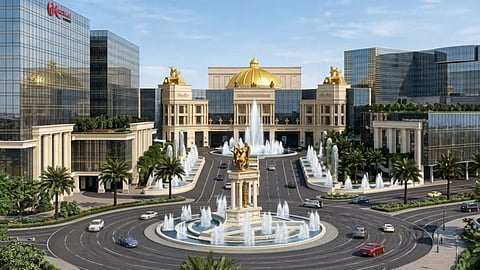
Manila: The Philippine capital, Manila, could soon have a new landmark for musicals, concerts and international performing arts, as the planned Grand Opera House takes shape within Westside City, the integrated entertainment and resort development in Parañaque.
The project is part of a broader ambition to establish the Philippines as the “Broadway of Asia”, bringing major stage productions, local performers and international audiences into one entertainment district.
Social media interest has been fuelled by lavish architectural visualisations showing grand lobbies, gold-accented interiors and contemporary theatre spaces.
But beyond the striking images, what is actually known about the project?
Location: Part of Westside City, a 31-hectare integrated township in Entertainment City, Parañaque, near Manila Bay.
Vision: To help establish the Philippines as the “Broadway of Asia”, attracting international productions and showcasing Filipino performing arts.
Seating capacity: Reports have cited a 2,000-seat venue, although other promotional material mentions approximately 3,000 seats. Final capacity needs confirmation.
Four-theatre district: The planned entertainment complex includes the Grand Opera House and three additional theatres: Apollo, Bohemia and Crown. These venues, developed by private money, could be the latest addition to Manila Metropolitan Theater (aka the MET), inaugurated in 1931, which had seen its pre- and post-WW2 heydays.
Opening date: No confirmed public opening date for the Grand Opera House has been independently established.
Potential: The venue could generate jobs for Filipino actors, musicians, dancers, stage technicians, set designers and other creative professionals, while supporting tourism and hospitality.
A major performing arts venue
The Grand Opera House is planned as the centrepiece of a theatre district within Westside City, developed by Megaworld and its partners in Manila’s Entertainment City.
Reports published in 2024 described the venue as a 2,000-seat theatre intended to host musicals, concerts and other large-scale productions. However, Megaworld-related promotional material has also cited a capacity of approximately 3,000.
The final seating capacity is not available, until the venue is completed.
The wider entertainment complex is planned to include three additional theatres: Apollo, Bohemia and Crown.
Together, the venues are intended to expand the Philippines' capacity to stage productions beyond conventional concert halls and hotel ballrooms.
In June 2024, Grand Westside Hotel was opened, touted as the largest hotel in the Philippines with 1,530 rooms in Parañaque City.
Developed by Megaworld Hotels and Resorts, the property sits next to the under-construction Grand Opera House.
The complex is aimed not only at ramping up tourism infrastructure but also generating up to 20,000 direct and indirect jobs while help boost Manila's cultural credentials.
Inside Westside City's bigger vision
Westside City is a 31-hectare township near Manila Bay, combining hotels, residential developments, retail and leisure facilities.
Its entertainment component is being developed alongside a major integrated resort featuring accommodation, gaming and dining.
The Grand Westside Hotel, which opened in 2024, is an existing part of the development. The planned theatre district is expected to complement the resort by encouraging visitors to stay longer and spend on performances, restaurants and other attractions.
The development has also moved beyond promotional concepts.
In March 2026, Westside Resort announced recruitment for its pre-opening team, describing the theatre district and Grand Opera House as key elements of the destination.
A May 2026 design portfolio from RGBA, working with Casas Architects, showcased renderings of the proposed opera house and three theatres.
When will it open?
As of October 2026, the developer's public materials continue to describe the Grand Opera House as an "upcoming" attraction.
Westside Resort's March 2026 recruitment announcement indicates that the wider resort was moving towards launch, but it does not establish a confirmed opening date for the opera house itself.
The distinction matters: construction progress at the integrated resort does not automatically mean that the theatre is finished, equipped or ready to host performances.
Can Manila become the Broadway of Asia?
The opportunity extends beyond tourism. A major performing arts venue could create work for Filipino actors, musicians, dancers, stage technicians, set designers and production crews. It could also give international producers a reason to bring touring musicals and theatrical productions to the Philippines.
But the building alone will not establish Manila as a regional theatre capital. Success will depend on programming, ticket affordability, production standards, transport access and sustained investment in Filipino creative talent.
For now, the Grand Opera House represents an ambitious development within a larger project rising out of land reclaimed from Manila Bay.
Eventual cultural impact will depend on what happens after the spectacular renderings become a functioning theatre.


