Kartavya review: Saif Ali Khan’s safe cop drama stalls and arrests its own momentum
Saif Ali Khan does what he can with the material; it's not enough
It's true.
Halfway through Kartavya, I was vaguely imagining the Saif Ali Khan multiverse. It was difficult not to imagine what his Race smarmy character Ranveer would do in this taciturn thriller set in Haryana. If a mid-air skirmish had suddenly cut to Saif emerging from a car with a parachute, I would have welcomed it, if only to jolt the film out of its monotony. Perhaps that’s unfair, but Kartavya progresses in such a straight line that you start wishing for something wildly outlandish just to talk about later.
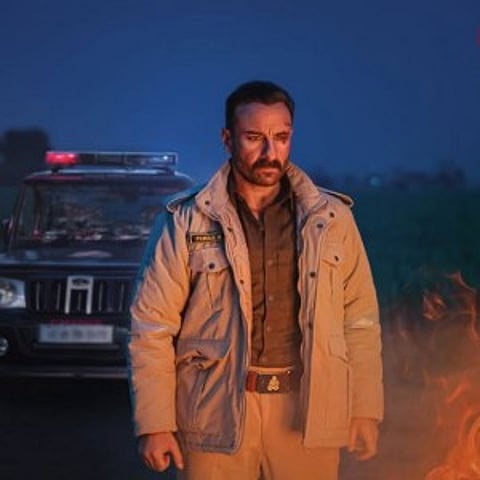
As it stands, Saif Ali Khan, charismatic as ever, can’t quite lift a story that keeps stumbling over its own creative gaps. On paper, it should have been a gripping thriller, but very little of that promise translates on screen. The film feels oddly familiar and cautious, despite being set in the fictional village of Jhamli, where Saif plays an earnest cop, Pawan, alongside his loyal sidekick played by Sanjay Mishra.
Pawan is tasked with protecting a journalist who is investigating a spiritual leader, and 10 minutes into the film he fails miserably: She is shot dead, as soon as they leave the train station. (But why was the person who was meant to be protected being sent ahead of the police cars, and sitting in the front seat, no less?)
Obviously, like all cops who need a mission to right their wrongs, Pawan is suspended. But, which cop accepts a suspension without dramatically promising a miracle? He declares: In seven days, he will prove that he is worthy of being a policeman, and find the killers. After all, are you really a redeemed cop if you don't give a deadline to soften your own follies?
Moreover, what makes matters a little more complicated: One of the killers is a mere teenager, named Harpal.
From there, Kartavya juggles multiple threads: Pawan’s hunt for Harpal, and a parallel family conflict involving his brother’s forbidden relationship, opposed by his father (Zakir Hussain). And cue a familiar parade of genre clichés, gunmen lurking at every corner, verbose antagonists delivering heavy dialogue, and village elders framing honour killing as a grim norm. It is all staged to feel gritty and hard-hitting, but the effect is closer to déjà vu: we’ve seen this before, many times, and nothing here feels new.
Saif does what he can with the material, while Rasika Dugal, as his wife, brings brief flashes of spark with her understated one-liners. She remains reliably compelling, but is ultimately underused and pushed to the margins. The actor who actually stands out in this colourless show, is Yudhvir Ahlawat, who plays Harpal. He actually plays his role with conviction: A boy crumbling under pressure, and his raw scenes really twist the knife. If only, the rest of the film had the same promise.
Kartavya clearly means well with its commentary on honour killings and child exploitation, but the impact never quite lands. It begins to weaken well before the halfway mark, losing its grip long before it can justify its intentions.


