BTS Rewind: Reliving Love Yourself Tear — their most honest, raw, and fragile album before 2026 comeback
Love Yourself: Tear captures BTS at their most vulnerable, facing fame’s true cost
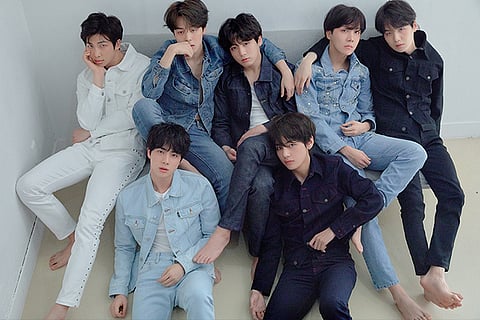
2026 marks BTS’s return—with a music album, to be clear. Not that they ever truly left ARMY, even during their time in military service. But their comeback arrives under intense scrutiny. All eyes will be on them. Heavy is the crown, after all, for a band that has come to symbolise South Korea itself.
It echoes another pivotal moment in their history: 2018, the year Love Yourself: Tear was released. By then, BTS had clawed their way to the peak of international fame, hands bloodied by the climb, even as the world only heard the music—not the fractures beneath it.
Love Yourself: Tear is an album steeped in grief and disillusionment, the spiritual counterpoint to Love Yourself: Her, which celebrated the euphoria of love. With BTS, however, love is rarely just romantic. It is self-acceptance, survival, and the difficult act of reaching for others. It can arrive as a storm that destroys, or as the quiet promise of sunlight after.
The album’s rawness mirrors the band’s exhausting relationship with fame. 2018 was later revealed to be the year they nearly disbanded—a truth shared during a tearful awards speech that still lingers in ARMY’s memory, especially the sight of J-Hope breaking down at the microphone.
It was the highest of highs, and the lowest of lows.
Only later did the full weight of that year become clear: relentless schedules, unending interviews, and immense pressure—much of it resting on RM, who carried the dual burden of leadership and constant translation. One misstep was enough to ignite global scrutiny.
They were preaching self-love to the world while struggling to practice it themselves.
Perhaps that is why Love Yourself: Tear, drenched in vulnerability, stands as a record of the moment BTS fully realised what it meant to be global pop stars. Fame was intoxicating—but at what cost?
As their next album approaches, once again under immense pressure, it feels necessary to look back at Love Yourself: Tear—an album etched permanently into the consciousness of ARMY.
Intro: Singularity
Have I lost myself
Or have I gained you?
One of the most profound lines in the track, sung by V, born Kim Taehyung. The album begins with this piercing heartbreak and unflinching agony; but the chilling, slow quiet of it all is what allows the words to breathe even more. In the R & B infused track with a deep bass, V pontificates on the thought of being surrounded by pain. And the metaphor is a frozen lake.
But now pain is so deeply part of his life, he doesn’t even know who he is without it. And yet, keeping to the band’s hope of spring, he hopes that the ice would melt away. Maybe, one day, the spring returns.
Fake Love
I wish love was perfect as love itself
I wish all my weaknesses could be hidden
I grew a flower that can't be bloomed in a dream
Such are the lyrics from BTS’s Fake Love.
If only love was as perfect as love itself.
It’s the song of disillusionment and despondence. Love is an illusion and nothing is real. And the music video drives the point home with a brutal hammer. At the beginning of the video, while displaying a complex and intricate choreography, the boys are locked in different nightmares of their own. Jungkook runs through rooms as the world collapses, Jimin stands in the flood, while Suga has a chilling smile while the room burns.
It's the song that has numerous interpretations: Perhaps the fear of creating a lie for their audience that’s all too beautiful to believe, when they’re hurting so much inside. The fear of not being true to oneself.
But, as Emily Autumn’s quote resounds here, “You are a terribly real thing in a terribly false world, and that, I believe, is why you are in so much pain.”
The Truth Untold
The weaknesses that I/ hide you can never see/ I wear a mask again so I can see you/.
Beginning with V’s haunting vocals, the song is about hiding yourself from the world. You must wear a mask, because what if people saw the real you? Would they still want you? Jin, Jimin, Jungkook and V, the group’s astounding vocalists, paint each word with such deep emotion that somehow even the soft instrumentals seem pale compared to them.
It's a quiet and fragile song, quite like the castle they keep describing too. The castle is made of sand, it can collapse, at any moment. So, they must wear a mask.
134340
The saying often goes, RM was so upset about Pluto being demoted as a planet that he wrote an entire song. And you wouldn’t expect a track about a planet to be so deep, but that’s where BTS surprises you. With a rather jazzy, retro feel, the song emphasises loneliness and the sudden confusion of being discarded.
There’s no name allowed for me
I, too, used to be your star
There’s a quiet sadness, that goes beyond just the talk of space and science.
Paradise
Right after the celestial tones of “134340,” comes “Paradise”—a track that often slips under the radar. While it may not have claimed chart-topping status, Paradise resonates deeply with fans who find healing in its quiet honesty. The lyrics challenge the modern obsession with constant striving and endless goals. Instead of glorifying the hustle, BTS urges listeners to reflect: Is the finish line really where happiness lies? Or could contentment be found in simply existing, in slowing down?
Sonically, the song takes a minimalist route, letting mellow synths, soft bass drums, and ambient textures cradle the listener. There’s no urgency here—just room to breathe.
Love Maze
After so much emotional wreckage, this track feels like finding a hand in the dark and realising you’re not lost after all. It doesn’t shout hope. It hums quietly, confidently, like something you can lean on without questioning it.
The vocal line carries the song with an almost deceptive softness. Jungkook’s voice floats through the track, gentle but unwavering, delivering reassurance without pleading. V’s deep, tone grounds the melody, adding weight and warmth, while Jin’s vocals arrive like a quiet promise—tender, steady, and emotionally precise. Together, they don’t just sing about love; they stabilise it.
The rap line slips in, not to disrupt the dream but to anchor it. Suga’s verse cuts through the haze with clarity, his flow sharp and resolute, reminding you that love isn’t blind optimism—it’s a choice made despite fear. RM follows with a calm authority, his lines measured and reassuring, like someone who has already walked through the maze and turned back to guide you.
Love Maze doesn’t pretend love is easy. It simply insists that it’s worth navigating—together.
Magic Shop
As ARMY promises, once you enter the magic shop, you never leave.
Hope is filled to the brim in this song. The track feels like BTS deliberately lowering their voices, inviting the listener inward instead of performing outward. From the first few seconds, the instrumental is calm but luminous, gently lifting without ever overwhelming. It creates the illusion of stepping into a quiet room where the noise of self-doubt doesn’t follow.
It's filled with emotional generosity. The song doesn’t try to fix you or demand resilience; it simply allows rest. There’s a steady reassurance threaded through every note, as if the music itself is saying, stay here, you don’t have to be strong right now. That restraint is precisely its power.
Not every track demands introspection—some exist simply to keep the body moving.
The last few songs Airplane Part 2, So What and Apanman are shots of adrenaline. Anpanma disguises its depth beneath sugar-rush beats and playful swagger. Inspired by the Japanese children’s hero made of red bean bread, the song reframes what heroism looks like. Anpanman isn’t powerful or untouchable—he gives parts of himself away until he’s empty.
That’s the point. BTS align themselves not with invincible icons like Superman, but with a hero who stays close, helps quietly, and weakens as he gives. Beneath the bounce is a sobering metaphor for emotional labour, fandom, and fame. Anpanman argues that real heroism isn’t about strength—it’s about showing up, even when it costs you.
And finally, Outro: Tear. Everything is messy, yet feels tied up neatly. . From the first mournful notes, the track feels like something breaking in real time. The instrumental aches, heavy and restrained, as if holding back a collapse it knows is inevitable.
When RM enters, his voice carries exhaustion more than anger, the sound of someone explaining a wound they’ve lived with too long. Suga follows like a rupture—his verse is brutal, precise, and unforgiving, cutting straight through denial. J-Hope closes in a rush of urgency, grief spilling over into desperation. Together, they don’t perform pain; they expose it, leaving nothing intact when the song ends.


