UK green lights Eurostar sale proceedings
Government intends to sell its 40% stake in the train operator before next May’s election
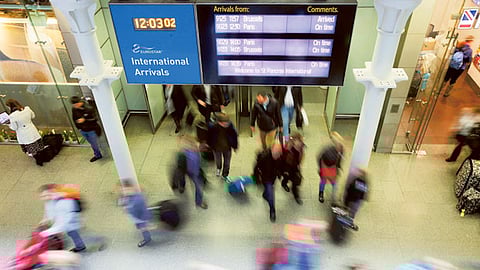
LONDON: Britain has started the sale of the government 40 per cent stake in Eurostar, the high-speed train company, with the aim of selling it before the general election in May.
George Osborne, the chancellor, is inviting initial bids by the end of October for the state’s stake. He hopes to complete a trade sale in the first quarter of next year if the government can ensure value for money for taxpayers.
He hopes to raise a sum in the low hundreds of millions, according to those familiar with the sale process, as part of the government’s effort to lower public debt. He first indicated the government wanted to sell its stake in Eurostar last December — generating the wrath of the rail unions — as part of a target to dispose of £20 billion (Dh118 billion) of government assets by 2020.
Under public financing accounting rules, the sale will not reduce public sector borrowing and make only a small dent in the £1,435 billion public sector net debt. Eurostar has become profitable over the past two years, declaring an operating profit of £54 million in 2013 and dividends of £18.6 million. The UK government’s share of these was £7.4 million.
Owning the trains and operating the services between London, Paris, Brussels, the French Alps and the south of France, the company is set to lose its monopoly and face competition from Deutsche Bahn within two years. Eurostar runs a fleet of 28 trains through the Channel tunnel and carried a record 10 million passengers in 2013.
It has bought 10 new trains, each with 900 seats, in a 600 million euro deal with Germany’s Siemens in 2010 and hopes to expand its route network.
The other owners of the company are the state rail operators in France and Belgium: SNCF of France holds 55 per cent and SNCB has 5 per cent. SNCF has the right to outbid the winner of the auction, but cannot block the sale.
The government appointed UBS as its adviser and after a market testing exercise over the summer expects considerable interest from pension funds and investment companies, rather than other rail operators. Pension funds seeking long-term stable returns in infrastructure projects have long been wooed by the UK government to take ownership of state assets.
Osborne says it was part of his drive to reduce Britain’s public debt. “Ensuring that we can deliver the best quality infrastructure for Britain and the best value for money for the taxpayer are key parts of our long-term economic plan,” he said. “As part of our aim to achieve £20 billion from asset sales by 2020, the sale proceeds would make an important contribution to the task of reducing the public sector debt.”
The £2 billion proceeds from the sale of Royal Mail count towards the total and the Treasury also wants to sell its stake in Urenco, a uranium enrichment company, legacy pension assets from the Royal Mail pension fund, further parts of the radio spectrum and the student loan book.
Eurostar services started running through the tunnel in 1994, carrying more than 145 million passengers since and with traffic increasing every year. The tunnel has been beset by financial difficulties, as have the high-speed tracks in the UK between St. Pancras station in London and the tunnel.
Eurostar does not own any of these assets, but pays to use them as a train operator. The group started as a joint venture between three state-owned rail companies before the privatisation of British Rail.
— Financial Times

