Cyberport: why Hong Kong’s AI launch pad matters to the UAE
Cyberport super-connects Mid East tech companies with Chinese Mainland and ASEAN markets
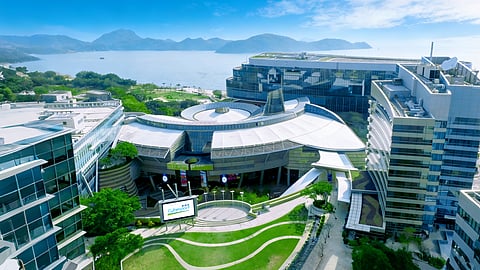
In the race to shape the future of artificial intelligence (AI), fintech and digital infrastructure, geography still matters, but only when it comes with scale, access and the ability to execute. Today, innovation hubs are defined not only by the start-ups they house but also by how effectively they bring together capital, computing power, talent and markets across borders.
Hong Kong’s Cyberport is positioning itself as a hub built precisely for this kind of role.
Wholly owned by the Hong Kong Special Administrative Region (HKSAR) Government, Cyberport has evolved from its origins as a technology park into a strategic digital technology hub and AI accelerator, anchoring Hong Kong’s ambitions in AI and innovation and technology (I&T). Today, it brings together more than 2,300 companies including 17 listed companies and 8 unicorns, spanning AI, data science, fintech, blockchain, digital assets, smart living, cybersecurity and digital entertainment, making it Hong Kong’s largest digital tech ecosystem.
For the UAE, where national strategies increasingly prioritise AI leadership, fintech growth and advanced digital infrastructure, Cyberport’s relevance lies not only in what it is building in Hong Kong but in how deliberately it is connecting Asia with the Middle East.
From access to acceleration
What differentiates Cyberport’s approach is its emphasis on speed and execution. Rather than acting solely as a landing zone, the ecosystem is designed to shorten the path from innovation to deployment with a clear focus on accelerating companies’ path to success.
That acceleration is visible in Cyberport’s international footprint. Over the past two years, over 30 leading companies worldwide have landed in Cyberport, with a number going on to secure successful listings on the Hong Kong Exchanges and Clearing (HKEX) shortly after their development journey at Cyberport. The market capitalisation of listed companies totals over HK$336 billion (Dh157.86 billion), while unicorns and soonicorns are valued in aggregate at HK$87.3 billion. Cyberport companies have raised over HK$46.2 billion in investments over the years.
Equally important is the diversity of the ecosystem. About one-third of these technology companies’ founders come from outside Hong Kong, representing 27 countries and regions, underscoring Cyberport’s role as a platform linking the city with Chinese Mainland and more than 36 overseas markets. Cyberport attracted over 480 companies to its campus over the past year alone, with over 150 companies from Chinese Mainland and overseas.
This reinforces Cyberport’s positioning as an international platform. Talent development, supported through partnerships with leading universities both locally and internationally, and cross-border collaboration programmes, remains a central pillar of this strategy.
A super-connector by design
Cyberport’s position as a super-connector and super value-adder, reflects a role well beyond incubation or co-working.
As Simon Chan, Chairman of Hong Kong Cyberport, explains that Cyberport as a super-connector and super value-adder, gives UAE innovators and investors unparalleled access to the Chinese Mainland, ASEAN and high-growth Asian markets.
This positioning is reinforced by practical enablers formed by over 500 network partners. Cyberport provides market-entry support, access to funding networks, enterprise connections and, increasingly, large-scale AI infrastructure, which are elements particularly relevant for UAE-based founders and investors seeking structured entry into Asian markets.
The Middle East has become an increasingly important part of Cyberport’s international engagement. Partnerships with Abu Dhabi’s Hub71, collaboration with Dubai Future Foundation and KACST, as well as participation in regional platforms such as the Dubai FinTech Summit reflect a growing alignment between Hong Kong’s I&T agenda and the Gulf’s digital ambitions.
Connectivity and capital mobilisation
Hong Kong is a premier gateway for UAE enterprises entering Asia. The city ranks third globally and first in Asia Pacific in the Global Financial Centres Index 38, and No. 1 worldwide in fintech capabilities, business environment, infrastructure and international reputation. Market confidence remains strong, with Hong Kong widely recognised as the world’s leading IPO venue in 2025, offering deep liquidity and efficient access to global capital for fast‑growing companies.
Built on the unique One Country, Two Systems framework, Hong Kong provides legal connectivity with the world under common law, free capital movement, a low and simple tax regime, and profit repatriation with less restriction—an attractive proposition for Middle East investors seeking stability, transparency and scale. Strategically located at the heart of Asia, Hong Kong enables seamless access to Chinese Mainland and the Greater Bay Area, while maintaining strong connectivity with global markets.
Cyberport is central to this advantage, serving as Hong Kong’s flagship digital economy and fintech hub and a preferred soft‑landing platform for international companies. For international companies, including UAE firms, Cyberport offers a ready‑made ecosystem to establish regional offices, pilot fintech, AI and smart‑city solutions, tap into top Asian and global talent, and collaborate with Chinese and international partners —supported by targeted government incentives and a pro‑business policy environment. Together, Hong Kong and Cyberport provide UAE investors with a trusted, scalable and innovation‑driven base to expand across Asia.
Cyberport’s ability to mobilise capital is a critical part of its value proposition. Through the Cyberport Investors Network (CIN) and the Cyberport Macro Fund (CMF), the ecosystem connects start-ups with more than 220 investors worldwide and co-invests in high-potential companies. To date, Cyberport-supported start-ups have raised more than HK$46 billion (US $ 5.9 billion) in funding.
This connectivity is translating into tangible outcomes in the Middle East. Through partnerships with Hub71, Dubai Future Foundation, KACST and other regional stakeholders, Cyberport is facilitating two-way expansion, enabling UAE start-ups to scale into the Greater Bay Area and Chinese Mainland, while supporting Asian companies entering the Middle East.
Dr Rocky Cheng, CEO of Hong Kong Cyberport, shared that Cyberport serves as Hong Kong’s engine for global innovation and a strategic gateway to Asia’s fastest-growing markets. He also noted that what differentiates Cyberport from other technology hubs is the depth and scale of its digital technology ecosystem. Enterprises entering Cyberport with expansion ambitions, he explained, are supported through Cyberport Connect, an initiative that links companies with local partners to globalise their products and services, connects them with investment from Hong Kong, the Chinese mainland and overseas, facilitates access to overseas markets including ASEAN and the Middle East, and supports opportunities for listings in Hong Kong and international stock exchange markets.
Dr Cheng explained that by turning connectivity into tangible outcomes, Cyberport is reinforcing Hong Kong’s position as a strategic launchpad for AI leadership and global digital transformation.
AI Supercomputing Centre: infrastructure at scale
At the heart of Cyberport’s next phase is the AI Supercomputing Centre (AISC), Hong Kong’s largest facility of its kind and a cornerstone of the city’s AI strategy.
As AI development becomes increasingly compute-intensive, access to high-performance, secure and scalable computing infrastructure has emerged as a critical differentiator. AISC is designed to support large language models, data science, generative AI and enterprise-grade AI applications, enabling faster experimentation and real-world deployment.
Chan describes the Centre as foundational to Hong Kong’s long-term positioning as a global AI powerhouse. With Cyberport AI Supercomputing Centre delivering 3,000 PFLOPS of computing power and HK$3 billion (US$ 380 million) in government-backed AI subsidies, Cyberport is building a comprehensive AI ecosystem for Hong Kong spanning computing power, data, large language models, model risk assessment, industry application support, AI governance and ethics, and talent cultivation.
In today’s digital economy, AI, Big Data and Cybersecurity are the three pillars powering every AI+ industry. To help startups capture these opportunities, Cyberport has launched the ABC Service Centre, an integrated platform that brings together AI technologies, cybersecurity assessments, professional training and expert consultation.
Together with the AISC, this powerful mix of cutting‑edge computing and end‑to‑end services supports startups from development through deployment, accelerating AI innovation, strengthening security and helping founders scale smarter and faster.
For UAE enterprises operating in regulated sectors such as finance, healthcare, insurance and smart cities, this emphasis on end-to-end AI capability, including governance and ethics, aligns closely with regional priorities around responsible AI adoption.
Cyberport 5: a physical anchor for digital growth
Complementing this digital infrastructure is Cyberport 5, the newest addition to the Cyberport campus and a significant investment in purpose-built I&T space. Positioned as an innovation and technology landmark for Hong Kong, Cyberport 5 is designed to support emerging and strategic industries, while fostering collaboration between start-ups, enterprises, researchers and investors.
At a time when digital innovation is often described as borderless, Cyberport’s continued investment in physical infrastructure signals a belief that density still matters — particularly in AI, where collaboration, talent concentration and access to computing infrastructure are critical. Cyberport 5 also expands the ecosystem’s capacity to host international companies, support enterprise partnerships and accommodate the next wave of AI-driven growth.
From an execution standpoint, Cyberport’s differentiation lies in the breadth and depth of its tech clusters, rather than reliance on a single sector.
That ecosystem spans more than 500 AI and data science companies, over 400 fintech firms, more than 300 blockchain and digital asset companies, alongside hundreds of businesses across smart living, digital entertainment and cybersecurity. This clustering is supported by strong links to investors, technology corporations and professional services, alongside infrastructure such as the AI Supercomputing Centre and Cyberport 5.
A launch pad for the next phase
As the UAE deepens its engagement with Asian markets and accelerates its own AI-driven transformation, Cyberport’s proposition is clear: access alone is no longer enough. What matters is the ability to move quickly, operate at scale and navigate multiple markets with confidence. And it is positioning itself as a critical bridge and a launch pad for the next phase of global digital growth.
This content comes from Reach by Gulf News, which is the branded content team of GN Media.