Why it now feels like peak travel season all year round in the UAE
Why airports now feel permanently busy — and what it means for your next trip
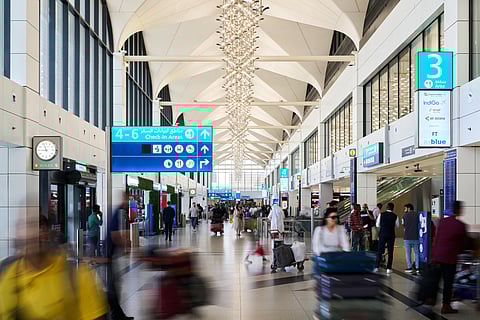
Dubai: If you travelled in 2025 and felt airports were constantly busy, you weren’t imagining it.
New regional data shows the Gulf has quietly entered a new travel era — one where “off-season” is fading, and demand now stays high for much of the year.
According to new data from Dragonpass, which operates digital airport services across the region, more than half of all GCC travel now happens between June and November, turning what used to be a short summer rush into a six-month peak.
For travellers in the UAE, that shift is already visible at check-in desks, immigration halls and departure gates.
“Travel demand in the GCC is no longer seasonal in the traditional sense,” said Andrew Harrison-Chinn, Chief Marketing Officer at Dragonpass. “It’s continuous, high-volume and increasingly complex to manage.”
6-month 'peak season' norm
Travel data from six GCC markets shows that 56% of all travel activity now falls between June and November, with July, August and October emerging as the busiest months of the year.
March is now the only period when all GCC countries see a noticeable slowdown. For UAE residents, this helps explain why flights feel fuller, fares fluctuate more often and airport queues stretch beyond traditional holiday periods.
Saudi Arabia and the UAE still dominate regional movement, together accounting for nearly 80% of all GCC travel. But the pattern of sustained demand is now shared across all six markets, creating what analysts describe as a new, region-wide travel rhythm.
Flying not just from mega-hubs
The way people in the UAE travel is also changing.
While Dubai, Riyadh and Jeddah remain the Gulf’s biggest aviation hubs, their monopoly is slowly easing. Dragonpass found that secondary airports handled 32.4% of total GCC travel in 2025, up from the year before.
That means more travellers are starting journeys from a wider mix of airports — whether for convenience, price, or new direct routes.
“This isn’t about the decline of major hubs,” Harrison-Chinn said. “It’s about the expansion of choice. Travellers are spreading across more airports as connectivity improves.”
For UAE passengers, this is reflected in growing international services from airports beyond Dubai International, and stronger regional links feeding into Saudi Arabia’s rapidly expanding aviation network.
Speed matters more than space
The shift is even clearer among frequent flyers and premium travellers.
The data also shows that 47% of premium travel activity now happens outside the top three airports, suggesting that high-value passengers are no longer concentrated only in mega-terminals.
At the same time, the company recorded a 1,010% year-on-year surge in Fast Track usage, a service that allows travellers to bypass queues at security and immigration.
The message is clear: travellers are increasingly willing to pay for time, predictability and smoother journeys, especially as busy periods stretch across half the year.
“Premium travel is no longer defined only by luxury lounges,” Harrison-Chinn said. “In a high-demand environment, efficiency has become the ultimate upgrade.”
For UAE travellers, that translates into rising interest in fast-track services, pre-booked airport experiences and tools that reduce uncertainty in crowded terminals.
What this means for your trips
As travel volumes stay elevated longer and spread across more airports, the entire Gulf travel ecosystem is being forced to adapt.
Airports must design for permanent high traffic, not short surges. Airlines are adjusting networks. Service providers are investing more heavily in passenger-flow solutions rather than seasonal capacity fixes.
For travellers, the shift is already personal. It now quietly shapes how early you book, where you choose to fly from, and how much ease and flexibility are worth to you.
The data suggests the future of GCC travel will be shaped less by where you fly, and more by how efficiently you move through airports that are busier, more distributed, and rarely quiet anymore.
For UAE residents planning holidays, work trips or quick getaways in 2026, one thing is becoming clear: Peak season is no longer a few weeks. It’s most of the year.