Rupee hits all-time low, boosting value for Indian expats sending money home
Rupee slips to ₹24.6 per dirham as US trade uncertainty and outflows drag sentiment
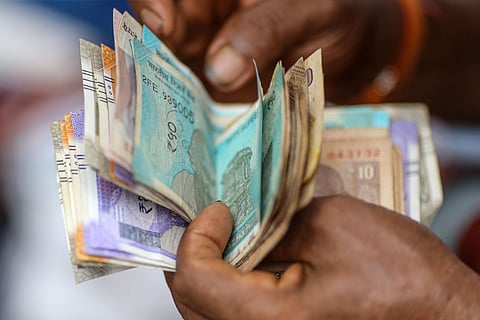
Dubai: The Indian rupee slid to an all-time low on Monday morning, continuing a sequence of losses that has rattled investor sentiment. The exchange rate stood at ₹24.6 per UAE dirham, marking the weakest on record and extending the stretch of declines seen in recent weeks. (Check live forex rates here)
The downturn came as the rupee depreciated by nine paise against the US dollar in early trade, touching a new low of ₹90.58. Uncertainty surrounding an India–US trade agreement and persistent foreign outflows from equities and bonds have weighed on the currency. At the interbank market, the currency opened at ₹90.53 per dollar before easing further.
Forex analysts say the rupee’s outlook remains fragile.
Dirham–rupee rate firm across December
The dirham’s value against the rupee has been steadily climbing across the past month. On November 16, one dirham fetched ₹24.05. By the end of that month, it had strengthened to ₹24.25. The upward move continued into December, crossing ₹24.30 on December 1 and breaching ₹24.40 just over a week later.
After holding near ₹24.4 for several sessions, the rate nudged higher again from December 10 onward. Monday’s quote of ₹24.6 per dirham marks the steepest point of depreciation this month, highlighting the currency’s persistent weakness.
Outflows and sentiment drag
The rupee’s challenges stem partly from sizable capital outflows. Foreign investors have withdrawn more than $17 billion from Indian equities this year, surpassing 2022’s record, while also trimming their bond exposure. Each fresh dip feeds a feedback loop where currency losses deter further inflows, leaving the rupee vulnerable to global shocks.
Analysts say sentiment has been further dampened by the prolonged wait for a comprehensive trade agreement with the US. The deal, originally expected this year, could now be delayed until March. Meanwhile, widening trade deficits and importer hedging have kept the supply of export dollars thin in the domestic market.
Scope for RBI action
The Reserve Bank of India continues to monitor exchange-rate volatility, stepping in periodically to temper sharp moves. Intervention, however, has appeared less forceful as the rupee slipped beyond the ₹88.80-per-dollar range. Market participants believe the central bank is unlikely to defend a fixed level, focusing instead on smoothing extreme swings.
The broader market tone also remains cautious. Asian stocks opened lower on Monday, mirroring overnight weakness in US markets. Traders point to the global policy calendar as a key near-term variable, with central banks in Japan, the UK, and the eurozone due to set rates this week.
For Indian expatriates in the UAE, the weaker rupee has opened a temporary window of opportunity. At ₹24.6 per dirham, remitters are fetching nearly 5%more compared with early November. This boost helps cover monthly obligations such as school fees, rent, and loan repayments back home.
Still, analysts urge caution, warning that volatility remains high. Should progress on the trade front or a change in risk sentiment emerge, the rupee could retrace part of its losses.
- With inputs from agencies


