UAE residents wonder whether to buy or rent
With property prices down do UAE residents prefer buying real estate or renting — or are they waiting and watching?
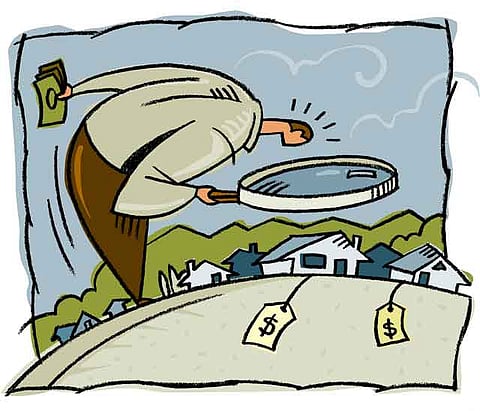
Buy or rent?
With house prices dipping at a time of increasing supply and tumbling oil prices, buying property seems a worthwhile prospect for expatriates looking at laying down roots here in the UAE. While investor interest in the market has waned over the past year, realtors feel a healthy number of end users are considering turning their backs on expensive rentals to take advantage of slipping property prices.
However with a further price slump anticipated, ratings agency Standard & Poor’s predicted a 20 per cent fall in prices, while property broker JLL was more optimistic, looking at a 10 per cent fall in prices for this year. Expatriates on their part are willing to play the waiting game to capitalise on best rates as prices fall.
Israa Al Tawi, a 31-year-old Palestinian expat who lives in Ajman and works as an administrative officer in Dubai, says houses continue to remain too costly for him and his family to consider giving up renting. “Prices are still high and in Ajman the prices have not dropped,” he says. “So we will wait and watch.”
Nadeem Rasheed, a Dubai-based photographer, agrees that prices are still high but says he is willing to consider buying should they fall in line with realtors’ expectations. “The prices are down but not to the level where we would consider buying,” says the 40-year-old Pakistani expatriate. “I think there will be further correction in the market and that is the time we will buy property here.”
Mohammed Tabrez, a 29-year-old Indian expatriate and Dubai resident, says “buying now makes sense”, but feels he will have to avail of a loan before any such purchase.
Filipino expatriate Roland Casanas, who also lives and works in the emirate, is looking to invest but is watching the market in anticipation of falling prices. “I would rather wait for some time to buy as the prices may drop further,” says the 35-year-old.
Despite the slump in prices, many expatriates say owning their own home is still out of reach as they are unable to stump up the larger deposits required since the mortgage laws introduced in 2013. Expat buying a property for under Dh5 million must now produce a minimum deposit of 25 per cent, rising to 35 per cent for properties above Dh5 million and 40 per cent for second properties.
Monika Mansour, who would love to buy property to avoid facing the pressures of annual rent hikes is also stumped by high costs and increased cost of living.
“There is nothing affordable in the market unless it is out in the desert somewhere,” says the German expatriate. “Secondly, all my savings go to increasing prices left and right… fuel, groceries, internet, insurance, etc.” Such costs mean the Abu Dhabi resident would struggle with the down payment on a property.
Mansour welcomed rent-to-own schemes such as the one offered several years ago by Aldar Properties, Abu Dhabi’s largest developer, which helped expatriates buy new homes. “It was the perfect solution,” she says. “Unfortunately when I was about to purchase the property I was living in, down payments increased from 10 per cent to 25 per cent, so once more I had to move on.
“I understand that banks need to secure their lending but if they would come up with a solution for buyers who want to live in [the property] opposed to buyers who are looking for a big deal in the market, then rental and buying prices would look entirely different here.”
According to the UAE Residential Market Overview from ReidIn.com, a real estate information portal, sale prices in Dubai dropped 4 per cent in the first quarter and 8 per cent year-on-year. Abu Dhabi is facing a similar phenomenon, but to a lesser extent.
Diane Monet Nobles, Office School Manager for Expressions of Dance and Drama in Abu Dhabi, has lived in the UAE for eight years. The American feels it’s a more financially viable solution to invest in property in her home country than in the UAE where real estate prices, she says, are still too high and it is a place expats can never retire. “Using the money we have saved living in Abu Dhabi, we have bought two new properties in the US, as opposed to probably having to wait another five years to buy property here,” says the 61-year-old. “Since you can never be a citizen here, we will be able to go back home and take care of our own properties.”
Khawar Khan, Research Manager at Dubai real estate agency Knight Frank, says a relatively healthy number of end users are purchasing property. “While investor interest in residential property has waned over the past year, end users have been relatively active,” he says. “This is because the downward adjustment in prices has improved affordability compared to 12-18 months earlier.
“However, the introduction of mortgage caps and higher transfer fees at the end of 2013 significantly increased the cost of purchase, which remains a hurdle for some.”
Helen Tatham, Managing Partner of Prime Places estate agents in Dubai, says despite forecasts that rental rates would drop by around 10 per cent in the coming
12 months, this has not proved to be the case so far, particularly in the more popular communities in the emirate such as Arabian Ranches, Dubai Marina, Downtown Dubai and Jumeirah Lakes Towers.
“The areas that generally reflect this sentiment are lesser developed ones where there is still a high volume of new units handing over. There are many residents in the dilemma of whether to take the plunge to buy whilst it is so expensive to live here as a tenant, which is effectively killing disposable income levels.” While there is buying interest in the market, decision-making is taking longer than it used to, she says. “This is due to the anticipation of the market dropping further and difficulties in reaching common ground with sellers on price.”


