Saudi Arabia revs up property-financing reforms
The new law is expected to propel the creation of private mortgage finance firms and banks will infuse a lot of money
Riyadh: Advisers to Saudi Arabia's king have approved a long-delayed overhaul of the country's mortgage law after the monarch pledged more than $82 billion (Dh300.94 billion) to fund homebuilding.
The Shura Council agreed on its final amendments to the law and passed it to King Abdullah Bin Abdul Aziz for final approval, according to Saad Mariq, deputy chairman of the council's finance committee.
"The law will propel the creation of private mortgage finance companies and banks will infuse a lot of money into mortgages," Mariq said in a telephone interview on Tuesday.
"I expect to see the injection of tens of billions of riyals into the sector as a result."
Saudi Arabia's mortgage law will change the way home finance is regulated, from registering mortgages to prosecuting police officers who refuse to carry out eviction orders.
Removes legal ambiguity
The law, debated for ten years, will give rise to a private lending market that Capitas Group International estimates at $32 billion a year for the next decade.
"Plans that have been in the pipeline for ten years are happening overnight because of the realisation of the need for change," Alexis Antoniades, assistant professor of economics at Georgetown University's school of foreign services, said in a phone interview from Qatar.
"The change either has to come from within the system or it will come from outside, and if it's the latter it can destabilise the place."
On March 18, the king announced a plan to spend $67 billion to build 500,000 homes and turned the country's housing authority into a ministry with a budget of 15 billion riyals.
Three weeks earlier, he pledged to increase funding for housing by $15 billion.
The Shura council cleared a hurdle that had delayed the mortgage legislation for months on March 27 by passing rules that define the provider of a loan as the owner of a property rather than the borrower. That's likely to create a smoother foreclosure process and removes a legal ambiguity that has deterred banks from lending, Mariq said.
The council also resolved disputes on mortgage securitisation and approved penalties for violations of the rules. The king and the council of ministers now have sole responsibility for any other changes and final approval, he said.
Stocks rise
Saudi Arabia's Tadawul All-Share Real Estate Development Industries Index, which includes seven developers, climbed 9.5 per cent since the king announced plans to build half a million homes on February 18. That compares with a 1.4 per cent gain for the broader Tadawul All-Share Index.
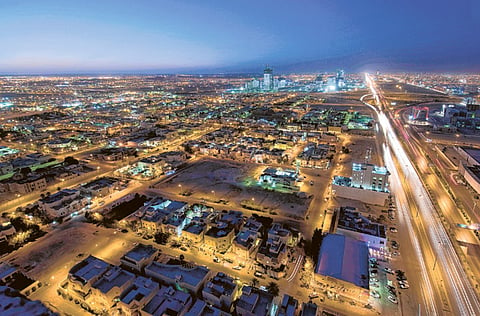
Saudi Arabia's population has quadrupled over the last 40 years to 28.7 million, creating a growing housing shortage. The Arab world's largest economy needs to build 900 homes a day over the next five years to meet demand, Jones Lang LaSalle has said.
Housing a priority
The council's quick action on the law after months of delays shows "the king has identified housing as one of the main problems that need to be addressed and that can only be construed as a positive," said Loic Pelichet, assistant vice-president of research at NBK Capital.
"The problem remains, how quickly can things move and that's very difficult to say."
Affordability is the main issue facing homebuyers in Saudi Arabia, where most of the homes now being built cater to the mid- to high-end of the market, said Saud Masud at Dubai investment bank Rasmala.
"The mortgage law is a means to create affordability by bridging supply to the user base through financing," he said. "What is still unclear is how they will get to the half million homes in the next five years and how many people could qualify for mortgages. It's not that many."


