Affordable housing: opportunities, challenges
How Dubai developers are addressing the affordability gap in the property market
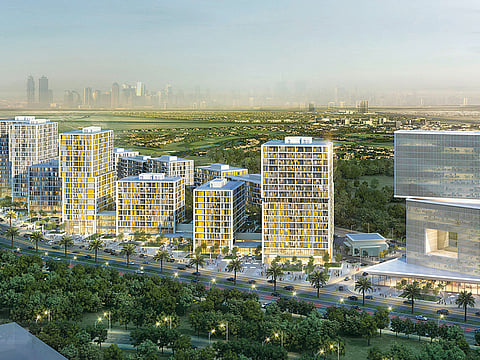
While Dubai has taken progressive steps towards affordable housing, a number of challenges remain to fully realise the goal of creating more budget-friendly homes in Dubai. Institutionalising a more nuanced definition of the term “affordable housing” may be an important step in this process.
“The implementation of a low-income housing policy may tackle this gap and allow a large number of low-income and middle-class families to benefit from real estate development in Dubai,” says Muhammad BinGhatti, CEO and head of architecture of Binghatti Holding. “There is a serious shortage of affordable housing options in Dubai, and this leads to traffic congestion caused by daily commuters who prefer to live in the northern emirates such as Sharjah while working in Dubai.”
Classification
BinGhatti proposes classifying households by income such as very low, low and middle-income. “Other elements of the classification shall comprise household size and the amount allocated to renting or buying a home compared to the gross household income.”
The Gulf Real Estate Awards 2018 awarded Deyaar’s Midtown Development as the best real estate project in the affordable housing segment. More than 63 per cent of units at the mixed-used development in Dubai Production City are priced Dh750,000 or less.
“We worked with the master developer to re-plan the area,” says Nasser Amer, vice-president of sales at Deyaar. “This involved merging 40 plots to create one mega plot, allowing us to create a spacious residential offerings for the middle-income bracket.” As part of its package, Deyaar accepts down payment as low as 5 per cent, and offers an extended payment plan of up to three years after handover.
“Similarities between affordable housing developments should hinge on the fact that they are able to deliver quality accommodation at a cost suitable to residents within a certain income bracket ,” says Amer. “The general rule of thumb for affordable housing is that it should be approximately 30 per cent of a resident’s monthly income.”
To be sure, Dubai last year announced a policy on affordable housing, which has been credited for further boosting the interest in this segment. “The policy maintains price stability and motivates developers to dedicate a percentage of their projects to low-income residents,” explains Mahmoud Al Burai, CEO of the Dubai Real Estate Institute. “As a result, we are seeing an increase in project and financing options.”
BinGhatti admits there is an increasing number of projects dedicated to middle-income classes, but he points out that less than 20 per cent of these projects are affordable to households earning less than Dh15,000 per month. “Most of the projects that are currently being built target households earning between Dh15,000 and Dh30,000.
“Most of the new projects in the market offer smaller unit sizes to keep prices attractive. Developers should start providing housing supply for the segment that earns below Dh10,000 as the supply for this segment is limited to studios and one-bedroom apartments, which is not attractive for families.”
Developer initiatives
Developers should also be more proactive in introducing innovative and practical ways to provide luxury features and amenities in affordable projects. “For instance, developers could improve space usage by including integrated space-saving equipment and furniture. Developers should also think of ways to offer units with high-quality materials and finishing,” says BinGhatti.
Allowing buyers to pay 50 per cent or less as down payment over a prolonged period is another key step, as it enables buyers to take up to 75 per cent mortgage on the value of the project upon its completion, or benefit from paying directly to the developer over an extended period.
Atif Rahman, partner and director of Danube Properties, which specialises in affordable housing, believes the segment is seeing encouraging signs, but two elements still need greater attention: land supply and liberalised credit facility.
“We need to start developing communities suitable for affordable housing projects, which not only includes the plot price but also revising the development control regulation [DCR],” says Rahman. “The mortgage facilities need attention too, which if achieved will not only boost the real estate sector but also benefit the banking sector. You can cater to the consumer needs by not just creating a suitable product, but also empowering them to buy the product. However, such facilities need to be protected with strict regulations so that they don’t lead to misuse and inflation.”


