Abu Dhabi-Dubai rental imbalance unlikely to retain hold
Price correction in one expected to eventually affect the other
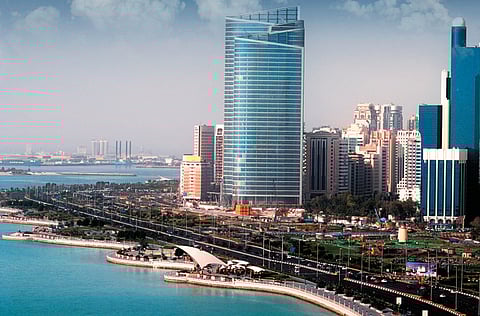
A majority of market observers concur that the stark difference in values, especially on the rental side, compared with Dubai is not justifiable. "There is a very interesting dichotomy at the moment between what's happening in Abu Dhabi and Dubai," says Steven Morgan, head of Dubai operations and overseeing the Abu Dhabi office at Cluttons. "Abu Dhabi arguably has a sustainable economy, but there is a rental imbalance at the moment that isn't sustainable going forward."
Fresh data suggests Morgan may have a point there. A closer look at regional real estate consultancy Investment Boutique's rent figures of the last quarter of 2009 provides the evidence.
The rent differential between a low-end apartment in Abu Dhabi and Dubai starts from Dh10,000 to Dh30,000 for a studio and one bedroom, respectively while it stands at Dh50,000 and Dh70,000 for a two- and three-bedroom. According to the IB report, this effectively makes studios an unaffordable option in Abu Dhabi. At Dh40,000 a year this segment is therefore an affordable option for those in the low-medium income bracket.
People in the medium-high income bracket can afford one-bedroom apartments and only the high-income earners can afford all property sizes. Yet, Abu Dhabi maintains high rents due to the fact that it is heavily undersupplied in all segments. The unmet demand, estimated at 26 per cent, lives in Dubai. "Those who are looking for a much sought-after two-bedroom property in the medium- to high-end segment would go to Dubai," says Heather Wipperman Amiji, CEO of Investment Boutique. "So will those seeking a medium to upper level three-bedroom apartment as their cost is 70 per cent lower than in Abu Dhabi."
Until there is enough supply of residential and high-rise communities to equal Dubai's, many would still prefer to live in Dubai and commute, instead of paying higher rents for less lifestyle. With the Khalifa Expressway further reducing travel time this option will become attractive to many.
"There is play-off and it's not equal at the moment," Morgan adds. "It shouldn't be the case that Dubai property is half the price of Abu Dhabi's. We'll begin to see it balance out as supply comes on-line."
Morgan reckons rents aren't likely to move much over the next 12 months. "To a certain extent Dubai will benefit from that and ultimately I see the cities merging into one."
There are few comparable communities today in Abu Dhabi. One which could rival Dubai Marina soon is probably Al Raha Beach. "It may take a while before Al Raha could substitute Dubai Marina," says Heather. However, she remarks that not everyone is interested in living the Dubai lifestyle despite its affordability. "The economic recovery and job creation are probably going to happen faster in Abu Dhabi," she adds.
"Many families prefer Abu Dhabi's lifestyle and are prepared to pay a premium for it."
Investment Boutique's research indicates that no significant relocation from Dubai to Abu Dhabi would take place before 2012. This suggests that in the meantime Abu Dhabi needs to make sure residents stay put.
"Dubai and Abu Dhabi have to be aware that there is demand for mid-upper and lower level properties and [they] interact," highlights Tasweek's CEO Masood Al Awar. "When Dubai's rents drop, Abu Dhabi has to reduce theirs.
"People can check for properties in both emirates, so the price has to be right. People are looking for quality and value for money." The same goes for property, which can be bought. Dubai's prices peaked and crashed because of sentiment and it was bound to have a knock-on effect on Abu Dhabi as well.
"Clearly, prices started at a higher point in Abu Dhabi and you can't have a property correction in one city and not in the other only 150km down the road," Morgan emphasises.
"Arguably the economy there is better equipped to deal with it in the short-term," he adds.
Looking for stability
"Investors' fixed yields expectations of 10 or 15 per cent simply can't happen anymore. People made a lot of money, but the cow has been milked to death, now we need to find another one. The impact will continue being felt for another year or two in Dubai and then when Abu Dhabi's projects come online they will stabilise both markets."
Masood Al Awar, Tasweek's CEO


