Who are the seven founders worth nearly $20b each after Anthropic’s IPO?
Claude’s maker priced its IPO at $83 a share, putting each founder’s stake at nearly $20b
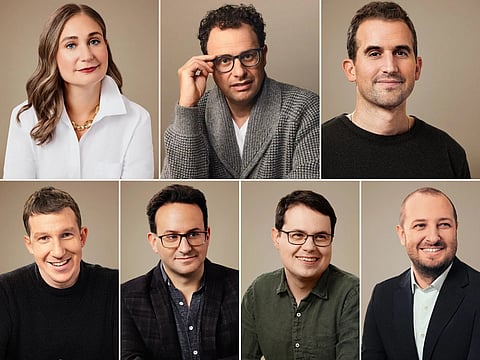
Dubai: Five years after seven former OpenAI colleagues founded Anthropic, the company behind Claude is heading to Nasdaq at a fully diluted valuation of about $1.5 trillion.
The $81.3 billion initial public offering is the largest on record, overtaking SpaceX’s debut in June. At the $83 offer price, the seven founders’ disclosed holdings after the sale are worth about $138.9 billion combined on paper.
Get updated faster and for FREE: Download the Gulf News app now - simply click here.
The prospectus lists each founder as selling roughly 3.38 million shares, worth about $280 million apiece before fees and taxes. The estimates below apply the offer price to the remaining shares and qualifying equity awards disclosed in the filing.
1. Tom Brown | $19.99 billion
Brown led the engineering work on GPT-3 at OpenAI. At Anthropic, he is chief compute officer, responsible for securing and managing the computing capacity the company uses to train and run models such as Claude. His disclosed holdings are the largest of the seven at the offer price.
2. Sam McCandlish | $19.92 billion
McCandlish built and led a team at OpenAI that studied what happens to AI models as they grow larger. As Anthropic’s chief architect, he oversees work on large-scale model training, including the systems researchers use to train models before refining them for specific tasks.
3. Chris Olah | $19.88 billion
Olah leads Anthropic’s interpretability research, which examines what happens inside an AI model when it produces an answer. He led similar work at OpenAI and previously worked as a research scientist at Google Brain.
4. Jared Kaplan | $19.83 billion
A theoretical physicist with a PhD from Harvard, Kaplan is Anthropic’s chief science officer. His research on AI scaling laws helped show how model performance changes as researchers vary the model’s size, the amount of training data and the computing power they use. That gives AI developers a way to estimate what they might gain from spending more on training.
5. Jack Clark | $19.83 billion
Clark covered technology for publications including Bloomberg before joining OpenAI, where he became policy director. He is now Anthropic’s head of public benefit and leads the Anthropic Institute, a think tank that studies how advanced AI could affect society.
6. Daniela Amodei | $19.76 billion
Daniela Amodei worked in risk management at payments company Stripe before joining OpenAI, where her roles included vice-president of safety and policy. The English literature graduate is now Anthropic’s president and board chair. She manages the executive team and oversees work across research, product and commercial operations.
7. Dario Amodei | $19.69 billion
Anthropic’s chief executive was OpenAI’s vice-president of research and previously worked at Google and Baidu. He holds a physics degree from Stanford and a PhD in biophysics from Princeton. He now sets Anthropic’s research direction and leads the company alongside his sister Daniela. His equity estimate excludes charitable shares for which he holds voting rights.