UAE is reviewing risks to trade flows and essential supplies after US tariffs on Iran, says minister
Trade, food supply and consumer prices under review after US tariff move on Iran
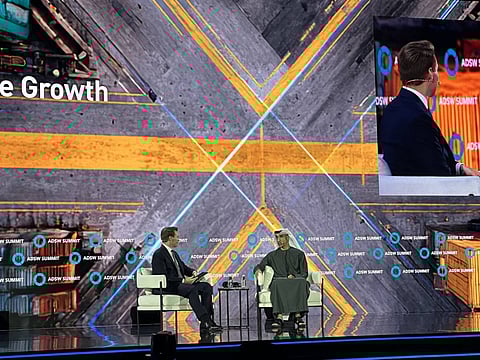
Abu Dhabi: The UAE is assessing the impact of new US tariffs on Iran and political upheaval in Venezuela, even as the country presses ahead with an aggressive push to expand trade ties across Africa, Asia and Latin America, Dr Thani Al Zeyoudi, Minister of Foreign Trade, Government of the UAE, said on Tuesday.
Speaking at Abu Dhabi Sustainability Week, Al Zeyoudi said details of US President Donald Trump’s announcement of a 25% tariff on countries doing business with Iran remain unclear, but the implications could be significant for regional supply chains.
“Everyone woke up today with the announcements by President Trump on the 25% additional duties,” he said. “The details of the announcement are still not clear, which we’re trying to explore and investigate further.”
Iran trade and supply risks
Iran is the UAE’s second-largest trading partner after China and a key supplier of food and essential commodities. Al Zeyoudi said any disruption would need to be carefully weighed against its effect on prices, availability and regional stability.
“We have to evaluate what are the consequences of disturbing the supply of many of the products and commodities that come from Iran,” he said. “Is this going to affect the prices on the consumer availability and how much they’re paying to have the alternative?”
Neighbourly relations also factor into the assessment. “Iran is our neighbour, and we have to make sure that we’re providing the right commodities to their people,” he said.
No decision has been taken, Al Zeyoudi added, but the measures will have an impact once implementation details become clear.
Venezuela and Latin America remain in focus
Political change in Venezuela presents a separate test. The UAE has a bilateral investment treaty with the country, signed during Al Zeyoudi’s visit to Caracas, and the fall of President Nicolás Maduro has raised questions about continuity.
“The relationship with South America is growing, and we’re having excellent engagements with the majority of countries,” he said, adding that the UAE will continue its engagement with Venezuela despite the leadership change.
“It’s business as usual. We’re going to continue,” Al Zeyoudi said, pointing to Venezuela’s resource base and the presence of US companies operating there under special clearances.
The UAE has expanded its trade footprint across the region, signing or negotiating agreements with Colombia, Costa Rica, Chile, Mexico, Ecuador and Peru, alongside new deals concluded this week with Bolivia and others.
Trade growth outpaces global trends
These developments come as the UAE posts strong growth in non-oil trade. Al Zeyoudi said trade volumes through October have already exceeded full-year 2024 levels.
“We’re expecting growth around 24 to 25% when we announce the full-year numbers,” he said, compared with global trade growth of about 7%.
Two of the latest agreements, signed with Nigeria and the Philippines, are expected to deliver measurable economic gains. Nigeria’s deal could lift UAE GDP by about 1.5 to 1.6% by 2033, while the Philippines agreement may add about 0.6% to UAE GDP by 2032, based on current modelling.
Supply chains are the biggest risk
Despite the momentum, Al Zeyoudi said supply chain disruption remains the biggest risk to global trade in 2026.
“Supply chain is the main issue,” he said, warning that tariffs and geopolitical shocks can quickly distort commodity flows.
The UAE plans to respond by accelerating digitalisation across trade processes. Al Zeyoudi said the Ministry of Foreign Trade will soon announce a major digital upgrade to strengthen supply chain resilience and allow faster assessment of policy impacts using predictive analytics.
Al Zeyoudi said the pace of global disruption shows no sign of slowing. “We’re living in an era where those shocking events are happening,” he said.
Openness to trade, investment, talent and technology remains the UAE’s anchor, even as volatility rises. In a fragmented global environment, that approach is being tested, but the UAE intends to stay agile rather than retreat behind barriers.