US solar capacity reaches milestone, enough to power 50 million homes
Milestone highlights solar’s rise as a major pillar of America’s power grid
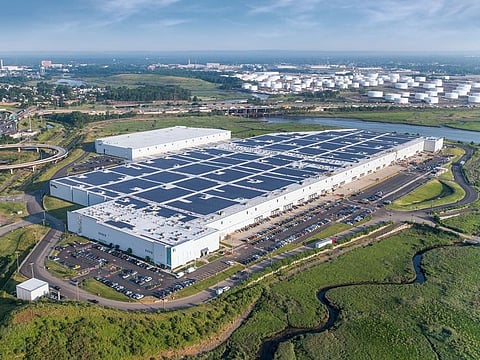
The United States has installed enough solar capacity to power more than 50 million homes, an industry milestone that underscores the rapid expansion of renewable energy even as new tariffs, permitting barriers and policy uncertainty threaten future growth.
The Solar Energy Industries Association, or SEIA, highlighted the achievement in a recent social-media post, citing its latest Solar Market Insight report with Wood Mackenzie.
11.4 GW added
US developers added 11.4 gigawatts of direct-current (DC) solar capacity in the second quarter of 2026 — a 45% increase from a year earlier and 43% more than in the first quarter, according to SEIA data.
The additions lifted cumulative US solar capacity to roughly 299 gigawatts, SEIA said.
Utility-scale projects made up the bulk of the growth, contributing 9.6 GW during the quarter, while commercial installations also increased.
Residential solar, however, declined 10% from the first quarter to 995 megawatts, according to Morningstar.
Utility-scale projects drive growth
The figures show that solar remains one of the fastest-growing sources of new US electricity capacity. Utility-scale installations grew 61% year on year during the April-to-June period, helped by developers rushing to start projects before expected changes to federal tax incentives.
States carried by President Donald Trump in the 2024 election accounted for 71% of the quarter’s new solar capacity, according to industry reporting, illustrating that large projects have increasingly become an economic-development issue across Republican- and Democratic-leaning states alike, Electrek reported.
“Solar and storage have grown to a scale most Americans have yet to fully realize,” SEIA President and CEO Tim Pawlenty said, arguing that the technologies will be essential to meeting the country’s rising electricity needs.
Tariffs cloud outlook
The milestone comes as the industry faces new trade barriers.
The US Commerce Department on Sept. 11 finalised steep antidumping and countervailing duties on solar cells and panels imported from India, Indonesia and Laos, finding that producers had sold goods at unfairly low prices and received unfair subsidies.
The measures will take effect only if the US International Trade Commission makes an affirmative final injury finding, scheduled for Oct. 14, according to Reuters.
SEIA has opposed tariffs on all three countries, warning that higher import costs could slow deployment and complicate efforts to build a more diversified supply chain.
The industry is also confronting transmission constraints, lengthy permitting processes and the prospect of a “tax-credit cliff.”
SEIA and Wood Mackenzie expect annual US solar additions to remain around 44 GWdc, but say growth could flatten without clearer policy and faster grid expansion.
Rising US demand for electricity
The solar buildout is arriving as US electricity demand rises, driven by data centers, AI computing, manufacturing investment and electrification. It also provides a domestic energy source that can reduce exposure to fuel-price volatility.
But reaching the next 50 million homes will depend on more than panels. It will require transmission lines, battery storage, faster interconnection approvals and stable rules for developers, manufacturers and households.
For now, SEIA’s post marks a clear shift: solar is no longer a niche supplement to the US grid.
It is becoming a major pillar of America’s power system — even as its policy future grows more uncertain.


