Philippines: Aboitiz Power advances deployment of giant power banks co-located with hydropower plants
Large-scale battery energy storage systems underscore drive towards energy security
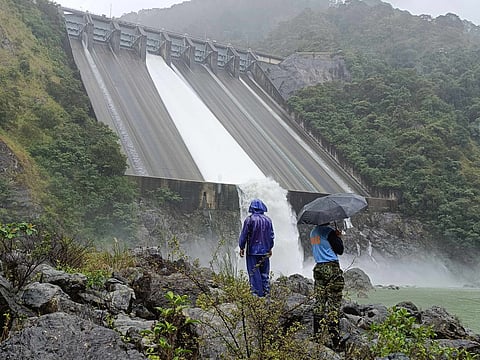
Manila: Giant power banks teaming up with waterfalls. That's right, it's like giving your city's energy grid a massive caffeine boost — and Aboitiz Power Corp is making it happen.
These enormous "super batteries" (we're talking Battery Energy Storage Systems, or BESS) chilling right next to roaring hydroelectric turbines in Benguet's misty mountains.
These bad boys store excess hydropower juice when the water's gushing like a firehose, then unleash it during peak hours or dry spells — like a squirrel hoarding nuts, but for megawatts.
It's not just cool tech wizardry; it's a game-changer for the Philippines' energy scene.
Aboitiz is deploying these large-scale setups with existing hydro plants.
The co-location with existing hydropower assets in Benguet is deliberate.
It's some of the first such installations in the country that dovetail grid-scale batteries with water power.
The aim: smoothing out supply dips, slashing blackouts, and supercharging national grid reliability.


Aboitiz Power disclosed that its joint venture, SN Aboitiz Power (SNAP) — formed with Norway-based renewable energy company Scatec — has reached "financial close" for two new BESS projects with a combined capacity of 80 megawatts (MW).
The projects comprise a 40-MW battery energy storage facility at the Binga Hydroelectric Power Plant (Phase 2) and another 40-MW system at the Ambuklao Hydroelectric Power Plant.
Both facilities will be integrated into SNAP’s existing hydroelectric complexes.
Batteries to bolster Luzon grid
Specific technical and financial details were not immediately disclosed.
The company confirmed that the systems are designed to deliver ancillary services to the Luzon grid through the reserves market.
These services are essential to maintaining grid reliability.
The batteries come in handly particularly as the country increases the share of renewable energy in its electricity generation mix.
Role of BESS
Megawatts-scale battery energy storage systems (BESS) play a critical role in modern power systems.
Unlike traditional generation assets, BESS can act as "peaker plants", able to respond — almost instantaneously — to fluctuations in supply and demand.
This helps stabilise grid frequency, prevent power outages, and smooth the variability associated with renewable energy sources such as solar and wind.
Paired with hydropower
When paired with hydropower, storage further enhances system flexibility by allowing energy to be dispatched precisely when it is most needed.
The Department of Environment and Natural Resources (DENR) has identified 412 principal river basins across the country, in 119 proclaimed "watersheds".
For households and electricity subscribers, the value of BESS is measured less in direct energy supply and more in reliability, quality, and cost efficiency.
As an illustration, every 1 MW of battery storage capacity added to the grid can provide fast-response reserve power capable of supporting grid stability for thousands of connected customers during sudden disturbances, peak demand periods, or generator outages.
A BESS makes costly fossil-fuelled "peaker" plants (coal or gas-fired) impractical or unnecessary.
Operationally, this translates into fewer brownouts, more consistent voltage levels, and a reduced risk of widespread power interruptions —benefits that are immediately felt by ordinary homes and small businesses.
Cheaper power?
Over time, when enough BESS are put in place, these systems also help moderate electricity costs.
This comes in the form of reduced need for expensive emergency power purchases and enabling more renewable energy to be integrated without compromising reliability.
As "ancillary services" become increasingly critical to the country's energy security equation, increased BESS capacity is expected to contribute to a more resilient grid.
This will help absorb unexpected shocks, while supporting the government's long-term decarbonisation goals.
Energy backup portfolio
The Benguet projects build on SNAP’s growing energy storage portfolio, which already includes a 24-MW BESS at the Magat Hydroelectric Power Plant.
This expansion reflects Aboitiz Power’s strategic positioning across the energy value chain, spanning power generation, distribution, retail electricity services, and distributed energy solutions, with a balanced portfolio of renewable and non-renewable assets.
As the Philippines accelerates its energy transition, investments in battery energy storage are expected to play a central role in ensuring that renewable growth is matched by system reliability.
Through projects such as these, Aboitiz Power is helping lay the foundation for a future-ready power system—one that delivers cleaner energy while maintaining the stability and security that consumers and the broader economy depend on.
So, imagine homes lit up 24/7 and factories humming without a hitch — with less (or no more) brownouts ruining your Netflix binge.


