Marcos eyes Philippines–China joint oil exploration deal revival as Mideast War reshapes energy strategy
President underscores Philippine foreign policy remains rooted in peace, national interest
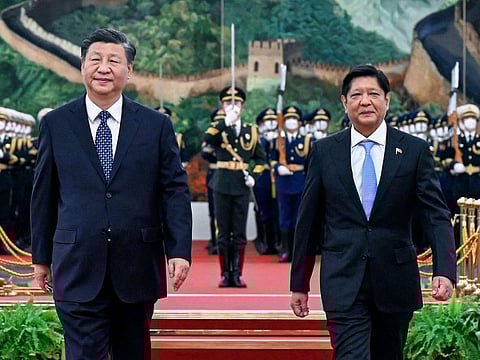
Manila: President Ferdinand Marcos Jr. said the escalating conflict in the Middle East could push the Philippines and China to revisit long-stalled talks on joint oil and gas exploration in the South China Sea, despite ongoing territorial disputes.
In an interview with Bloomberg, Marcos acknowledged that negotiations between Manila and Beijing have long been constrained by sovereignty issues.
“We’ve been talking about it for a great deal, but the territorial disputes will get in the way,” he said, adding that global developments—including tensions involving Iran—may now change the calculus.
“Maybe it should provide impetus for both sides to come to an agreement,” he added.
Marcos signaled that broader geopolitical shifts could force countries to rethink their alliances and economic strategies.
“It’s certainly going to happen… there’s going to be a very, very serious restructuring,” he said, noting that nations may need to “redraw” aspects of their international relationships.
Peace, national interest
Despite this, the President underscored that Philippine foreign policy remains rooted in peace and national interest.
“Our foreign policy is very simple: peace in the national interest. That’s it,” he said. “War is never in the national interest as far as the Philippines is concerned.”
The remarks suggest a potential shift from Manila’s earlier position.
In 2022, then-Foreign Affairs Secretary Teodoro Locsin Jr. announced the termination of joint exploration talks with China due to unresolved constitutional and sovereignty concerns.
However, Foreign Affairs Secretary Enrique Manalo has since said the Philippines has not closed the door on future negotiations, provided any agreement complies with the Constitution and safeguards national interest.


