Yango CEO advocates for AI as core architecture at BRIDGE Summit
Shuleyko says the future of apps belongs to systems that understand us before we speak
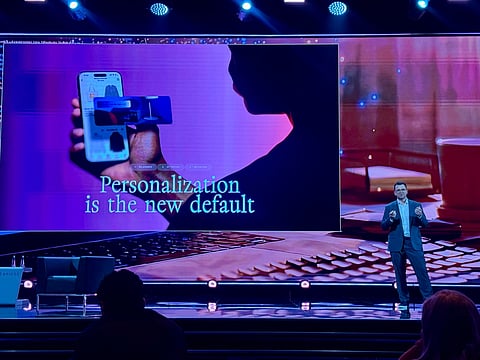
At a forum largely shaped by media leaders, content creators, and digital strategists, an unexpected and refreshingly external perspective came from Daniil Shuleyko, CEO of Yango Group. Unlike most speakers at BRIDGE Summit, Shuleyko does not work in media. His world is product architecture, large-scale digital infrastructure, and building city-level services. That distance gave his remarks a different tone — one focused not on storytelling, but on how people will interact with technology itself in the decade ahead.
A shift in user expectations: From interaction to anticipation
He began with a familiar observation: nearly every boardroom has spent the past few years debating how to “add AI.” Companies launched AI-powered features and rushed to attach the label to their products. “But end users do not care about AI,” he noted. “They care about whether the service works — fast, seamlessly, intuitively.”
Shuleyko argued that a new generation of users has already internalised a different standard. They are not buying technology for its own sake, but the convenience and capability it unlocks. The public shift began the moment ChatGPT gave mainstream users a frictionless interface to advanced models. What researchers had admired for years suddenly became accessible — and expectations rose overnight. “The baseline for what ‘good’ looks like,” he said, “shifted instantly and permanently.”
This behavioural change is reshaping how people interact with digital systems. Browsing is giving way to prompting; interaction is moving from “scroll and discover” to “ask and receive.” And the next phase, he suggested, is anticipatory: systems that recognise user intent before it is expressed. “The most powerful experiences,” he said, “will be the ones that appear just before you ask.”
Such a shift places new pressure on design and personalisation. Research shows consumers overwhelmingly prefer relevant, contextual experiences, and companies that lead in personalisation outperform the market. But AI-native users do not ask which model is running in the background. “They only care,” Shuleyko said, “if the experience is relevant, useful, and immediate.”
AI as architecture, not a feature
His strongest critique was reserved for how companies adopt AI. Many still treat it as a feature to be bolted onto legacy products. Shuleyko argued for a more fundamental transformation: “You don’t build an AI feature — you rethink how your product works.”
Yango has been moving toward agent-based architectures where intelligence is not an add-on, but the underlying logic shaping each interaction in real time. “Agents aren’t a layer,” he said. “They are the architecture.”
His appearance at BRIDGE Summit — a gathering focused on the future of content, influence, and digital communication — underscored a broader point: the industries discussing media today cannot ignore how rapidly user behaviour is shifting beneath them. As governments, creators, and platforms explored questions of trust and distribution, Shuleyko’s intervention pointed to the infrastructure-level changes that will determine how audiences interact with any digital environment.
Taking place at the Abu Dhabi National Exhibition Centre (ADNEC), BRIDGE Summit 2025 attracts more than 60,000 participants from 132 countries, 430+ global speakers, 1,200 chief executives, 260 advertising agencies, and 150 exhibitors. The event is one of the key initiatives of the Bridge Alliance, the world's first independent global organisation dedicated to advancing the media, content, and entertainment sectors while strengthening their diversity and impact on economies and societies.


