US ban on electronics affects flights from Dubai, Abu Dhabi
Ban applies to all US-bound passengers on direct flights originating from UAE, other Mideast countries
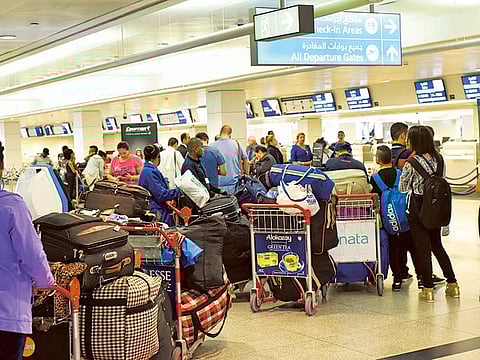
Dubai: A widespread security ban on electronic devices will take effect on Saturday and impact US-bound passengers originating from airports in the UAE and other countries in the Middle East and Africa.
The ban will last for about seven months and will be applicable to all nonstop direct flights to the United States originating from ten airports in eight Muslim-majority countries.
A spokesperson for Emirates confirmed on Tuesday that, following a new policy enforced by the Transportation Security Administration (TSA), electronic gadgets larger than a mobile phone - excluding medical devices - will not be allowed in their flight cabins.
“The directive comes into effect on 25 March 2017 and is valid until 14 October 2017, an Emirates spokesperson told Gulf News.
"It is applicable to all US-bound passengers from Dubai International Airport, whether originating or transiting through. Emirates requests that all passengers travelling to the US pack all electronic devices larger than a cell phone/smart phone in their checked-in baggage.”
On Tuesday, the US government warned that extremists plan to target passenger jets with bombs hidden in electronic devices, and banned carrying them onto flights from 10 Middle East airports.
Senior US officials told reporters that nine airlines from eight countries had been given 96 hours — beginning at 3:00 am (0700 GMT, 11am Tuesday), to ban devices bigger than a cellphone or smartphone from the cabin.
Devices banned
The US government is not allowing passengers on certain flights originating in the Middle East from including iPads, cameras, laptops and other electronic items in their carry-on bags starting Tuesday.
An official from the US told The Associated Press that the prohibition will affect US-bound nonstop flights from Dubai, Abu Dhabi in the UAE, Cairo in Egypt; Amman in Jordan; Kuwait City in Kuwait; Casablanca in Morocco; Doha in Qatar; Riyadh and Jeddah in Saudi Arabia and Istanbul in Turkey.
What are the airports covered?
No end date has been put on the order, and officials would not say whether the restriction might spread to other airports.
A spokesperson for Emirates earlier told Gulf News that they will comply with any changes on baggage requirements imposed by aviation authorities.
Etihad had also said earlier that it was not informed of the new policy.
“The airline’s policies have not changed but we will continue to work closely with the authorities in the US and here in Abu Dhabi,” the airline said in a statement.
Other Middle East carriers have already alerted their passengers about the ban.
In its latest notice, Royal Jordanian stated that, following instruction from concerned US departments, it is now prohibiting passengers departing to and arriving from the United States from carrying any electronic device inside the flight cabins.
“Cellular phones and medical devices needed during the flight are excluded from the ban,” the notice reads.
(With inputs from Reuters, AFP)
Electronic ban: By the numbers
50 flights: The number of flights daily from some of the busiest hubs in the Middle East, Turkey and North Africa will be obliged to follow the new emergency ruling.
3 major electronic items: The ban (not allowed to be taken to the passenger cabin) includes laptops, tablets and portable game consoles — electronic gear bigger than a cellphone or smartphone
9 airlines: The number of airlines from eight countries covered by the new rules
96 hours: The time given to airlines, starting from at 3:00 am (0700 GMT), 11am Dubai), within which to comply with the rule on banned devices


