Jet fuel shortage explained: Why airfares rise when its supply tightens
As supply tightens, airlines face higher costs, route cuts and rising passenger fares
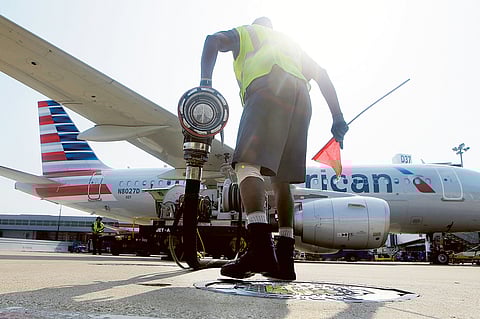
Dubai: Jet fuel shortages are fast becoming one of the biggest hidden pressures on global aviation, affecting everything from airline profitability to the price travellers pay for tickets.
While passengers may only notice the impact when fares suddenly rise, the causes run much deeper — from refinery bottlenecks and geopolitical tensions to fragile shipping routes and surging travel demand.
“Jet fuel remains the single most critical input cost for airlines after labour,” Willie Walsh, Director-General of IATA, has repeatedly warned in recent industry briefings, stressing that supply disruptions can destabilise airline networks far beyond the regions where shortages begin.
Reuters recently reported that, even after tanker routes reopened through the Gulf, IATA cautioned jet fuel supply shortages could continue for months because refinery repair timelines are much longer than shipping recovery periods.
Here is an explainer on how jet fuel shortages affect global aviation — from why supplies tighten and who controls production, to how disruptions push up airline costs and eventually make flights more expensive for passengers.
Get updated faster and for FREE: Download the Gulf News app now - simply click here.
How much is produced, consumed globally?
According to Energy Intelligence data cited in 2026 industry reporting, global jet fuel consumption reached 7.788 million barrels per day in 2025 and is expected to rise to nearly 7.99 million barrels per day in 2026. That is equivalent to roughly 120 billion gallons a year.
How is it produced?
Jet fuel comes from the middle part of the oil refining process, between lighter products like petrol and heavier ones like diesel. This kerosene-like fraction is then further treated and purified to meet strict aviation safety standards before it becomes Jet A or Jet A-1 fuel used in aircraft.
Unlike petrol shortages, jet fuel shortages are rarely caused by a lack of crude oil itself. The real issue lies in refining capacity.
Who produces it?
Aviation fuel is produced by specialised refineries operated by companies such as Shell, BP, ExxonMobil, Saudi Aramco, ADNOC, Sinopec and Indian Oil. These refineries are concentrated in strategic hubs including the US Gulf Coast, Singapore, South Korea, India, the UAE and Saudi Arabia.
CAPA aviation analysts often describe jet fuel shortages as “a refinery allocation problem rather than a crude oil supply problem”, because not every refinery is configured to produce sufficient aviation-grade kerosene.
The Middle East plays a crucial role in global jet fuel exports. The UAE, Saudi Arabia, Kuwait and Qatar are among the world’s largest exporters, supplying major aviation markets across Asia, Europe and Africa. Singapore, South Korea and India are also major refining exporters, while Europe relies heavily on distribution through Rotterdam and Belgium.
Much of this fuel passes through chokepoints such as the Strait of Hormuz, making the market highly vulnerable to conflict or shipping disruption. According to Reuters, more than one-fifth of the global seaborne jet fuel trade passes through the Strait of Hormuz.
Who consumes the most?
The United States remains the largest single consumer because of its huge domestic aviation market, followed by China, Europe, and fast-growing hub regions such as the Gulf, where airports in Dubai, Abu Dhabi and Doha serve as major global transit points. Demand is highest next in India.
However, FAA, ICAO, and IATA data consistently show that North America remains the largest single aviation fuel market due to dense domestic aviation traffic.
Why do shortages happen despite enough crude oil?
Aviation fuel requires specialised refining cuts. A refinery may produce petrol and diesel, but not enough aviation-grade kerosene. That mismatch causes shortages.
As CAPA analysts often note, jet fuel shortages are usually “a refinery allocation problem, not a crude supply problem.”
The cost element
For airlines, fuel is not just another expense — it is one of the largest components of operating cost. According to IATA economic data, fuel typically accounts for between 25 and 35 per cent of airline operating expenses and, during volatile periods, can exceed 40 per cent. This has a direct impact on ticket prices.
Industry analysts estimate that roughly 20 to 30 per cent of a passenger airfare reflects fuel costs. For a passenger ticket, roughly 20–30 per cent of the airfare reflects fuel cost, and on long-haul flights, the fuel share is higher.
For example, if a Dubai–London fare is around Dh1,835, roughly Dh367 to Dh550 of that ticket price may effectively represent fuel-related costs.
Why fuel affects fares quickly
Airlines price tickets months in advance, but fuel costs fluctuate daily. Sudden spikes squeeze margins before airlines can raise fares.
IATA’s weekly fuel monitor shows global jet fuel has recently averaged $197.83 per barrel, underscoring how rapidly costs can escalate in volatile periods.
Do airlines absorb any of the increase?
When shortages intensify, airlines begin adjusting operations quickly. Some reduce flight frequencies, suspend weaker routes, or tanker fuel from airports where supply is more reliable.
Reuters recently reported that several Asian carriers have already trimmed schedules and carried extra fuel loads because destination airport supplies had become either too costly or too uncertain. Eventually, airlines pass costs to passengers via fuel surcharges, higher base fares, and reduced promotional pricing.
Why shortages are worsening now
Experts cited by Reuters, Bloomberg and AP identify five main causes: Refinery shutdowns, geopolitical disruption, and rising air travel demand. Other reasons include export restrictions and a mismatch in the climate transition.
Airports Council International (ACI) Europe has warned that Europe could see jet fuel shortages if the Strait of Hormuz does not reopen in the next three weeks.
Is there an alternative to jet fuel?
The main alternative: Sustainable Aviation Fuel (SAF) – currently, the only scalable near-term substitute.
Made from used cooking oil, agricultural and municipal waste, and synthetic e-fuels. IATA says SAF production in 2025 will reach only 1.9 million tonnes, which is just 0.6 per cent of total global jet fuel consumption. With SAF, problems persist.
They have an extremely limited supply; SAF is 2–5 times more expensive than regular jet fuel; there are very few refineries certified to produce SAF; and feedstock constraints are a problem.
Walsh has repeatedly warned that SAF output is “far below what aviation needs.”
Worst-case scenario
When jet fuel shortages become severe, the effects spread rapidly across the aviation industry. Airlines are often forced to cut flights, reduce frequencies on less profitable routes, or suspend certain services altogether.
Ticket prices tend to rise sharply as carriers seek to offset higher fuel costs, while cargo operations can also face disruptions as freight airlines compete for a limited supply. In many cases, airlines resort to “tankering” fuel — carrying extra fuel from airports where it is cheaper or more readily available — to avoid shortages at destination airports. Smaller regional airports are usually hit first, as they have less storage capacity and fewer supply alternatives than major international hubs.


