Cathay Pacific Airbus A350's shocking 'tail strike' in Hong Kong go-around: Grounded, inspected — what happens next?
Airbus A350-1000 grounded after tail strike during aborted landing in Hong Kong
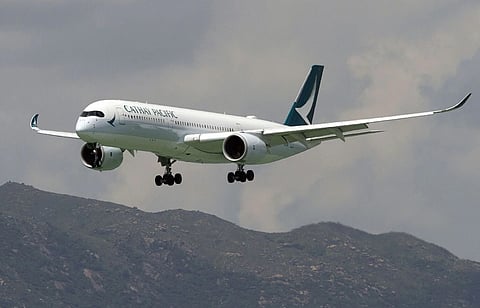
A Cathay Pacific A350-1000 has been grounded after a reported "tail strike" during its aborted initial attempt to land in Hong Kong recently.
On November 26, 2025, Flight CX764 of Cathay Pacific — from Ho Chi Minh City (Vietnam) to Hong Kong — experienced a “tail strike” during a go-around, a standard procedure when a landing attempt must be aborted.
Aviation Source reported that the aircraft, registered B-LXO, had approached Hong Kong International's runway 07C.


How common are tail strikes
Tail strikes are a common occurrence, despite pilot training efforts to prevent them, aviation industry sources say.
European planemaker Airbus data shows that tail strikes are more frequent during landing, accounting for about 65% of cases, compared to roughly 25% during takeoff or go-arounds.
These incidents can cause damage and safety risks, prompting manufacturers to implement technological solutions to reduce their occurrence.
Some Airbus aircraft feature pitch limit indicators on the Primary Flight Display below 400 feet during landing, accompanied by audio alerts like "PITCH PITCH" if the pitch exceeds safe limits.
Boeing introduced its Tail-Strike Protection system in 2003, first on the Boeing 777-300ER, which detects excessive rotation rates during takeoff and automatically adjusts the elevator to slow rotation if the tail nears the ground.
These systems help mitigate tail strike risks and protect aircraft integrity during critical phases of flight, as per Aerospace Global News.


