Al Maktoum Airport: 10 key numbers UAE travellers need to know about Dubai’s new airport
From its 2032 opening to 260 million passengers, here is what to know
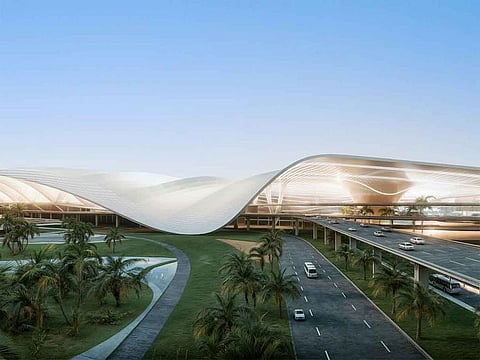
Dubai: Al Maktoum International Airport is on track to begin operations in 2032, setting the stage for one of the biggest changes to Dubai’s aviation landscape in decades.
The airport, which is already operational on a smaller scale as Dubai World Central (DWC), is undergoing a massive expansion that will eventually turn it into Dubai’s main aviation hub.
The first phase is designed to handle 150 million passengers a year, while the completed airport is planned to accommodate 260 million passengers and 12 million tonnes of cargo annually. For UAE travellers, that means a major change is coming — but not overnight.
Here are the key numbers that explain what is being built, when it will happen and what it could mean for your future flights.
2032: First phase
The first major date to remember is 2032.
Dubai Government confirmed in June that work on the first phase remains on schedule for operations to begin that year. Construction is progressing across runway infrastructure, passenger-terminal foundations and other major development packages.
The 2032 milestone refers to the first phase of the expanded airport, rather than the completion of the entire project.
150 million: First capacity
When the first phase becomes operational, Al Maktoum International will have capacity for 150 million passengers a year.
That gives some perspective on the scale of the development. Dubai International Airport (DXB) handled a record 95.2 million passengers in 2025.
In other words, the first phase of the new airport is being designed to handle significantly more passengers than DXB currently does in a year.
260 million: Ultimate capacity
The really big number comes later.
At full build-out, Al Maktoum International is planned to handle 260 million passengers annually. It will also have capacity for 12 million tonnes of cargo a year.
That is the capacity Dubai is building for the decades ahead, rather than an indication of how many passengers will use the airport when the first phase opens.
Five: Runways
The completed airport will have five parallel runways.
Dubai Airports says the expansion is ultimately planned around five runways, while the airport's masterplan is being delivered in phases to keep pace with expected passenger and cargo growth.
For passengers, more runways mean the airport is being built to accommodate a much greater volume of aircraft movements as operations expand.
400: Aircraft stands
The airport's first strategic phase is planned around 400 active and inactive aircraft stands, according to Dubai Aviation Engineering Projects.
The wider ultimate development will include more than 430 aircraft stands, according to the airport's published plans.
This is another indication that the project is not simply a larger terminal building. It is an entirely new aviation ecosystem designed around much higher aircraft and passenger volumes.
Get updated faster and for FREE: Download the Gulf News app now - simply click here.
Dh128 billion: Cost
The approved cost of the new passenger terminal project is AED128 billion.
The terminal design was approved in 2024, with Sheikh Mohammed bin Rashid Al Maktoum saying the completed airport would have the world's largest capacity, accommodate up to 260 million passengers and include five parallel runways and 400 aircraft gates.
Dubai Airports currently describes the development as a US$35 billion investment.
Dubai Airprots CEO Paul Griffiths told reporters at a media roundtable on Wednesday that Dh13 billion of contracts are already under construction, with the additional Dh55 billion to be awarded in various packages over the coming months.
"We've already in the last 15 months committed 10 million work hours of activity to the new project," Griffiths said.
"17,000 piles are already in the ground, and 45 million cubic metres of earth has been moved at DWC. What other proof do you need that our confidence in the future is completely unfazed by the development of the new airport?"
70 sq km: Airport size
At full development, Al Maktoum International is planned to span around 70 square kilometres.
The scale helps explain why Dubai is treating the project as more than an airport expansion. The site is being developed as part of the wider Dubai South growth area, with aviation, logistics, transport and other economic activity planned around it.
12 million: Cargo
The completed airport is designed to handle 12 million tonnes of cargo annually.
That capacity supports Dubai's wider ambitions as a global logistics and trade hub, linking aviation with cargo, shipping and the surrounding logistics district.
15 minutes: Baggage
Dubai Aviation Engineering Projects lists 15 minutes as the planned time for a passenger to receive luggage at the airport.
The airport's plans also include a metro station, a 6,000-space car park and four automated people-mover stations connecting passengers between the terminal and concourses.
For travellers, these details are potentially more meaningful than the headline capacity figures: the aim is to build an airport where moving through the facility is faster and more automated despite its enormous scale.
2032-35: The transition
The long-term plan is for operations to transition from DXB to Al Maktoum International as the new airport's capacity becomes available.
Dubai Airports has stressed that the transition will be smooth and carefully managed, rather than an abrupt switch.
That matters to UAE residents because DXB remains the city's main international gateway today. It handled 95.2 million passengers in 2025, its highest annual traffic on record.
The exact timing of individual airline and flight moves will therefore be important for travellers as the project progresses.


