Resilience is now the true measure of economic strength
Markets that sustain performance under pressure are emerging as the most competitive
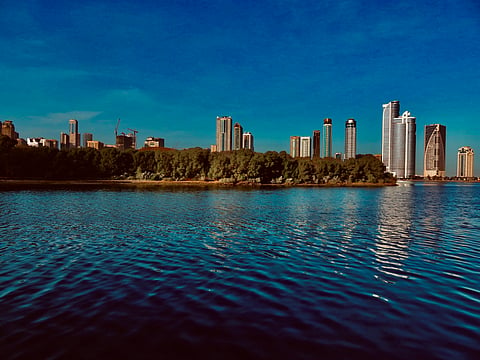
Dubai: The global investment landscape is undergoing a fundamental recalibration. The defining question for investors is no longer how quickly capital can grow, but how reliably it can endure.
Get updated faster and for FREE: Download the Gulf News app now - simply click here.
This is not a cyclical adjustment. It reflects a deeper structural shift in how risk and value are understood in a world where disruption is no longer occasional, but persistent. Supply chains can be tested overnight, trade flows can be rerouted, and market conditions can change with little warning. In such an environment, performance that cannot be sustained is no longer considered performance at all.
Global data points to this transition with increasing clarity. Analysis from Ernst & Young shows that strategies focused solely on short-term gains are becoming more exposed to risk, prompting a pivot toward stability, diversification, and long-term growth. The Resilience Redefined study by Bloomberg Media in collaboration with Mubadala, surveying 260 investors across 11 major markets, finds that resilience is now a defining factor in capital allocation.
Taken together, these signals point to a clear conclusion: stability is no longer a defensive position. It is a competitive advantage.
But stability itself has been redefined. It is no longer about steady returns in predictable conditions. It is about an economy’s ability to maintain continuity when conditions are not predictable. It is measured by how effectively systems absorb shocks, sustain activity, and adapt without losing momentum.
This is where geography, infrastructure, and economic design converge.
In Sharjah, resilience is not framed as an outcome. It is embedded in the structure of the economy. Nearly 96 percent of economic output is driven by non-oil sectors, reflecting a deliberate diversification strategy that reduces reliance on any single growth engine. This is supported by a network of specialised free zones, enabling depth across industries rather than concentration in one.
Economic participation
Long-term planning reinforces this foundation. The emirate’s Dh44.5 billion 2026 budget, with 35 percent allocated to infrastructure, underscores a sustained commitment to enabling connectivity, efficiency, and business expansion at scale. These are not short-term interventions, but structural investments designed to preserve economic continuity.
Equally important is the breadth of economic participation. As of February this year, with more than 84,000 active establishments, a 34 percent increase in new business licences, and an 18 percent rise in foreign-owned licences, Sharjah’s economy has enjoyed consistent, distributed activity. The 57 percent growth in home-based businesses in 2025 further signals that entrepreneurship is expanding across multiple layers of the economy, strengthening resilience from within.
This kind of distributed growth matters. It ensures that economic momentum is not dependent on isolated sectors or temporary surges, but on a continuous flow of enterprise creation and expansion.
Sharjah’s approach is also shaping the broader investment conversation. Through annually held international events such as the Sharjah Investment Forum, which was hosted in tandem with the World Investment Conference in the emirate last year - the emirate is actively convening global stakeholders to address how resilience is becoming central to investment strategy. This positions Sharjah not only as a destination for capital, but as a platform contributing to how future-ready investment models are defined.
For investors, the implications are clear. Capital is no longer simply seeking opportunity. It is seeking environments where opportunity can be sustained.
In this context, the most competitive economies will not be those that promise the fastest returns, but those that deliver consistent performance across cycles. They will be defined by their ability to integrate diversification, infrastructure, and policy into systems that function under pressure.
The shift is already underway. The focus is moving from speed to durability, from growth alone to the conditions that make growth viable over time.
Stability, once seen as the safer option, has become the smarter one.

- The writer is CEO of Invest in Sharjah


