US 'Iron Gate' blockade push against Iran meets resistance from Iraq, Turkey, Pakistan: Report
US faces pushback from Iran's neighbours over 'Iron Gate' blockade initiative
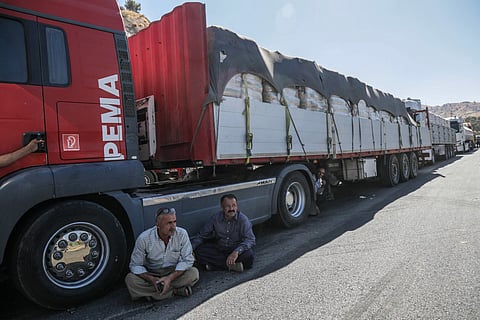
The United States is trying to extend its economic pressure campaign against Iran beyond the sea and air, targeting the country’s remaining land-trade routes.
But Iraq, Turkey and Pakistan are resisting Washington’s calls to close border crossings, The New York Times reported.
US officials have spent weeks pressing Iran’s neighbours to shut crossings, the report stated, citing three Iraqi officials and a US official familiar with the discussions.
The effort follows a US naval blockade that has severely restricted Iranian maritime trade and new sanctions that have disrupted much of Iran’s air-transport network.
Get it: Fast, verified news for FREE ... download the Gulf News app — simply click here
'Task Force Iron Gate'
On Saturday, US Central Command announced the creation of Task Force Iron Gate to combat the movement of weapons, sanctioned goods and illicit revenue across Iran’s land borders and the Caspian Sea.
The task force will comprise 20 civilian and military personnel based in Florida.
A US military official told the Times that the team would not conduct military operations.
Instead, they aim to encourage neighbouring countries to deploy their own forces against illicit trade.
According to Iraqi officials cited by the newspaper, Washington asked Baghdad to close all but two of its border crossings with Iran.
Iraq has refused, although it has temporarily shut some crossings.
Turkey has largely declined to change its border policies, while Pakistan has intermittently closed crossings, citing security concerns and new import procedures, the report said.
Cross-border commerce
Iran’s neighbours fear that tighter restrictions could damage their economies and trigger unrest in border communities dependent on cross-border commerce.
The report comes as the Trump administration increasingly emphasises economic pressure rather than renewed military strikes to force Tehran into a nuclear agreement.
“The economic pain that is being inflicted on Iran right now is extraordinary,” US Secretary of State Marco Rubio said Tuesday after a G7 meeting in Paris.
“We don’t need to conduct military strikes if we’re achieving the same objective through economic means,” he added.
Iranian officials have also sought to persuade neighbouring countries to maintain trade ties and resist US pressure.
On Tuesday, Iran’s deputy foreign minister said he had met Russia’s ambassador to discuss ways to counter US measures, including Task Force Iron Gate, according to the Times.
Cooperation crucial
The dispute shows that economic pressure depends on cooperation from Iran’s neighbours, whose border economies and political stability may be affected by stricter enforcement.
What’s next
Watch whether Iraq, Turkey and Pakistan tighten enforcement, whether Iran secures alternative trade channels, and whether Washington shifts from diplomatic persuasion to further sanctions or enforcement measures.


