Trump approves landmark US–Saudi deal on peaceful use of nuclear energy
Civilian reactor plan tests US nonproliferation standards in Middle East
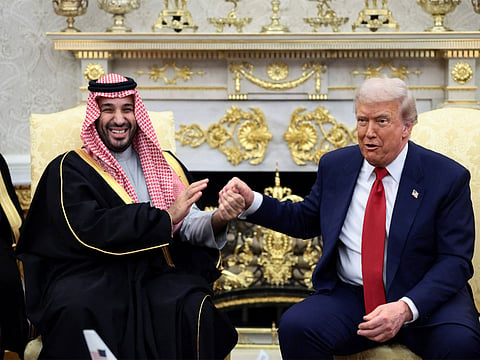
US President Donald Trump has approved a landmark civilian nuclear cooperation agreement with Saudi Arabia, clearing the way for US companies to help develop the kingdom's civilian nuclear energy programme.
Get — updated faster and for FREE: Download the Gulf News app now - simply click here
The US Department of Energy announced Wednesday that the two countries had signed a so-called "123 Agreement," a legal framework required under the US Atomic Energy Act for civilian nuclear cooperation.
The accord now heads to Congress for a mandatory review before it can take effect.
Congressional debate over nuclear proliferation and security in the Middle East is expected following Trump's approval.
The 30-year deal would allow American companies to supply nuclear technology, equipment and expertise for Saudi Arabia's planned civilian reactor programme.
The Saudi Ministry of Energy confirmed the agreement.
Saudi enrichment provision draws scrutiny
Unlike some previous U.S. nuclear cooperation agreements, however, the Saudi deal does not require Riyadh to adopt the so-called "gold standard" of nonproliferation, under which countries permanently renounce uranium enrichment and spent-fuel reprocessing.
Instead, officials said Saudi Arabia could eventually enrich uranium for fuel used in civilian nuclear reactors under agreed safeguards—a provision that has raised concerns among arms-control advocates because enrichment technology can, in theory, be used to produce material suitable for nuclear weapons if diverted from peaceful purposes.
The Trump administration has maintained that the agreement contains robust safeguards.
"The agreements uphold the highest standards of nuclear safety and nonproliferation," Energy Secretary Chris Wright said in a statement announcing the signing.
Strategic shift amid regional tensions
The agreement comes as Washington seeks to deepen strategic ties with Saudi Arabia while confronting escalating tensions with Iran.
The kingdom has long argued that it wants nuclear energy to diversify its economy, reduce domestic oil consumption and meet rapidly growing electricity demand under its Vision 2030 modernisation programme.
Saudi officials have also said that if Iran were ever to acquire a nuclear weapon, Riyadh would seek to match its capabilities — a position that has heightened international concern over the potential for a regional nuclear arms race.
The deal follows months of internal deliberations within the Trump administration.
US media previously reported that negotiations had stalled over concerns that the ongoing conflict with Iran could complicate congressional approval and increase scrutiny of any agreement involving sensitive nuclear technology.
Congressional review ahead
Under US law, Congress has the authority to review the agreement and could attempt to block or amend it, although doing so would require significant bipartisan support.
Lawmakers are expected to closely examine whether the safeguards are sufficient to prevent the diversion of nuclear technology for military purposes and whether the agreement adequately protects US national security interests.
If approved, the accord would mark one of the most significant US-Saudi strategic agreements in years, expanding cooperation in civilian nuclear energy while adding a new dimension to an already volatile geopolitical landscape shaped by the Iran conflict, regional security competition and concerns over nuclear proliferation.


