Palestinian village of Duma seethes with anger
Residents complain no one can protect them from Jewish terrorist attacks
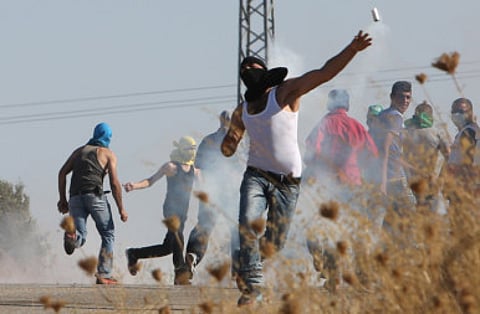
Duma, West Bank - Early one recent morning, a few residents of this sleepy hilltop hamlet heard that Jewish colonists were hurling rocks at a house. Almost instantly they started posting messages on Facebook, rousing neighbours. Then, somebody’s brother called a friend, who called his cousin, who called the Muslim preacher, who rushed to the mosque, flicked on a megaphone rigged to the minaret and shouted:
“Citizens must gather to repel the colonists!” said Hatem Dawabsheh, a Duma resident, recalling the early Sunday morning episode. “It was faster than Facebook,” he laughed “Everybody heard it at the same time.”
Tens of Duma’s young men headed into the olive orchards, using their cellphones for illumination and wooden broomsticks for protection, hoping their presence had shooed the attackers away.
The impromptu vigilante effort underscored a stark change in this West Bank village after Jewish terrorists killed an 18-month-old boy, Ali Dawabsheh, and his father and severely burning his mother and 4-year-old brother in a firebomb attack on their house earlier this month.
Duma, an isolated village, had long ago found a peaceful accommodation in an otherwise tense area. But now, with a mixture of anger and ambivalence, they run security patrols - and clash with Israeli occupation forces. With newfound vigour, they loudly criticise their Palestinian representatives, furious that officials co-opted the slain child’s funeral to appear instead as a festival of allegiance to the Palestinian Authority president, Mahmoud Abbas.
Now, some speak of uprising.
“Can we explode against the occupation, without exploding against the authority?” asked Mohammad Dawabsheh, 32 (most residents of the hamlet share the same family name). “No. You don’t fix your garden before fixing the house,” he said.
But this shift to lashing out, to vigilante patrols, to vociferously condemning Palestinian governance, is bleeding out across the West Bank amid rising frustration. Weary of conflict after the violence of their second intifada, Palestinians speak of deep unease over the future, and despair of their present.
Peace talks have been stalled for years, and Palestinian efforts to hold Israel to account in international forums - particularly the International Criminal Court - are unlikely to bring results in the near future. The Palestinian government, led by Abbas, 10 years into what was supposed to be a five-year term, is increasingly seen as neglectful and corrupt.
Justice in local courts is equally elusive. The Israeli rights group, Yesh Din, reported in May that the prospects of a Palestinian complaint leading to criminal conviction are just 1.9 percent. The group, which investigates law enforcement in the West Bank, estimated that 85.3 percent of all investigative files were closed, “due the failure of the police investigators to locate suspects or to find sufficient evidence to enable indictment.”
“There’s no clear message to enforce the law and protect Palestinians,” said Ziv Stahl, the director of Yesh Din’s Research Department. Palestinians “tell us they don’t even want to bother to file with the police, and basically they are right.”
“We throw stones because nobody has guns,” said Mustafa, 18, in the Jalazoun refugee camp, where mourners were holding a wake for a teenager who was fatally shot in a clash with Israeli soldiers also this month. In Douma, Palestinians shrugged when they heard their government planned to file a suit with the ICC over the arson attack.
“How will it help us?” asked one man who sat with his friends at the elementary school. “They can send all the files they want, but who will protect us here?”
— New York Times News Service


