Odds stacked against police in Baghdad
Pervasive corruption, intimidation and thin trail of evidence are just some problems apart from suicide attacks
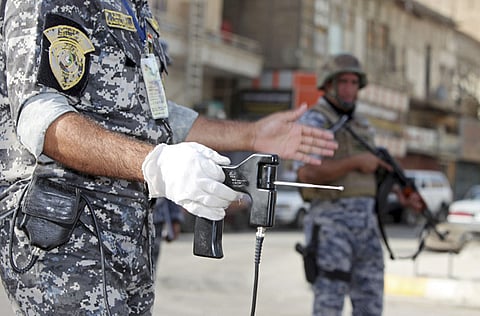
Baghdad: At a police outpost in the middle of Baghdad, the latest theft they're investigating is someone in the neighbourhood stealing electricity — from the police station.
In the grand scheme of things, it's a minor crime, but one symptomatic of a city where almost no one plays by the rules. Though the security vacuum and the looting of the 2003 invasion have been replaced with a largely functioning Iraqi Army and police force, basic services are woefully unreliable as the country lurches along without a new government half a year after elections.
Overall violence has dropped dramatically from its height in 2006-07. But militants are now targeting police as they increasingly take responsibility for security in cities such as Baghdad.
Dozens of police officers have been killed since the beginning of August by gunmen with silencers, roadside bombs, and suicide bombs. The major attacks have been claimed by groups affiliated with Al Qaida in Iraq.
"Ninety per cent of our work is about sacrifice — we are being targeted all the time," says police chief Abu Abbas, who first joined the police in Saddam Hussain's time.
When suspects are arrested, about 75 per cent of them are let go when they're brought to a judge, according to the US military. In addition to a lack of evidence, corruption and intimidation are still prevalent in the justice system.
On the other side of the city, layer upon layer of security protects the sprawling Interior Ministry, one of the biggest targets of insurgents. Police with Russian-made PKC machine guns are posted along blast walls painted with yellow and pink daisies.
As part of a security alert around the September 1 end of the US combat mission here, police were directed to patrol on foot instead of the usual vehicle patrols — a move Abu Abbas disagrees with in his vulnerable neighbourhood.
"What do I benefit from sending men out in the street and everyone can see them? I'd rather send them out in plain clothes," he says.
Praise for force
At the Interior Ministry, Maj Gen Ahmad Abu Ragheef — the director of internal affairs — says the police have made huge strides in the last four years, when they were infiltrated by militia members and death squads.
In a major victory last week, he says the police, acting on intelligence obtained from confessions, discovered a storehouse near Fallujah, built under a bathroom, that contained suicide vests, rocket-propelled-grenades, and packages of explosives.
At the same location, they found a four-wheel-drive loaded with more than 1,000 pounds of explosives ready to be detonated. The alleged military leader of the Islamic State of Iraq, an Al Qaida-linked group, was arrested in a related operation.
"The planning against Iraq is a plot that other countries are participating in," Abu Ragheef said. "There are people who are throwing wood on this fire."


