Israel moves toward ‘de facto sovereignty’ in West Bank: What changes and why it matters
New steps ease settler land buys, expand Israeli authority, weaken Palestinian self-rule
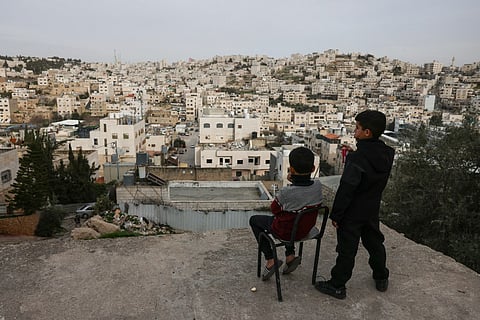
Dubai: Israel’s security cabinet has approved a series of steps that significantly expand Israeli control over the occupied West Bank.
While the full text remains classified, senior ministers have publicly outlined the changes, which do not require further legislative approval and are expected to take effect soon.
Israeli officials, including Finance Minister Bezalel Smotrich, Defence Minister Israel Katz, and Energy Minister Eli Cohen, have described the steps as establishing “de facto sovereignty” over the territory.
How do the measures affect land ownership and settlements?
The most far-reaching change lifts long-standing restrictions on land purchases by Israeli Jews in the West Bank.
Until now, settlers typically relied on intermediaries and required state permits to buy land. Under the new rules:
Israeli individuals and companies can purchase land directly
Special permits will no longer be required
Classified land registry records will be declassified, easing property acquisitions
The government is also reviving a state committee empowered to make “proactive” land purchases, effectively reserving land for future settlement expansion.
Israel has approved record settlement growth, including 52 settlements in 2025 alone. More than 700,000 Israelis now live in the West Bank and east Jerusalem, alongside roughly 3.4 million Palestinians.
What changes for Palestinian-governed areas?
Under the Oslo Accords, the West Bank is divided into:
Area A – Palestinian civil and security control
Area B – Palestinian civil control, Israeli security control
Area C – Full Israeli control
The new measures expand Israeli enforcement powers into Areas A and B, particularly over:
Land use and planning
Water and environmental violations
Archaeological and “national park” sites
Critics say this will further weaken the Palestinian Authority, override Oslo-era arrangements, and push Palestinians into fragmented urban enclaves.
What happens to religious and heritage sites?
Israel will assume greater control over sensitive religious sites, including:
Cave of the Patriarchs (Ibrahimi Mosque) in Hebron
Rachel’s Tomb near Bethlehem
In Hebron, building permit authority around the site will shift to COGAT, Israel’s military administration body. Rachel’s Tomb will be transferred from the Bethlehem municipality to a new Israeli authority.
Palestinian officials warn this could accelerate settlement activity and displacement around holy sites.
Why are Palestinians and others calling this annexation?
Palestinian leaders, Arab states, and rights groups say the measures amount to annexation in practice, even if not formally declared.
Energy Minister Eli Cohen said the steps “establish a fact on the ground that there will not be a Palestinian state,” language that mirrors critics’ warnings.
The Palestinian Authority says the measures violate international law and agreements signed with the Palestine Liberation Organization.
How has the international community reacted?
A group of eight Arab and Muslim-majority countries issued a joint rejection, warning the steps would fuel regional instability
The United Nations said it was “gravely concerned”
UN Secretary-General Antonio Guterres warned the measures undermine the two-state solution
A White House official on Monday reiterated US President Donald Trump’s opposition toward Israel annexing the West Bank. “A stable West Bank keeps Israel secure and is in line with this administration’s goal to achieve peace in the region,” the official said.
The moves also put Israel at odds with past US positions opposing West Bank annexation, even as Prime Minister Benjamin Netanyahu prepares for talks in Washington on Wednesday.
Bottom line
Taken together, the measures cement Israel’s control over the West Bank, accelerate settlement expansion, weaken Palestinian self-rule, and make the creation of a viable Palestinian state increasingly remote — reshaping the conflict’s landscape without a formal annexation declaration.


