Islamists set to take power but won't rock the boat
May not upset ruling elite by pushing for radical change
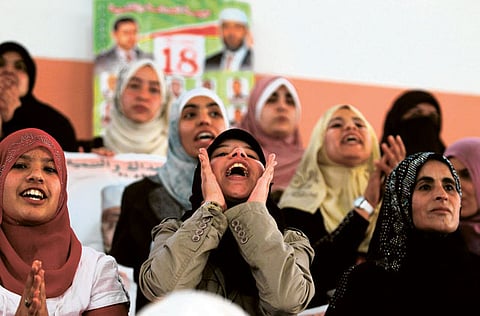
Algiers Moderate Islamist parties should emerge the winners of a parliamentary election in Algeria Thursday but they are unlikely to push for substantial change in a country ruled by the same elite since independence half a century ago.
Islamists have already won a share of power in other countries in the wake of the Arab Spring uprisings and an election victory would be a symbolic shift in Algeria, which has one of the most rigidly secularist elites in the Arab world. In the early 1990s, the military-backed elite overturned an election which Islamists were poised to win and then fought a conflict with them in which about 200,000 people were killed.
Beyond the symbolism though, change will be limited. The Islamists have close ties to the ruling elite, they are moderate, rarely mention religion, and parliament's restricted powers mean they cannot push radical reform even if they want to.
Volatile
More hardline Islamists who do seek radical change, and who represent an influential and often volatile part of society, are outside the political process — some out of choice and some because they have been outlawed.
"The Islamists will very likely win, they will very likely form a coalition inside the parliament, they will make a lot of noise, but this will have very little impact on Algeria's political life," Mohammad Mouloudi, an editor and specialist on Islamic affairs, said.
Algeria has no reliable opinion polls but analysts and diplomats predict the six Islamist parties running in tomorrow's election will pick up a bigger share of the vote than the traditionally dominant secularist parties.
The trend was evident on Saturday in the Al Harcha sports hall in the centre of the capital, Algiers.
Ahmad Ouyahia, the prime minister and leader of the secularist National Democratic Rally, gathered about 5,000 people for a rally but many seats were empty. A few hours later, the same venue was full for a rally held by the Islamist Front for Change.
While the Islamists who swept to power after the Arab Spring in Tunisia or Egypt were former dissidents who often spent years in jail for their beliefs, their counterparts in Algeria are more familiar with the inside of government limousines.
Most forecasts say the Green Alliance, a pact between three Islamist parties, will be the biggest contingent in the new parliament.
The Movement for Society and Peace (MSP), the biggest party in the alliance, was part of a pro-presidential coalition until last December, when its leader announced he was going into opposition.
Web of links
It nevertheless kept several of its ministerial portfolios. One of those who stayed was Amar Goul, minister for public works. He heads the alliance's roster of candidates in the capital and is tipped by some as a possible prime minister.
A similar web of links exists between the ruling establishment and other Islamist parties even though they all say they are in opposition.
A former leader of Al Islah, another party in the Green Alliance, is now an advisor to President Abdul Aziz Bouteflika. At least one ex-senior member of Al Nahda, the third alliance partner, has been given an ambassadorship. Abdul Majid Benasra, head of the Front for Change, served as industry minister during Bouteflika's first term and used to be in the MSP.
Most of the Islamists in the election are also close to the ruling elite in terms of ideology. Their campaigns focus on bread-and-butter issues and make little mention of the role of Islam in public life.
In its speeches and campaign literature, the Green Alliance does not mention the integration of Sharia, or Islamic law, into the justice system. For many people in the Arab world, backing the adoption of Sharia is the test of a true Islamist.
At Amar Goul's campaign headquarters, a villa in an up-market street in Algiers, there was no sign last week of any religious symbols.
The most powerful group sitting out the election are Algeria's Salafists, followers of an ultra-purist interpretation of Islam. They control hundreds of mosques and have a vast network of charitable associations.


