Differences emerge among the youth of Tahrir
Confrontation between Muslim Brotherhood and youth groups nearly turn into full-blown clash outside parliament
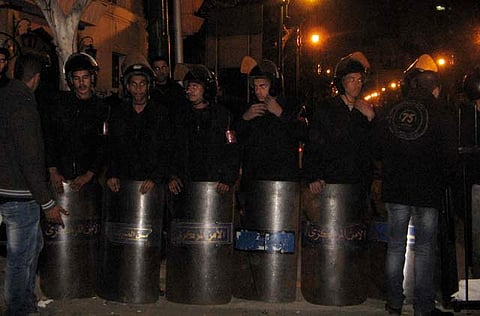
Cairo: On Tuesday night, the youth of Tahrir found themselves for the first time at odds with one another due to political differences between the Muslim Brotherhood and other youth-driven political movements.
The confrontation nearly turned into a full-blown clash outside the Parliament doors, after Tuesday's session.
The Parliament members were discussing the means by which they are to meet the revolution's demands, among which is the immediate hand over of authority to an elected council.
The parliament, led by the Muslim Brotherhood, were against the notion, leading to two separate marches by protesters timed to meet the parliament members as they exited the building.
The Muslim Brotherhood, fearing the possibility of the protests turning violent, sent about 2,000 of its youth to act as body shields, standing between the protesters and the parliament.
That gesture, instead of keeping the peace, sparked anger amongst the protesters, which predictably enough turned into a clash, in which 47 young Muslim Brotherhood members were injured. No one from the opposing marches was injured, as the Muslim Brotherhood members did not attack.
A few thinkers and political activists attempted to diffuse the tension until they succeeded and the Muslim Brotherhood members then stood at either side of the parliament's entrance, allowing the protesters easy access.
Taghrid Mohammad Abu Shady, a housewife, said she had come to the Parliament to protect her vote and support the decisions of the Parliament.
"We forced the Supreme Council of Armed Forces to hand over the power via presidential elections this June."
To Taghrid, the political movements by the youth-driven parties did not make much sense.
"Over 30 million people came out in droves to vote for the parliament. It doesn't matter what these parties think at this point, Egypt has elected it's representatives. It's done."
She also pointed out the paradox of these parties' actions.
She said: "On the one hand, they did not vote for the parliament, and they claim to not recognise it, yet they march to it, demanding that it comes on the receiving end of the power hand over."
Moataz Samir, an Arabic Languages University student and active member of the Freedom and Justice Party, said: "I arrived late on the scene, but I figured now is a good time as any to discuss today's events with the youth, so I can perhaps understand their views better."
The Muslim Brotherhood did not in my opinion violate any laws when they decided they must protect the parliament," he added.
Hassan Al Saeed, a graduate, stands at the opposite end of both Samir and Taghrid's argument.
"I was at the sit-in at Maspero - Egypt's state television's compound. I can attest to the fact that both marches were peaceful, and so I find the Muslim Brotherhood's need to protect the parliament from a fictional threat confusing, if not downright strange," he said.
"Today's events left me with questions, rather than answers," he added.
Activists on Twitter and Facebook for the first time since the popular 18-day uprising made a clear distinction between the youth of Tahrir and those of the Muslim Brotherhood. Having once stood side by side, united by a common purpose, today the same people find each other at odds with one another.


