BDS activists push SodaStream boycott
Activists say boycott is part of a wider effort of nonviolent resistance
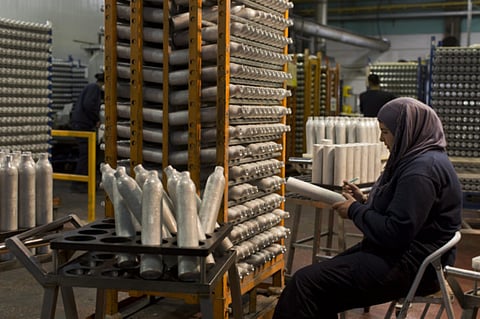
Ramallah: The world may be abuzz over SodaStream’s factory in the West Bank but it’s whirring non-stop.
At the edge of a palm-lined industrial zone 15 minutes east of Occupied Jerusalem, heavy machinery punches out steel canisters that customers across the world use to create fizzy drinks.
In other departments, women in hijabs work side by side with Russian immigrants to Israel while young Palestinian men work on assembly lines fine-tuning the soda maker.
The Israeli company’s sales expanded 30 per cent last year and 50 per cent in 2012, even before Scarlett Johansson signed on as a brand ambassador just in time for the Superbowl.
To keep up with demand, SodaStream has quintupled the number of Palestinians it employs to about 500, making it the largest private employer of Palestinians in the West Bank, according to CEO Daniel Birnbaum, who describes the plant as a haven of coexistence and economic stability.
But in the eyes of critics, employing a few hundred of the more than 2 million Palestinians in the West Bank does not excuse the fact that the factory operates in an Israeli colony, the establishment of which the United Nations has declared a violation of international law.
Supporters of the Boycott, Divestment, Sanctions (BDS) movement, aimed at ending Israel’s occupation of the West Bank and recognising the rights of Palestinians, are calling on consumers not to buy products from companies like SodaStream.
“The consumer boycott has two goals: ending the complicity of corporations in violating Palestinian rights and increasing the isolation of Israel in the world in order to achieve those rights,” says Omar Barghouti, a Palestinian human rights activist and co-founder of the BDS movement, who adds that it’s part of an effort to apply “morally consistent pressure” on Israel across the board.
“The boycott against Israeli companies that violate international law, like SodaStream, is therefore part of a much wider strategy of nonviolent resistance and solidarity aimed at achieving freedom, justice and equality for the Palestinian people as a whole.”
Just how effective the BDS movement has been, or can be, at putting a dent in the Israeli occupation of the West Bank — through targeting private companies or otherwise — is difficult to measure. While the Israeli government collects information on companies that face boycotts, “there is no official data on the scope of such boycotts,” according to a recent report from Molad, the Centre for the Renewal of Israeli Democracy, based in Occupied Jerusalem.
But in recent months the movement has touted a series of successes, and Mr Barghouti describes the movement as reaching a tipping point in its efforts to make the Israel brand as toxic as South Africa’s once was.
Since last spring, European Union members have taken a number of concrete steps against Israeli companies and institutions working over the Green Line in areas conquered by Israel during the 1967 war with its Arab neighbours.
More than a dozen EU countries are poised to require the labelling of products made in Israeli colonies, such as SodaStream machines; the second-largest Dutch pension fund and the largest Danish bank have taken a stand against Israeli banks dealing with the colonies; and Germany recently moved to withhold grants from private companies linked with the occupation — an unprecedented move from an EU country, which some Israelis worry could lead to a domino effect among the EU’s 28 other members.


