How Kazakhstan positions AI and digital governance as the next engine of growth
Exclusive interview with Deputy Prime Minister Zhaslan Madiyev on AI & digital development
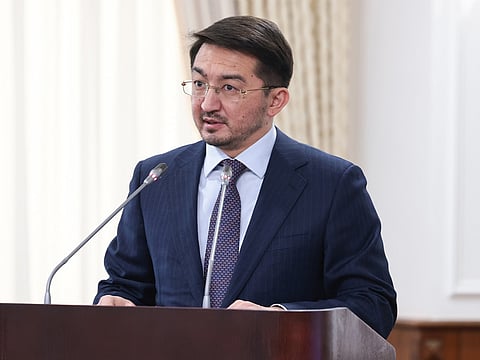
Kazakhstan is accelerating its shift toward an AI-powered digital economy, with most public services online and a fast-growing startup ecosystem.
In this interview, Zhaslan Madiyev outlines how artificial intelligence, smart cities and digital infrastructure are shaping the country’s next growth phase, while partnerships with the United Arab Emirates strengthen Kazakhstan’s ambition to emerge as a leading Eurasian tech hub.
What are the immediate priorities guiding your vision for Kazakhstan's digital transformation since your appointment in September 2025?
Kazakhstan has invested heavily in digital transformation over the past decade, becoming a leader and hub of Eurasia on its path to becoming a digital state. The country ranks among the top 24 globally in the UN e-government index and top 10 in online service quality. Of more than 1,300 public services, about 92% are available online. Almost all personal documents are digitised. By law, digital documents are equivalent to physical ones, and they can be used for banking, public services, travel and more.
Banks and fintech companies have transformed the payments market, making Kazakhstan nearly cashless; over 90% of transactions are digital. The central bank has also launched a blockchain-based CBDC, a programmable digital national currency, now rapidly being adopted. It is used to track government support programmes and ensure funds reach intended recipients.
Beyond govtech, Kazakhstan hosts the region’s largest IT hub and one of the fastest-growing startup ecosystems globally, with over 1,700 startups and major tech companies. IT exports are approaching $1 billion this year, earlier than the original 2026 target.
Kazakhstan aims to play a larger regional role, serving as a bridge between Central Asia, Eurasia and global markets. The country sees itself as a driving force supporting the regional startup ecosystem.
Artificial intelligence is also a national priority, approached systematically. Kazakhstan has established a strong institutional framework, including a dedicated Ministry of AI. The government approved a five-year AI development strategy last year and is finalising AI legislation focused on clear terminology, ethical standards and product labelling, without overregulation.
A key focus area is infrastructure. Fiber-optic coverage currently reaches about 45% of the country’s 6,000 villages and will expand to 90% by the end of next year. The rollout of 5G infrastructure is another priority, with more than 3,000 base stations planned. Kazakhstan is also investing in computing power and has launched the region’s largest supercomputer cluster.
Human capital development is another priority. Kazakhstan aims to train one million people in AI skills. Over 30,000 government employees have already completed AI training, which will soon become mandatory.
What is your vision for developing smart cities in Kazakhstan, particularly through innovation hubs like Astana Hub and its global network?
This is a very ambitious project initiated by the President of Kazakhstan, the creation of a territory of accelerated growth. The preferred approach is to develop it as a foreign direct investment platform, offering favourable regulations and incentives to attract both local and international investors.
The President’s vision is to build the city as a centre of accelerated development, an FDI hub and a business capital of Eurasia. According to the master plan, the city will consist of four main districts, including business, research, logistics and green resort areas.
Several prerequisites are essential for the city’s success. It should operate under AIFC regulations and British common law, with the entire area designated as a special economic zone. English should serve as the common business language, and foreign currency and crypto transactions should circulate freely.
Interest from South Korea and China in its infrastructure development is already strong. While the government will provide basic infrastructure and legal incentives, investment is expected to come from both foreign and local private sectors.
How can UAE and Gulf partners and investors, such as AIQ and Presight AI, support long-term collaboration and innovation with Kazakhstan and Central Asian startups?
All of these initiatives are already underway. The UAE serves as a strong benchmark for Kazakhstan in adopting and scaling innovative ideas. Kazakhstan is pursuing a similar path, exchanging expertise, sharing best practices and integrating its high-tech and business sectors.
Minister Omar Sultan Al Olama of the UAE is a member of Kazakhstan’s AI Council, symbolising this close collaboration. The partnership has expanded through Presight’s regional operations in Kazakhstan and the joint development of the supercomputer cluster.
What are your expectations for how AI-driven projects will impact Kazakhstan’s economy?
We believe there is enormous potential for productivity growth through the implementation of advanced technologies and the integration of AI into the economy. According to international forecasts, AI will add approximately $15 trillion to the global economy by 2030.
SMEs already contribute nearly 40% of Kazakhstan’s GDP, yet AI adoption remains limited. This presents a major opportunity for innovation and growth, particularly for startups. Kazakhstan has already produced its first AI unicorn, positioning the country alongside the United States and China in this advanced AI field.
These initiatives represent a long-term investment, expected to yield lasting benefits for Kazakhstan’s economy.
How has your leadership experience shaped your approach in your current role?
It has been a natural progression, from economist and finance specialist to digital finance expert, and eventually to AI. A diversified background and rotation between the public and private sectors provide a multidimensional perspective and a strong ability to execute complex projects.
In the public sector, it is essential to think with the mindset of the private sector, focusing on efficiency, innovation and measurable outcomes. Visionary ideas are important, but execution is critical.


